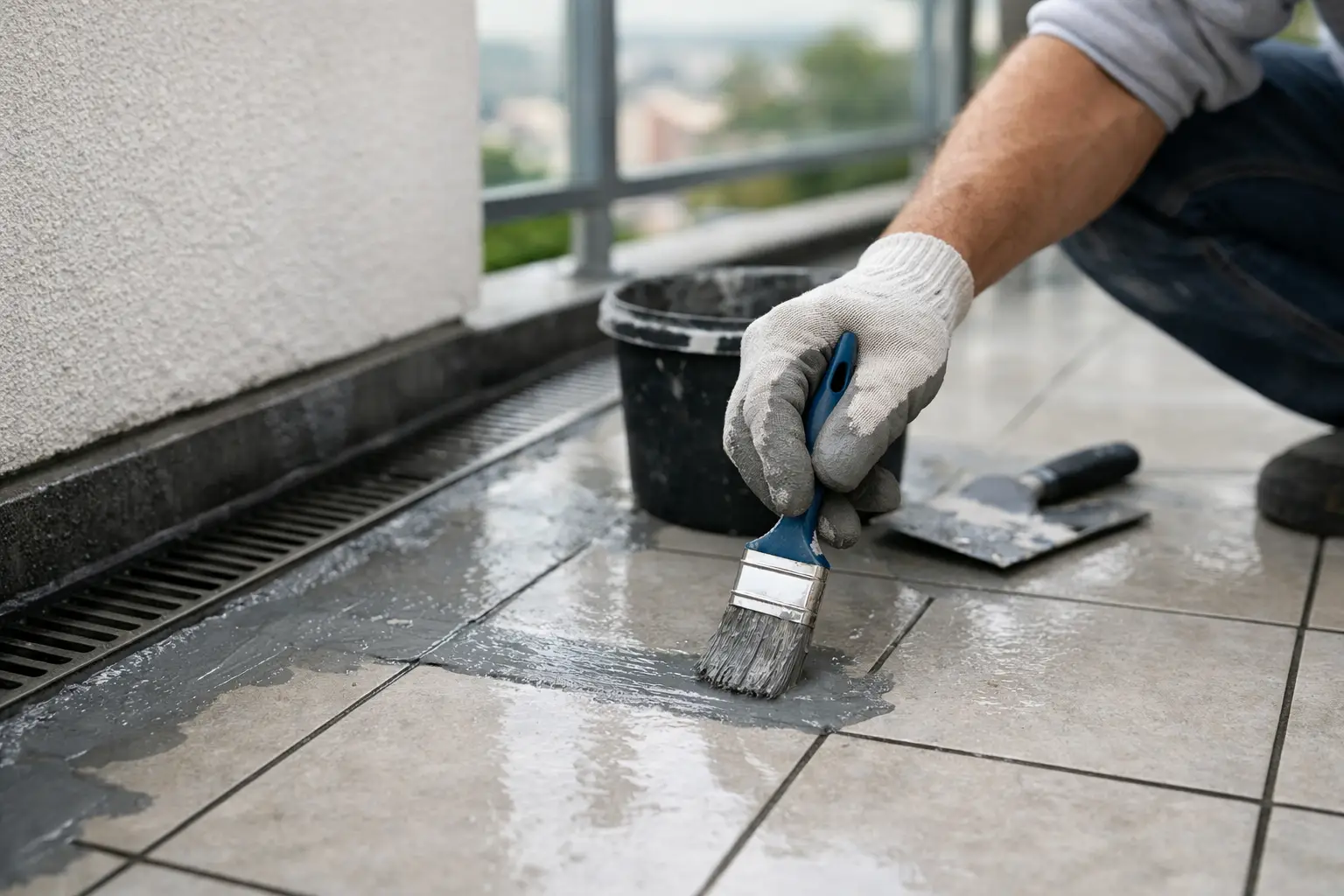
A balcony leak rarely starts as a dramatic problem. It often begins with a dark patch below the balcony, loose grout around a tile edge or water sitting in a corner after rain. Balcony waterproofing without removing tiles can be a practical way to stop water getting through failing joints before it reaches the structure, ceiling below or neighbouring property.
For Melbourne homeowners, landlords and property managers, the priority is usually clear: fix the source of water ingress properly, retain sound tiles and avoid an expensive demolition job where it is not needed. The right repair depends on what has failed. Deteriorated grout and cracked silicone can often be renewed without lifting tiles. A failed waterproof membrane beneath the tiles is a different problem and may require more extensive work.
Why tiled balconies start leaking
Tiles are a hard-wearing surface, but they are not the waterproof layer. Rainwater can enter through cracks in grout, gaps around the balcony perimeter, failed silicone at wall junctions and openings around drainage points. Once water gets below the tiled surface, it can travel further than expected before a stain or drip appears.
Melbourne’s wet winters, temperature changes and exposed balcony conditions all place pressure on tiled joints. Balconies also move slightly over time. That movement can break rigid grout at changes of plane, such as where the floor meets a wall or balustrade. These junctions need flexible, well-bonded silicone rather than grout alone.
Warning signs worth acting on include crumbling or missing grout, cracked tiles, mould around edges, efflorescence - a white, powdery residue - and water marks on the ceiling or wall below. In apartment buildings, a leaking balcony can also become a strata issue if water affects another lot or common property.
Can balcony waterproofing be done without removing tiles?
Yes, in many cases. Where the tiles are firmly bonded and the underlying waterproof membrane has not failed, targeted balcony regrouting and silicone renewal may restore the protective barrier at the surface. The work focuses on removing loose, cracked or porous grout, preparing the joints and applying new grout and flexible sealant where needed.
This approach is not a cosmetic cover-up. Done correctly, it addresses common entry points for water while preserving the existing tiled finish. It is usually faster, cleaner and more cost-effective than removing tiles, replacing the membrane and retiling the whole balcony.
However, no reputable specialist should promise a tile-preserving repair before assessing the balcony. If water has caused significant substrate damage, tiles are drummy or loose, drainage is poor, or the membrane underneath has broken down, simply regrouting the surface will not provide a lasting answer. The repair needs to match the actual cause of the leak.
When a tile-preserving repair is likely to suit
A no-removal solution is commonly suitable when the tiled surface is generally sound but the joints have deteriorated. This may include grout that has cracked or worn away, silicone that has split away from the wall, or gaps around penetrations and edges where water can enter.
It can also suit balconies showing early signs of water ingress, before prolonged moisture has damaged the screed, framing or ceiling beneath. Acting at this point gives property owners the best chance of avoiding a larger remedial project.
When removing tiles may be necessary
There are situations where retaining the tiles is not the responsible option. Persistent leaking despite sound surface joints may indicate membrane failure. Extensive hollow tiles, movement in the substrate, major cracking, failed falls that leave water ponding, or visible deterioration beneath the balcony all require closer investigation.
A proper assessment should distinguish between a failed grout or silicone joint and a broader construction issue. Regrouting is valuable when it solves the problem. It should not be used to disguise evidence that the balcony needs reconstruction.
What the repair process involves
A targeted balcony repair starts with inspection, not assumptions. The condition of the grout, silicone, tiles, drainage areas and surrounding walls is checked to identify likely water-entry points. The specialist should also ask when the leak occurs - only during heavy rain, after washing the balcony, or continuously - as this helps narrow down the cause.
Loose and failed grout is then removed from affected joints. This preparation matters because new grout applied over weak, contaminated material will not hold for long. Joints are cleaned and renewed, while failed silicone is removed and replaced with flexible sealant at wall-to-floor junctions and other movement areas.
The final finish should be neat, fully sealed and appropriate for an exposed outdoor area. Once repaired, the balcony needs reasonable curing time before it is exposed to heavy use or water. Your contractor should explain this clearly, along with any maintenance steps that will help protect the work.
Why grout and silicone matter so much
Grout does more than improve the appearance of a tiled balcony. It supports tile edges and closes the gaps between tiles, reducing the pathways rainwater can use to get below the surface. When grout becomes cracked, porous or missing, those pathways open up.
Silicone has a separate but equally important role. It is used where surfaces meet and movement is expected. Grouting these areas can lead to repeated cracking because grout is rigid. Quality silicone remains flexible, helping it accommodate normal expansion and contraction without opening a gap.
The best result comes from treating both materials as part of the same system. Replacing grout while leaving split perimeter silicone can leave the balcony vulnerable. Likewise, adding new silicone to joints surrounded by loose grout may not stop the leak.
The cost of waiting on a balcony leak
A small leak can become more expensive while it remains hidden. Water may saturate materials beneath the tiles, damage paint and plaster below, corrode fixings or contribute to timber rot. In multi-level homes and apartments, the visible damage may appear in a different area from the actual entry point.
For landlords and property managers, delay can also mean a more complicated repair, tenant disruption and potential disputes with adjoining owners. A timely inspection is generally more cost-effective than waiting for obvious structural or internal damage to develop.
There is also the issue of safety. Loose tiles and damaged balcony surfaces can become a trip hazard. Moisture and mould around adjoining walls may affect the use and condition of nearby rooms.
Choosing a balcony repair specialist in Melbourne
The key question is not simply whether someone can apply grout. It is whether they can diagnose water ingress and recommend a proportionate repair. A specialist should be clear about the condition of your balcony, what work is included and the limits of a tile-preserving solution.
Look for a free inspection where appropriate, a fixed quote before work begins and a written warranty that gives you confidence in the outcome. These details reduce the risk of surprise costs and make it easier to compare a targeted repair with the disruption of full tile removal.
Mr. Regrout focuses on restoring deteriorated tiled wet areas without unnecessary demolition, including balcony regrouting and silicone renewal across metropolitan Melbourne. A 5-year waterproof warranty provides added reassurance where the balcony is suitable for this type of repair.
Keeping the repaired balcony in good condition
After repairs, basic maintenance can extend the life of grout and silicone. Keep drains and outlets clear so water does not pond on the tiles. Avoid harsh acid cleaners that can damage grout, and check perimeter joints periodically for cracking, separation or mould.
If you notice a new stain beneath the balcony or a joint begins to fail, arrange an inspection early. The best time to address water ingress is before it becomes a ceiling repair, a neighbour’s complaint or a full balcony rebuild.