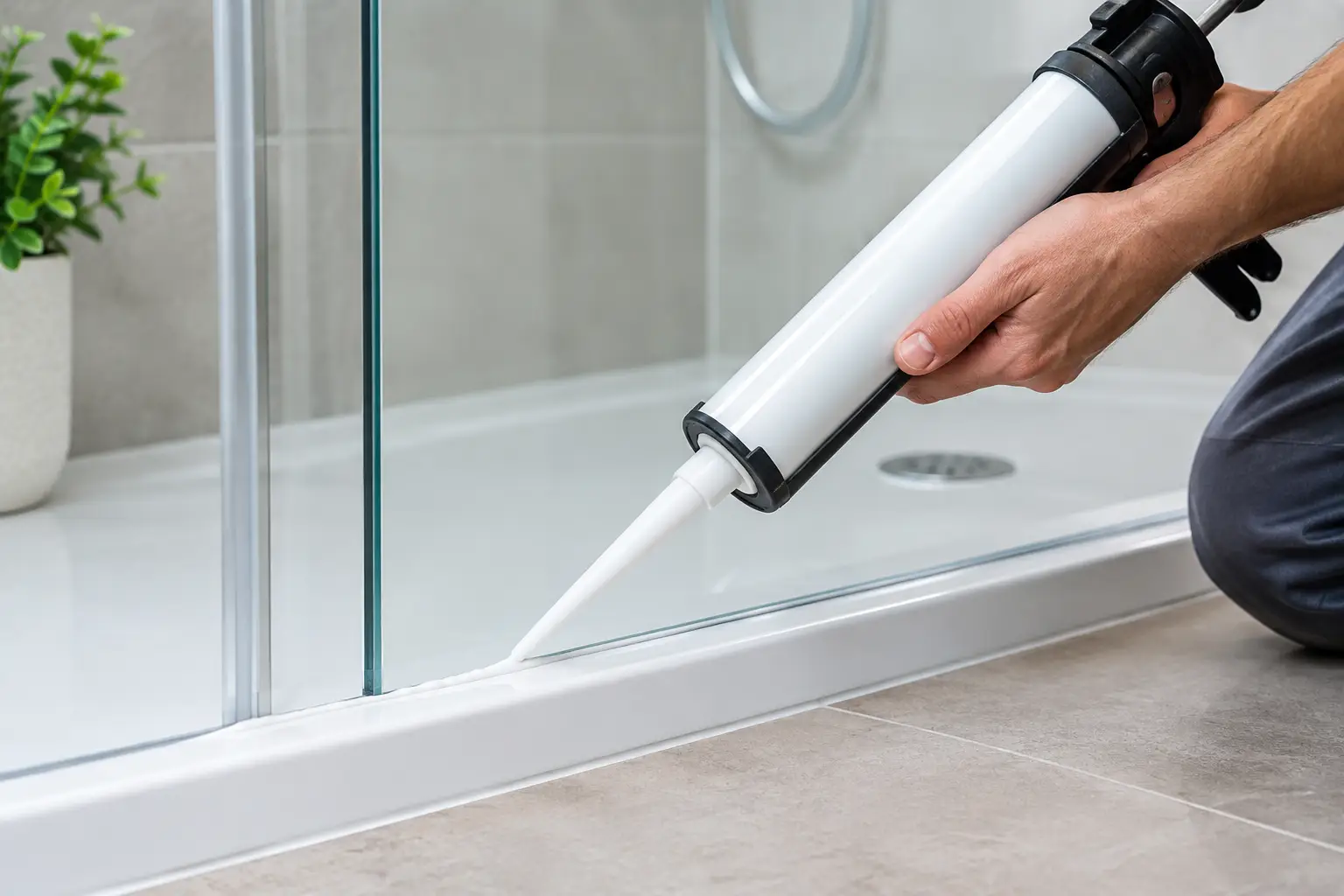
A bead of silicone around a shower screen can look like a small job, until water appears on the bathroom floor, in the adjoining wall or on the ceiling below. The best shower screen sealant is one that remains flexible, bonds properly to the screen and surrounding tiles, and is applied in the right location without blocking the screen’s drainage paths.
For many Melbourne homes, failed sealant is only part of the problem. Silicone may have split at the shower perimeter, discoloured with mould or pulled away from the tiles after years of movement and cleaning. Replacing it can stop minor leaks, but it cannot repair damaged waterproofing behind the tiles. Knowing the difference helps you choose the right repair before water damage spreads.
What makes the best shower screen sealant?
For sealing around a shower screen in a tiled bathroom, a premium sanitary-grade silicone is generally the right product. It is designed for wet areas, remains flexible as the building and materials move, and resists mould better than ordinary general-purpose sealants.
The word “best” depends on the screen, the substrate and the source of the leak. A frameless glass screen, semi-frameless screen and framed sliding door can each have different sealing and drainage requirements. The product must also adhere to the materials involved, which may include glazed tile, porcelain, glass, aluminium and acrylic.
Look for a silicone that is labelled for bathrooms and wet areas, offers strong mould resistance, and is suitable for the surfaces being sealed. Neutral-cure silicone is often a sound choice around metal screen components because it is less likely to cause corrosion than some acid-cure products. Always follow the shower screen manufacturer’s instructions where they are available, particularly for frameless installations.
Colour matters too, although performance matters more. Clear silicone can be less noticeable around glass, while white is commonly used where the screen meets white tiles or a shower base. A neat, continuous bead is more effective and looks better than an oversized line of sealant pressed over old residue.
Shower screen sealant is not the same as grout
Grout fills the gaps between tiles. Silicone is used at changes of plane and around fixtures where movement occurs, such as wall-to-floor junctions, vertical corners and the point where a shower screen meets tiled walls or a shower base.
These materials do different jobs. Grout is hard and can crack as surfaces move. Silicone is flexible, allowing it to bridge small amounts of movement without opening up. Applying grout to a corner or along the edge of a shower screen is not a substitute for a proper silicone joint.
Neither material should be treated as the bathroom’s only waterproof barrier. In a correctly built shower, waterproofing sits behind the tiles and directs water safely to the drain. When grout is loose, silicone has failed and water has been entering the structure for some time, surface resealing may improve the appearance without resolving the leak beneath.
Where sealant should and should not go
The most common sealing points are the outside edges where the shower screen meets the tiled wall, the shower base or bath, and sometimes fixed glass panel joints. These areas need a clean, flexible seal to stop splashed water finding its way behind the frame or into an open junction.
However, more sealant is not always better. Many framed shower screens are designed with drainage or weep holes in the bottom track. These small openings allow water that enters the frame to return to the shower area. Sealing over them can trap water inside the track, causing it to overflow to the bathroom side or accelerate deterioration.
Likewise, the inside and outside of a screen may need to be sealed differently. A screen installer’s instructions should take priority, as a misplaced silicone bead can alter how the frame sheds water. If water is escaping from a sliding-door track, worn door seals, poor door alignment or blocked drainage may be the real cause rather than a failed perimeter joint.
How to choose sealant for your shower screen
Start by identifying what you are sealing. If the silicone has separated from a tiled wall or shower base but the rest of the shower is dry and sound, replacing the joint with quality sanitary silicone may be appropriate. If the leak appears only when water hits a particular screen edge, the screen seal, door sweep or frame drainage deserves close attention.
The condition of the existing joint is just as important as the product you buy. New silicone will not reliably bond over mouldy, loose or oily old silicone. Every trace of failed material needs to be removed, then the surfaces must be cleaned and fully dry before the new bead is applied. Rushing this preparation is one of the main reasons a new seal fails early.
Also consider the joint width and movement. A very narrow surface smear may look tidy on day one but can pull away as the screen and tiles move independently. A correctly sized, smoothly tooled bead gives the silicone enough contact with both surfaces to maintain a watertight seal.
Allow adequate curing time before using the shower. Cure times vary by product, temperature and humidity, so check the label rather than assuming it is safe after a few hours. Melbourne’s cooler, damp conditions can slow the process, especially in a poorly ventilated bathroom.
Signs that a new silicone bead will not be enough
A shower screen leak is often visible at the bottom of the screen, but the actual water entry point may be elsewhere. If water is tracking through cracked grout, failed corner silicone or gaps around plumbing penetrations, resealing one screen edge alone will not provide lasting protection.
Be cautious if you notice persistent mould that returns after cleaning, hollow-sounding tiles, loose grout, cracked tiles, swollen skirting boards, peeling paint outside the shower or staining on a ceiling below. These can indicate ongoing water ingress behind the tiled surface. The longer that moisture remains hidden, the greater the risk of damage to walls, flooring and neighbouring properties in apartments.
A shower that leaks even when the screen is not being sprayed may have a broader waterproofing issue. Similarly, if water escapes through the doorway despite intact perimeter silicone, the screen may be incorrectly adjusted or the shower floor may not be draining as it should. Adding sealant without diagnosing the path of the water can simply conceal the problem for a short time.
A practical approach to shower screen leaks
For a localised, accessible silicone failure, careful replacement may be a sensible maintenance task. Remove the old sealant completely, clean and dry the joint, use a wet-area silicone compatible with the materials, apply an even bead and keep the shower dry for the full recommended cure period. Do not fill weep holes or seal areas the screen manufacturer identifies as drainage points.
When the leak is recurring, widespread or connected to deteriorated grout and multiple failed joints, a specialist inspection is the more cost-effective next step. The aim is to identify whether water is getting past the screen, through surface joints, or behind the tile bed. That diagnosis determines whether silicone renewal, grout replacement or more comprehensive shower leak repairs are needed.
For Melbourne property owners, Mr Regrout provides free inspections and fixed quotes for targeted shower repairs without removing tiles where the existing tiled shower can be restored. Renewing failed grout and silicone correctly can protect the wet area while avoiding the disruption and waste of a full renovation. Eligible work is supported by a 5-year waterproof warranty.
The best result is not simply the neatest-looking silicone line. It is a shower screen and tiled wet area that direct water where it belongs, keep moisture out of the structure and give you confidence each time the shower is used.