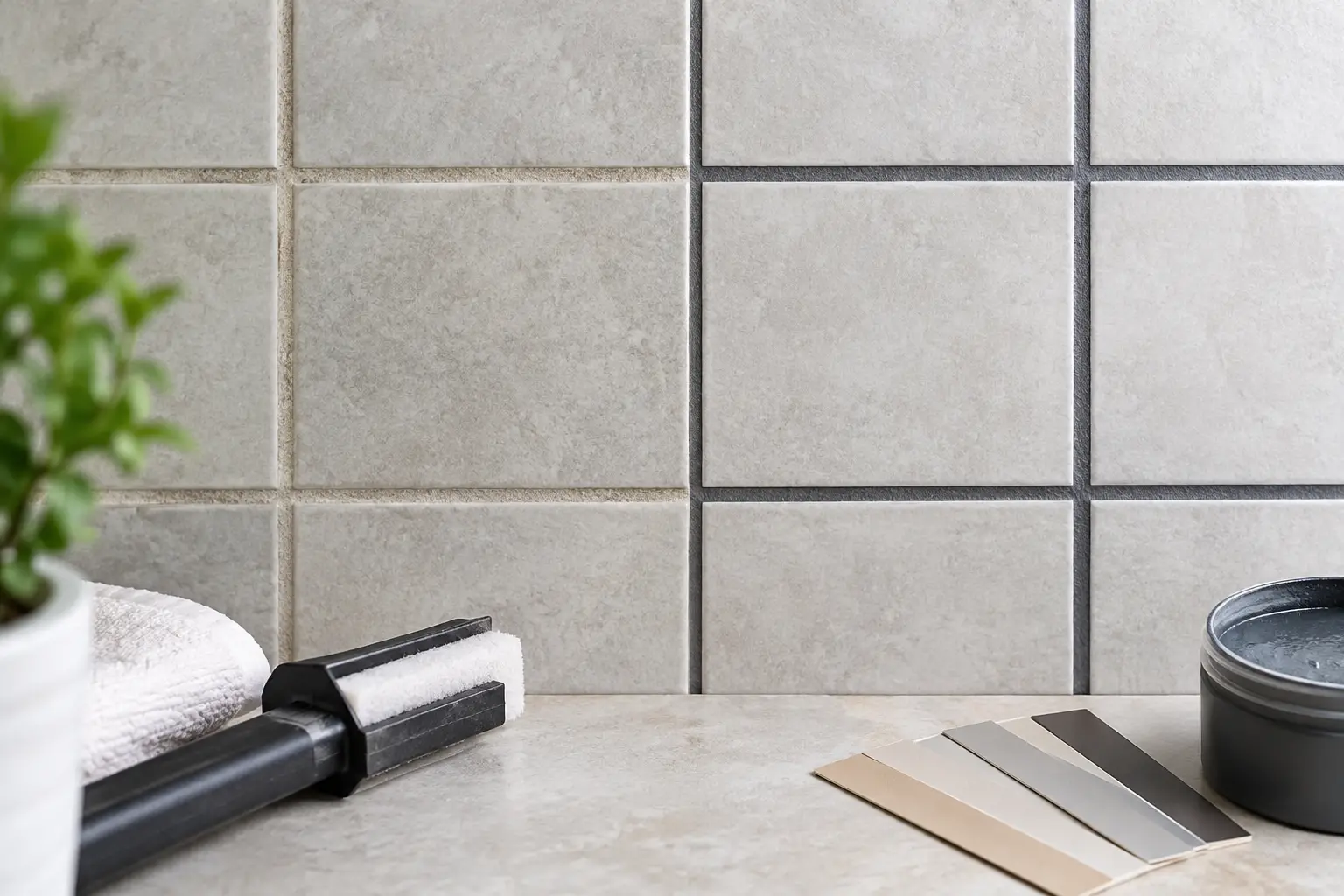
A tiled shower can look tired long before the tiles themselves need replacing. Darkened joints, patchy repairs and stubborn mould often lead owners to ask: can grout be recoloured rather than removed? In some cases, yes. But changing grout colour is a cosmetic treatment, not a repair for deteriorated joints or a leaking shower.
For Melbourne homes, the right answer depends on what is happening beneath the surface. If the grout is intact and the area is dry, recolouring can freshen the finish. If grout is cracking, missing, soft or allowing water into adjacent walls and floors, it needs proper remedial work first.
Can grout be recoloured successfully?
Grout can be recoloured using a grout colourant or colour seal. These products sit over the existing grout, changing its appearance while helping reduce staining and moisture absorption. They are commonly used to take yellowed white grout back to a cleaner white, cover uneven discolouration or update a dated grout shade.
The finish can look very effective when the existing grout is sound, clean and firmly bonded between the tiles. A well-applied colour seal also makes routine cleaning easier because it creates a more consistent, less porous surface than untreated cement grout.
However, recolouring does not rebuild failed grout. It will not fill deep cracks properly, stop movement around the shower base, repair loose tiles or restore a compromised waterproofing membrane. Applying colourant over damaged joints may improve the look temporarily while the moisture problem continues behind the tiles.
When recolouring grout makes sense
Recolouring is generally suitable where the issue is limited to appearance. Perhaps the grout is permanently stained despite cleaning, the original colour has become uneven, or different areas have been patched with slightly mismatched grout. In these situations, a colour seal can give the tiled area a more uniform, maintained finish without removing tiles.
It is also a practical option for a dry tiled floor, splashback or wall where there are no signs of water ingress. The grout should be hard, complete and free from persistent mould growth. Any cleaning residue, soap film and loose material must be removed first, otherwise the colourant will not bond evenly.
Even in a sound shower, preparation is the difference between a lasting result and a patchy one. The joints need to be thoroughly cleaned, allowed to dry and checked for small areas of deterioration before any colour seal is applied.
Cosmetic improvement is not waterproofing repair
Grout is not the waterproof layer in a shower or balcony. Most tiled wet areas rely on a waterproof membrane behind or beneath the tiles, while grout and silicone help form the finished surface and manage day-to-day exposure to water.
That distinction matters. Grout can become porous with age, and open joints can let more water through than they should. But simply painting over those joints does not confirm that the membrane is intact or that water has not already reached the surrounding structure.
If there is a ceiling stain below a bathroom, swollen skirting boards, peeling paint outside the shower, damp carpet in an adjoining room or a musty smell that returns after cleaning, treat it as a possible leak rather than a colour problem.
Signs grout should be replaced, not recoloured
Regrouting is the safer option when the grout is visibly failing. Cracks running through multiple joints, gaps along tile edges, powdery or soft grout, and sections that fall out during cleaning all indicate that a surface treatment is unlikely to hold.
Mould is another warning sign, particularly when it returns quickly after cleaning. Surface mould can be removed, but recurring dark growth in grout lines may mean moisture is being retained in the area. In a shower, this often occurs alongside failed silicone at internal corners, around the shower screen or where wall tiles meet the floor.
Balconies need the same care. Sun, rain and building movement can cause grout to crack and joints to open. Water may then travel beneath tiles and affect the balcony substrate, internal rooms or the property below. Recolouring can make an ageing balcony look neater, but it should never be used to conceal open joints or active water damage.
Where deterioration is localised, targeted grout replacement may be enough. Where joints are broadly worn or the shower has leaking symptoms, removing the failed grout and renewing the silicone is usually the more reliable path. This can often be completed without removing the existing tiles.
Why silicone matters as much as grout
Homeowners often focus on grout lines because they are the most visible part of a tiled shower. Yet the flexible silicone joints are just as important. Silicone is used where surfaces meet and move differently, such as wall-to-floor junctions, vertical internal corners and around fittings.
Grout is rigid. It cannot accommodate normal movement in the same way silicone can. When silicone becomes mouldy, splits, lifts away or hardens with age, water can enter at the edges of the shower even if the grout still looks reasonable.
For that reason, recolouring grout without inspecting the silicone can leave the main failure untouched. A proper assessment looks at the condition of both materials, along with tile movement, drainage, shower screen seals and any evidence of moisture outside the wet area.
What a proper regrouting process involves
Professional regrouting is not a matter of spreading fresh grout over old joints. The failed material needs to be removed to an appropriate depth so the new grout has a clean, stable surface to bond to. Loose residue is cleared, affected joints are prepared, and new grout is installed and finished carefully.
Old silicone should be removed rather than coated over. The joints are cleaned and dried before new sanitary-grade silicone is applied, creating a flexible seal at the vulnerable transitions around the shower or balcony.
The exact scope depends on the condition of the tiled area. A bathroom with isolated staining may only need cleaning and colour sealing. A shower showing cracks, deteriorated silicone and leaking symptoms may need regrouting and silicone renewal. If inspection identifies more extensive waterproofing failure, the repair approach should be explained clearly before work begins.
Is recoloured grout difficult to maintain?
Once a suitable colour seal has been applied, maintenance is straightforward but still necessary. Clean the surface regularly with a non-abrasive, pH-neutral cleaner and avoid harsh acids, bleach-heavy products and aggressive scrubbing pads. These can wear the finish and damage surrounding silicone.
Good ventilation also matters. Run the exhaust fan during and after showers, wipe down excess water where practical, and address dripping taps or shower leaks promptly. On balconies, keep drains clear so water does not sit against tiled surfaces after rain.
No grout finish is maintenance-free. Recoloured grout can improve the appearance of sound joints, but it cannot prevent damage caused by movement, trapped moisture or neglected silicone.
Choosing the right option for your shower or balcony
The most cost-effective solution is not always the quickest cosmetic fix. If your grout is structurally sound and the problem is staining alone, recolouring may be a sensible way to improve the room without major work. If there are signs of a leak, missing grout or failed silicone, repair the cause before considering the colour.
For Melbourne property owners, a specialist inspection can remove the guesswork. Mr. Regrout provides free inspections and fixed quotes for targeted shower and balcony repairs, with work designed to retain existing tiles where possible and backed by a 5-year waterproof warranty.
A clean new grout colour can make a bathroom feel renewed. Just make sure it is the final finish on a dry, stable tiled surface, not a cover for water that is already finding its way out.