A shower can look perfectly serviceable from the bathroom side while water is slowly reaching the wall, floor or ceiling behind it. That is why the question, does regrouting stop shower leaks, needs a more useful answer than simply yes or no. Regrouting can stop a shower leak when deteriorated grout and failed silicone are allowing water into otherwise sound tiled surfaces. It will not solve every leak, particularly where the waterproof membrane, plumbing or shower base has failed.
For Melbourne homeowners, landlords and property managers, the key is finding the actual entry point before water damage becomes a larger and more expensive repair. A targeted grout and silicone repair can often restore a leaking shower without removing tiles. But it needs to be assessed properly and completed as a complete system, not treated as a cosmetic patch-up.
When regrouting can stop a shower leak
Grout sits between tiles and helps keep the tiled surface stable, clean and finished. Over time, it can crack, become loose, wear away or develop small gaps. In a shower, those gaps allow water to travel behind the tiles during every use.
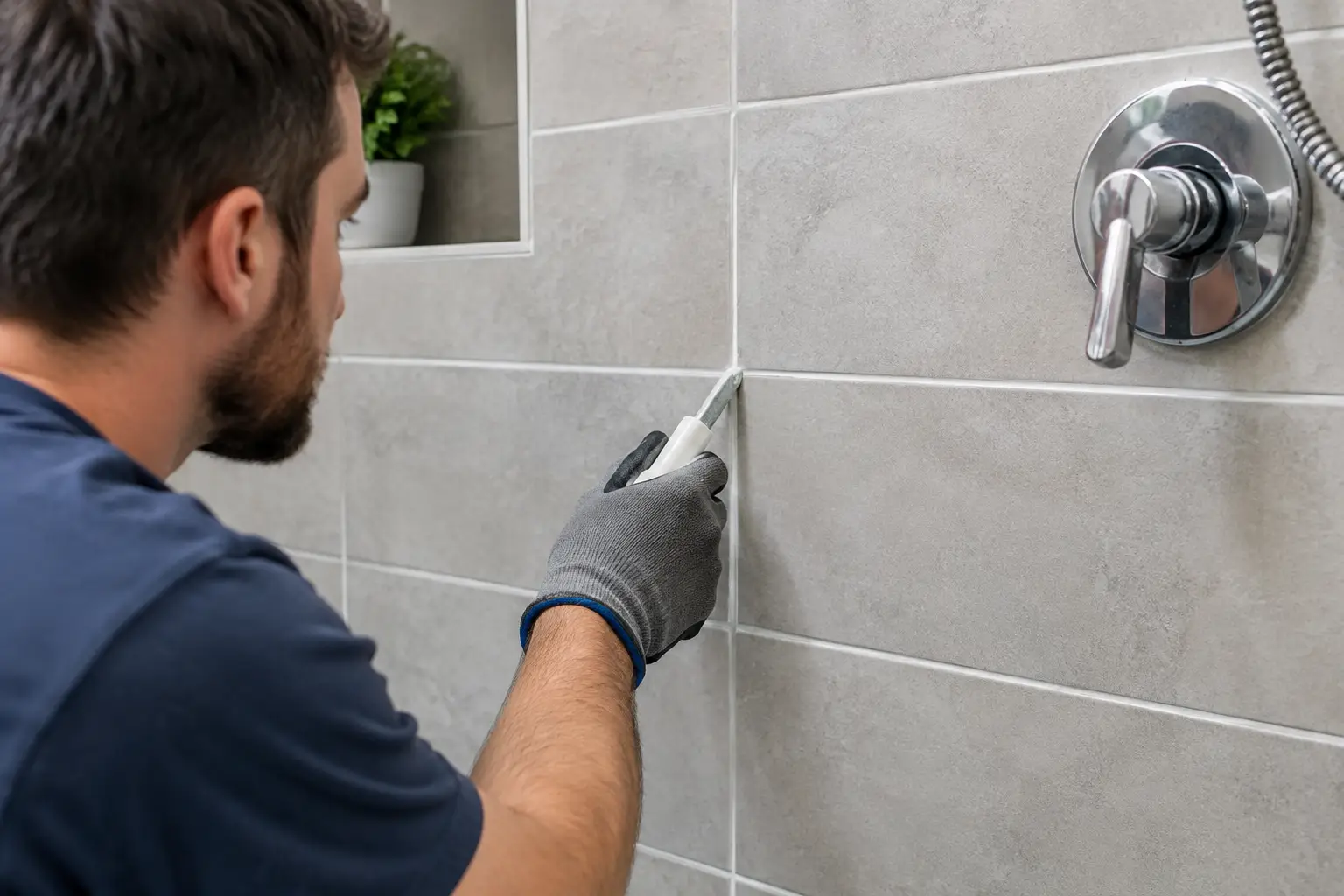
If the waterproofing membrane behind the tiles remains intact, replacing failed grout can remove that pathway for water. The repair usually involves removing deteriorated grout to the required depth, thoroughly cleaning the joints and applying new grout. Once cured and sealed where appropriate, the tiled surface is better protected against ongoing moisture entry.
The same applies to the flexible joints around the shower floor, wall corners, screen and fixtures. These areas should be sealed with sanitary-grade silicone, not rigid grout. Silicone is designed to accommodate slight movement between tiled surfaces. When it peels away, splits, discolours with mould or separates from the tile, water can pass directly behind the shower lining.
In many established homes, it is the combination of tired grout and failed silicone that causes the problem. Renewing both at the same time provides a more reliable result than replacing one and leaving the other compromised.
Does regrouting stop shower leaks caused by bad silicone?
Often, yes. Failed silicone is one of the most common causes of shower water ingress, especially along the wall-to-floor junction and vertical corners. These joints move slightly as the building settles, materials expand and contract, and people step in and out of the shower. Grout in these movement joints will eventually crack, while old silicone can lose adhesion.
A proper silicone renewal means removing the old material rather than applying a new bead over the top. Surface patching may look neat briefly, but it cannot create a dependable seal if mould, soap residue or loose silicone remains underneath.
Fresh silicone needs clean, dry surfaces and adequate curing time. Using the shower too soon can affect the seal, so follow the repairer’s instructions before putting the bathroom back into service.
When regrouting will not fix the leak
Regrouting is not a substitute for every waterproofing repair. Grout is not the shower’s primary waterproof barrier. Tiles and grout form the visible finish, while the membrane behind them is designed to manage moisture that gets through the tiled surface.
If the membrane has split, deteriorated or was incorrectly installed, new grout may reduce surface water entry but cannot repair the failed layer behind the tiles. Likewise, a plumbing leak from a pipe, mixer, drain or waste connection needs a plumbing repair, not regrouting.
Warning signs that the issue may be more than grout include persistent dampness outside the shower, swollen skirting boards, peeling paint on an adjoining wall, loose tiles, a soft floor, or staining on the ceiling below. A musty smell that returns after cleaning can also point to trapped moisture.
In apartments and townhouses, shower leaks can affect neighbouring properties or common areas. That makes early diagnosis particularly important. Waiting for visible damage to worsen can increase the repair scope and create avoidable disruption for tenants, owners corporation managers and neighbours.
Why patching small cracks is rarely enough
It is tempting to fill a few visible grout cracks with a hardware-store product and hope for the best. For a very minor, isolated issue, a small repair may be reasonable. But showers rarely fail in one place only. Grout deterioration is often spread across wall joints, floor joints and corners, while old silicone may already be lifting in less obvious areas.
A spot repair can also create an uneven finish and leave weak surrounding grout untouched. Water follows the easiest path, so sealing one crack does not help if moisture can still enter through another gap nearby.
A thorough regrouting repair focuses on the shower as a wet area. It checks the condition of grout, silicone, tile movement and likely water paths rather than treating the first crack that catches the eye. This approach is more likely to stop a recurring leak and preserve the existing tiles.
What a proper leaking shower assessment looks for
Before deciding whether regrouting is the right solution, a specialist should inspect the shower carefully. The aim is to separate surface-seal failure from plumbing faults or deeper waterproofing problems.
The inspection should consider the condition of grout throughout the shower, not just around the drain. It should also check silicone joints at corners and the shower perimeter, tiles that sound hollow or move under pressure, drainage performance, signs of moisture outside the shower, and potential plumbing-related causes.
There is no benefit in recommending demolition if a targeted repair can restore the shower’s waterproof integrity. Equally, there is no benefit in promising that regrouting will fix a leak where the evidence points to a failed membrane or pipe. Clear advice upfront protects the property owner from spending money on the wrong work.
For suitable showers, a specialist service such as Mr. Regrout can replace deteriorated grout and silicone without removing existing tiles. A free inspection and fixed quote help establish the likely scope before work begins, while a 5-year waterproof warranty provides practical reassurance that the repair is backed by accountability.
How long does a regrouted shower last?
The lifespan depends on the shower’s condition, the quality of the preparation and materials, how well it is ventilated, and how it is cleaned. A properly completed repair should provide long-term protection, but no bathroom surface is maintenance-free forever.
Harsh acidic cleaners, abrasive scrubbing and poor ventilation can shorten the life of grout and silicone. Regularly running the exhaust fan, wiping down excessive water where practical and cleaning with suitable products will help keep joints in better condition. Silicone should be checked periodically, particularly at floor-to-wall junctions where water naturally collects.
For landlords and property managers, arranging repairs at the first signs of grout loss, blackened silicone or external dampness is usually far less disruptive than waiting for a tenant to report a ceiling stain or damaged wall. The same principle applies to owner-occupiers: a short, targeted repair now can help avoid a major bathroom project later.
The practical answer for your shower
Regrouting can stop a shower leak when failed grout and silicone are the source of water ingress and the underlying waterproofing remains sound. It is a cost-effective option because it retains the existing tiles, avoids demolition and addresses the areas most exposed to daily moisture.
However, regrouting should follow diagnosis, not guesswork. If water is already affecting nearby walls, flooring or ceilings, arrange an inspection promptly. The right repair is the one that stops water at its source and gives you confidence to use the shower again without wondering what is happening behind the tiles.