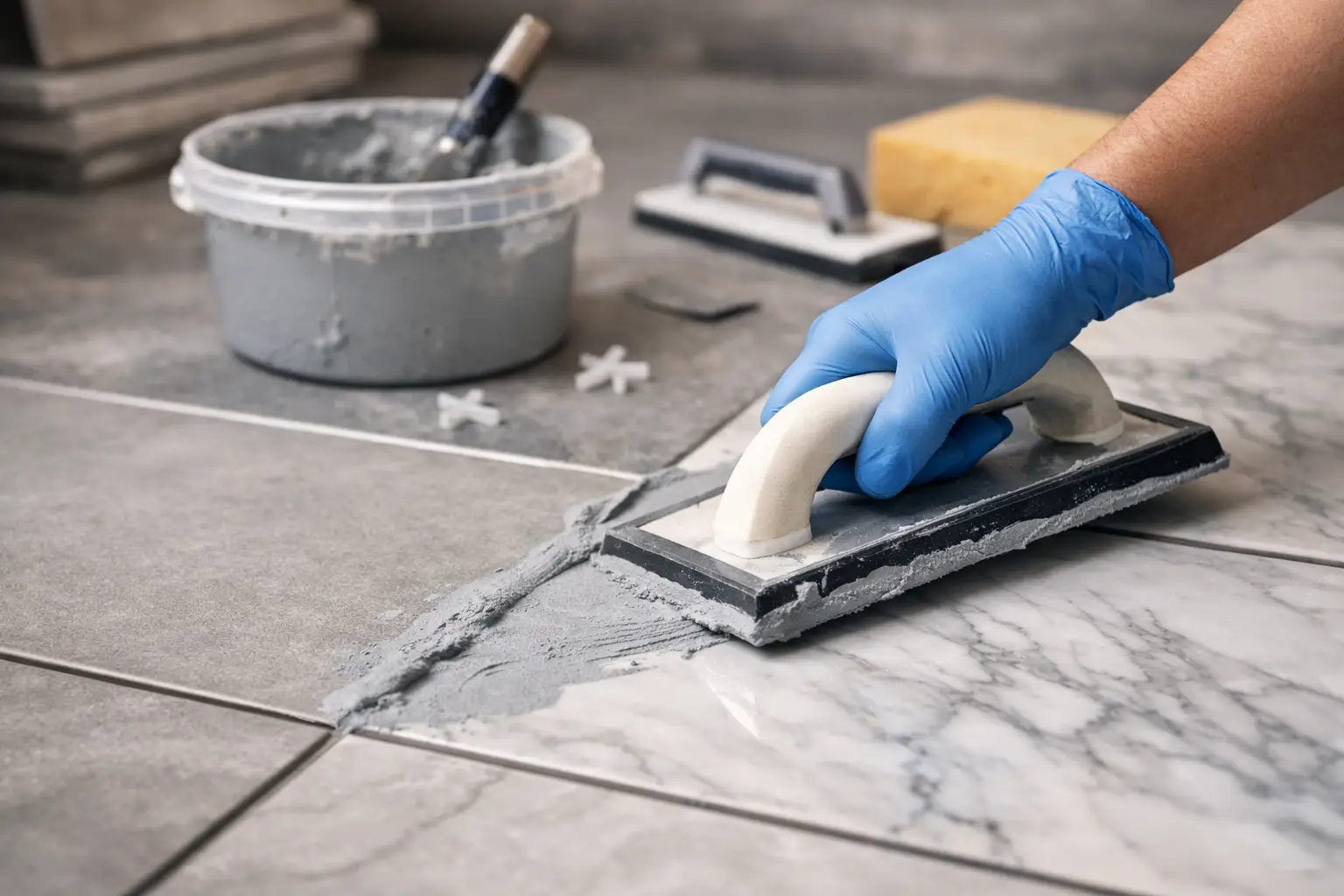
A shower floor that stays dark around the drain, mould returning along the corners, or grout that cracks again after cleaning are not just cosmetic frustrations. Homeowners looking into epoxy grout Melbourne options are often trying to stop a leak before it reaches wall linings, timber floors or the ceiling below. Epoxy grout can be an excellent part of a repair, but it is not a blanket fix for every tiled shower or balcony.
The right result starts with identifying where water is getting in. In some cases, renewing deteriorated grout and silicone without removing tiles is a practical, long-lasting repair. In others, the condition of the waterproofing membrane, tile movement or drainage needs closer attention first.
What makes epoxy grout different?
Traditional cement grout is porous. Even when sealed, it can gradually absorb moisture and staining, particularly in a busy shower or an exposed balcony. Over time, cleaning chemicals, movement and constant wetting can leave it cracked, worn or discoloured.
Epoxy grout is made from resin and hardener rather than cement. Once cured, it forms a dense, low-porosity joint that is far more resistant to moisture, staining and mould growth. It does not need the regular sealing commonly associated with cement-based grout.
For tiled wet areas, that can mean easier cleaning and a more durable finish. Soap residue and everyday grime are less likely to penetrate the grout line, and the surface is generally better suited to areas that are regularly wet.
That does not mean epoxy grout is always the best choice. It is more difficult to install than standard grout and requires careful timing, preparation and clean-up. If it is applied over unstable tiles, failed movement joints or an unresolved leak path, the improved grout itself will not correct the underlying issue.
Where epoxy grout works well in Melbourne homes
Epoxy grout is often a strong option for shower floors, shower walls, bathroom floors, laundries and tiled balconies. These are areas where repeated moisture exposure puts ordinary grout under pressure.
In a shower, it can be particularly useful where grout is stained, crumbling or allowing water to sit in open joints. On a balcony, it can help provide a more durable finish where weather, temperature changes and foot traffic have degraded existing grout.
However, the condition of the tiled area matters more than the material alone. Tiles should be soundly bonded, the substrate should not be moving excessively, and the falls should direct water towards the drain. A balcony with ponding water or a shower floor where water consistently pools may need a broader assessment before regrouting is considered.
Silicone joints also need separate attention. Corners, wall-to-floor junctions, shower screens and penetrations are movement areas. They should be sealed with suitable flexible silicone, not rigid grout. Using grout in these joints can lead to early cracking as the surfaces expand and move independently.
Epoxy grout Melbourne repairs need the right diagnosis
A common misconception is that grout is the waterproofing layer. It is not. Grout and tiles provide the visible surface finish, while waterproofing behind or beneath the tiles is designed to manage water that passes through the tiled surface.
When grout has failed, water can enter more easily and place extra stress on the system. Renewing failed grout and silicone can reduce that exposure and restore the finish of a tiled area. But if the waterproofing membrane has already failed, or water is entering through another point, regrouting alone may not stop the leak.
Warning signs that deserve a specialist inspection include bubbling paint on an adjoining wall, swollen skirting boards, a damp ceiling below a bathroom, loose tiles, persistent musty smells, or water appearing outside the shower area. On balconies, look for staining to the soffit underneath, cracked joints, loose tiles, efflorescence or water marks around doors and external walls.
The goal is not to sell a full renovation where one is not needed. It is to determine whether a targeted repair can protect the area without removing existing tiles, or whether the problem has progressed beyond the tiled surface.
The benefits and trade-offs to consider
For the right application, epoxy grout offers genuine practical benefits. Its dense finish resists staining, holds its colour well and makes day-to-day cleaning easier. This is particularly appealing for rental properties, family bathrooms and balconies that are exposed to Melbourne's variable weather.
It is also a premium material and installation process. Epoxy grout generally costs more than cement grout because it is more labour-intensive to apply correctly. It cures quickly, leaves little room for error and can be difficult to remove if it is smeared across textured tile surfaces or allowed to set before cleaning.
Tile type matters too. Natural stone, unglazed tiles and heavily textured finishes require careful product selection and testing. The aim is to avoid residue, discolouration or a finish that does not suit the appearance of the tile.
For some repairs, a high-quality cement-based grout combined with proper silicone renewal may be the more suitable and cost-effective choice. The best material depends on the location, tile condition, level of moisture exposure and the source of any water ingress.
What a proper regrouting repair should include
A lasting repair is more involved than applying new material over old grout. Surface patching can make a shower or balcony look better briefly, but it rarely addresses failed joints properly.
First, deteriorated grout should be removed to an appropriate depth so the replacement material can bond correctly. The tiled area then needs to be cleaned and prepared. Failed silicone should be cut out rather than coated over, because new sealant will not reliably adhere to contaminated or loose silicone.
The replacement grout is then installed carefully, and flexible silicone is renewed in the joints where movement is expected. Once complete, the tiled surface should be left clean, tidy and ready to cure as required. The exact process varies between showers and balconies, but preparation is where much of the repair's durability is determined.
A professional assessment should also consider the shower screen, plumbing penetrations, drainage, tile movement and the condition of surrounding finishes. Water can take unexpected paths. Treating the visible crack while missing a failed corner joint or screen seal can leave the real issue unresolved.
Can epoxy grout stop a leaking shower?
Sometimes, but only when failed grout is part of the water-entry problem and the underlying waterproofing remains serviceable. If water is tracking through open grout lines or failed silicone joints, correctly renewing those components may stop the leak and restore the tiled area without demolition.
If a leak is caused by a ruptured pipe, failed membrane, poor drainage or structural movement, epoxy grout will not be a standalone answer. This is why a free inspection is valuable before committing to any repair. It gives the property owner a clearer view of the likely cause, the suitable scope of works and whether tile-preserving repair is realistic.
For apartments, early action matters. Water from a leaking shower or balcony can affect neighbouring lots, common property and strata obligations. For landlords and property managers, a targeted repair can also reduce vacancy disruption and help prevent a minor maintenance issue from becoming a larger claim.
Choosing a Melbourne regrouting specialist
Ask how the cause of the leak will be assessed, whether failed silicone joints are included, and what warranty applies to the waterproof result. A clear fixed quote is also useful, particularly where the alternative may be a costly strip-out and retile.
Mr. Regrout focuses on restoring tiled showers and balconies without unnecessary tile removal, with free inspections, fixed-price quotes and a 5-year waterproof warranty on eligible work. That approach is designed for property owners who need a practical repair, not renovation pressure.
If your grout is cracking, mould keeps returning or signs of moisture are appearing outside the tiled area, avoid treating it as a cleaning problem. Have the area assessed while the repair may still be contained, and you may be able to protect the tiles you already have.