A shower can look tired long before it starts leaking. Dark grout lines, recurring mould and cracked corners are often the first signs that water is finding a path behind the tiles. When comparing epoxy versus cement grout, the right choice is not simply about which product is stronger. It depends on the location, the condition of the tiles and joints, and whether the problem is surface staining or an active water-ingress issue.
For Melbourne homeowners, landlords and property managers, the priority is usually clear: stop water damage without turning a grout repair into a full bathroom renovation. Grout selection matters, but so does identifying failed silicone, loose tiles, movement and any damage beneath the tiled surface.
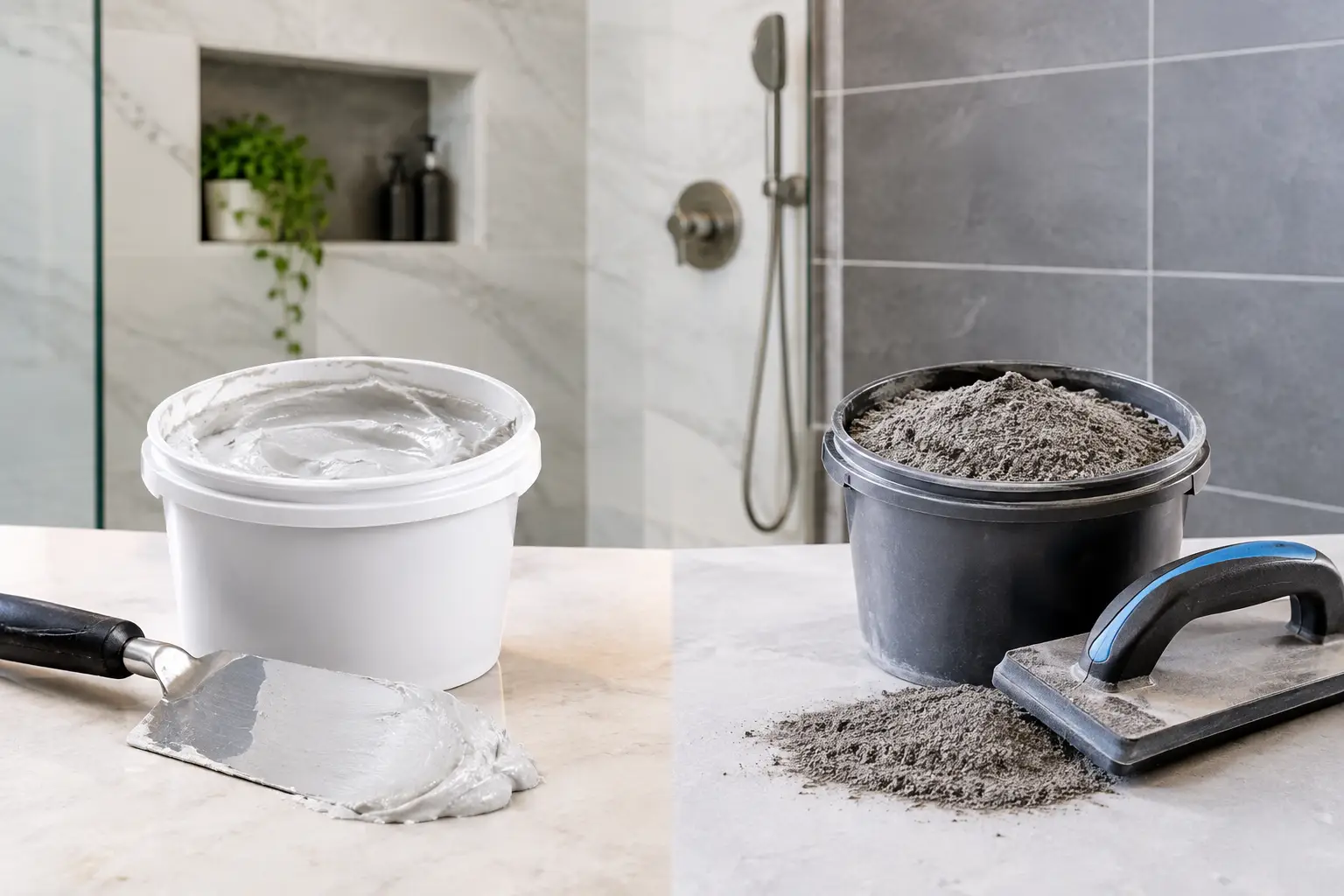
Epoxy versus cement grout: the practical difference
Cement grout is the traditional material found in most tiled bathrooms, laundries and balconies. It is made from cement, fine aggregate and colour pigments, then mixed with water before installation. Once cured, it creates the familiar textured finish between tiles.
Epoxy grout uses epoxy resins and fillers instead of cement. It is denser, less absorbent and more resistant to stains and household chemicals. These qualities make it appealing in wet areas, particularly where cleaning and ongoing maintenance have become a frustration.
The key difference is porosity. Cement grout has microscopic pores, so it can absorb moisture and collect soap residue, body oils and mould spores over time. Sealing can reduce this absorption, but sealers wear away and need periodic renewal. Epoxy grout is far less porous, which means it is generally easier to keep clean and less likely to stain.
That does not mean epoxy is automatically the best answer for every shower or balcony. A grout joint is not the same as a waterproof membrane. If water is entering through failed corners, around plumbing penetrations, behind loose tiles or through a compromised membrane, replacing grout alone may not solve the leak.
Cement grout: familiar, repairable and cost-conscious
Cement grout remains a practical choice for many tiled areas. It is widely used, comes in a broad range of colours and can be easier to apply and repair than epoxy. When a small section becomes damaged, cement grout can often be removed and renewed without extensive work to surrounding joints.
For a bathroom that is well ventilated, has sound silicone joints and does not have a current leak, quality cement grout can perform well when installed correctly. It also suits homeowners who prefer a more traditional tiled finish and are prepared to keep up with regular cleaning and sealing where needed.
Its limitation is maintenance. Cement grout can become discoloured, especially in shower floors and lower wall areas that stay wet for longer. Mould may return if the room has poor ventilation, if shower water is not being removed after use, or if soap and shampoo residue is left on the surface.
Cracking is another warning sign. A single hairline crack may be localised wear, but repeated cracking along the same line can indicate tile movement or a joint that should be flexible silicone rather than grout. Applying more cement grout over a moving joint usually leads to another crack.
Epoxy grout: low-absorption, but not a shortcut
Epoxy grout is often chosen for its stain resistance and dense finish. In a shower, it can reduce the amount of moisture and grime absorbed into grout joints. This makes it a useful option in areas exposed to frequent water, particularly for households wanting a lower-maintenance surface.
It also has a reputation for durability, but installation quality matters greatly. Epoxy products set differently from cement grout and must be mixed, applied and cleaned within specific working times. If excess material is not removed properly, it can leave a hard haze on tile faces. It is also more difficult to remove later, which can complicate local repairs or future tile replacement.
Cost is another consideration. Epoxy grout is generally more expensive than cement grout, both as a material and because of the additional skill required to apply it correctly. It may be worthwhile in a high-use shower or a tiled area where stain resistance is the main concern. It is less sensible if the real issue is a failed shower recess, deteriorated silicone or water already travelling behind the tiles.
Epoxy grout is not flexible. That matters around the perimeter of a shower floor, wall-to-floor junctions, vertical internal corners and changes in material. These areas need a properly applied flexible silicone joint to accommodate normal building movement. Filling them with either epoxy or cement grout can create a rigid bridge that cracks and lets water through.
What grout can and cannot do for a leaking shower
Grout helps finish and protect the visible tiled surface, but it should not be relied on as the primary waterproofing system. Water can pass through cement grout over time, which is why a correctly built shower depends on waterproofing behind the tiles as well as sound grout and silicone at the surface.
In an existing bathroom, failed grout and silicone can create an accessible entry point for water. Renewing these joints may stop a leak where the underlying waterproofing is still intact. This is often the reason targeted regrouting works without removing tiles.
However, no grout type can repair a damaged membrane, a plumbing leak or major structural movement. Signs that need proper assessment include water stains on the ceiling below, swollen skirting boards outside the bathroom, persistent damp smells, loose tiles, crumbling wall linings or leaks that continue after the shower has not been used.
A balcony needs the same careful approach. Cement grout on an exposed balcony can weather, crack and retain dirt, while epoxy grout can offer a denser finish. Yet balconies are subject to sun, rain, drainage and movement. Failed perimeter sealant, blocked outlets, cracked tiles or poor falls can all contribute to water damage. Choosing epoxy without addressing those factors can leave the actual cause untouched.
Choosing the right option for your tiled area
Start with the condition of the area rather than the product label. If grout is stained but firm, tiles are secure and silicone is intact, cleaning, sealing or selective cement grout renewal may be enough. If the goal is improved stain resistance in a sound shower, epoxy grout may be a good fit.
Where grout is missing, crumbling or cracked throughout the shower, a full grout replacement may be more appropriate. The existing material needs to be removed to a suitable depth so the new grout can bond properly. Simply applying a thin layer of new grout over old joints is not a durable repair.
If the cracks sit in corners or along wall-to-floor changes, the solution is usually silicone renewal, not more grout. Quality silicone should form a continuous flexible seal in these movement zones. It should also be mould-resistant and properly bonded to clean, dry surfaces.
For rental properties and strata-managed homes, the decision often comes down to certainty and disruption. A targeted repair can be far less disruptive than demolition, but it should be based on an inspection rather than an assumption. The visible grout may be the cause, or it may be pointing to a broader issue.
Protect the repair with the right maintenance
Even the best regrouting work benefits from sensible care. Keep the shower ventilated, use an exhaust fan during and after bathing, and wipe down wet surfaces where practical. Avoid harsh acidic cleaners on cement grout, as they can gradually erode the surface. Cleaning products should suit both the grout and tile type.
Check silicone joints regularly, especially at shower corners, around screens and at the base of tiled walls. Silicone that has shrunk, lifted, split or developed mould beneath its surface should be renewed before water reaches the edges of the tiled area.
For cement grout, consider whether resealing is appropriate after cleaning and drying. Sealers can help reduce absorption, but they are not permanent and should never be treated as a substitute for sound waterproofing. Epoxy grout requires less sealing maintenance, but it still needs routine cleaning and intact silicone around movement joints.
When a shower or balcony is showing signs of failure, the most useful next step is a clear diagnosis. Mr. Regrout provides free inspections and fixed quotes for Melbourne properties, helping owners address failed grout and silicone without removing tiles where a targeted repair is suitable. A 5-year waterproof warranty provides added confidence when the work is completed.
The best grout choice is the one that suits a sound repair plan, not the one with the strongest marketing claim. Address the water path first, use flexible silicone where movement occurs, and choose a grout that matches how the tiled area is used and maintained.