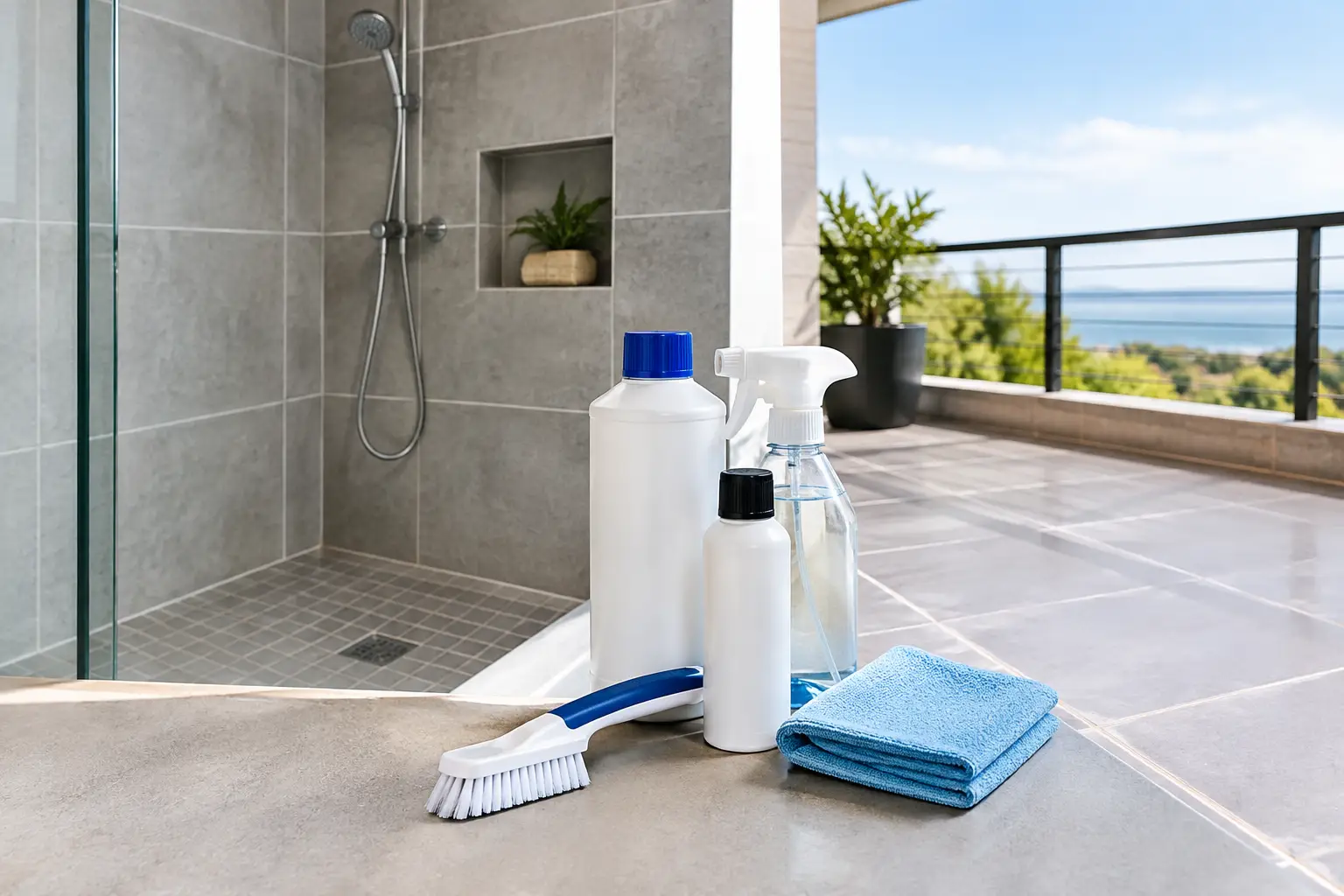
A shower can look clean and still allow water behind the tiles. The same is true of a balcony where grout appears intact from a distance but has become porous, cracked or loose at the joints. Understanding grout sealer options helps Melbourne property owners make a sensible decision early - before water reaches surrounding walls, ceilings, subfloors or neighbouring properties.
A sealer can be useful maintenance, but it is not a substitute for sound grout, flexible silicone joints and a working waterproofing system. The right option depends on the condition of the tiled area, how much moisture it receives and whether there are already signs of water ingress.
What grout sealer actually does
Grout is naturally porous, particularly traditional cement-based grout. In a bathroom or on an exposed balcony, those tiny pores can absorb water, soap residue, dirt and oils. Over time, this can lead to staining, mould growth and a surface that is harder to keep clean.
A grout sealer is applied over cured grout to reduce absorption. It helps moisture bead closer to the surface rather than soaking in, making regular cleaning easier and slowing down staining. On a balcony, it can also reduce the impact of rain and surface moisture on otherwise sound grout.
What it does not do is bridge cracks, reattach loose grout, replace missing sections or seal a failed wall-to-floor joint. It also cannot repair a damaged waterproof membrane behind the tiles. If water is already leaking through a shower recess or balcony, applying sealer over the top may hide the issue briefly while moisture continues to travel underneath.
Grout sealer options to consider
Not all sealers behave the same way. The most suitable product depends on whether the grout is internal or external, the tile type and whether the area is still in sound condition.
Penetrating or impregnating sealers
Penetrating sealers soak into the grout rather than forming a noticeable film on top. They are generally the practical choice for showers, bathroom floors and many tiled balconies because they maintain a natural finish and allow the grout to breathe.
These sealers are designed to resist water and common stains while keeping the grout’s appearance largely unchanged. They are less likely to peel than a surface coating, which matters in areas exposed to regular water, cleaning and foot traffic.
A penetrating sealer is best applied to clean, dry, fully cured grout. If mould, soap scum or old coating is still present, the sealer may not penetrate evenly. That can leave patchy protection and a finish that is difficult to assess.
Topical or surface sealers
Topical sealers sit on the grout surface and can create a visible sheen or darker, enhanced look. Some are chosen for decorative tiled areas where appearance is the priority and water exposure is limited.
For a frequently used shower or an exposed balcony, surface coatings need more caution. Constant moisture, cleaning products and movement can cause them to wear unevenly, cloud or peel. A glossy finish can also alter the appearance of the grout lines and may be unsuitable beside matte tiles.
There are situations where a topical product has a place, but it should not be treated as a waterproof coating for a leaking wet area. The performance of the tile assembly still depends on the grout, silicone joints, drainage and waterproofing beneath it.
Colour-enhancing sealers
Colour-enhancing sealers deepen the tone of grout and, in some cases, natural stone. They can give tired grout a richer, wet-look appearance while providing some stain and moisture resistance.
The trade-off is permanence of appearance. Once a colour enhancer is applied, the grout may look noticeably darker than expected, and achieving an even finish can be difficult where grout has aged differently across the surface. Always test a small, inconspicuous area first, especially with light-coloured grout or porous tiles.
Epoxy grout and epoxy coatings
Epoxy grout is often discussed alongside grout sealers, but it is a different solution. Unlike cement grout, epoxy grout is far less porous and usually does not need a separate sealer. It is durable and highly resistant to staining, which can make it attractive for showers and high-use areas.
However, epoxy grout is not a simple coating to apply over deteriorated joints. It requires careful preparation and installation, and it will not resolve movement or a failed silicone joint. If the underlying issue is water entering at corners, around fittings or through cracks, a harder grout alone will not stop it.
When sealing existing grout makes sense
Sealing is worthwhile when grout is in good condition: it is firmly bonded, free from cracks, properly cured and not showing signs of ongoing leakage. This might include a recently regrouted shower, a well-maintained bathroom floor or a balcony with sound joints that needs routine protection from weather and staining.
In these cases, a quality penetrating sealer can extend the clean, finished look of the grout and make maintenance more manageable. It should be part of normal care, along with ventilation in bathrooms, prompt cleaning of spills and avoiding harsh acidic cleaners that can damage cement-based grout.
The timing matters. New grout needs to cure before it is sealed, following the product and grout manufacturer’s directions. Sealing damp grout can trap moisture and reduce the sealer’s ability to work properly.
When a sealer is the wrong repair
If grout is crumbling, missing or cracked, the first task is to remove and replace the failed material. Sealer applied over damaged grout cannot restore its strength. Similarly, joints where tiled walls meet floors, baths, shower trays and benchtops should normally be protected with flexible sanitary silicone, not rigid grout.
Watch for warning signs such as mould returning quickly after cleaning, swollen skirting boards, peeling paint outside the bathroom, damp carpet near a shower wall, staining on a ceiling below, or water appearing at the base of a balcony. These symptoms can indicate that the issue has moved beyond surface maintenance.
Balconies need particular attention because they face rain, heat, UV exposure and building movement. A sealer may help protect sound grout, but cracked joints, poor falls, failed perimeter sealant or water damage below the tiled surface require a proper assessment. Treating a balcony leak as a weekend sealing job can allow more expensive structural damage to develop.
Grout sealer options are not all waterproofing options
This distinction is where many costly mistakes begin. A grout sealer repels or reduces absorption at the exposed grout line. Waterproofing is the protective layer installed behind tiles or beneath a tiled surface to direct water away from the building structure.
In a shower, the grout, silicone and tiles form the visible surface. They work with the waterproofing system, but they do not replace it. When grout and silicone have deteriorated, renewing them can stop water entering where it should not. When the membrane itself has failed, the repair approach needs to address that failure rather than relying on a surface product.
A specialist inspection can identify whether the problem is limited to failed grout and silicone or whether there are signs of a more serious waterproofing issue. That assessment is more valuable than selecting a sealer based solely on the label.
Choosing a practical repair path
Start with the condition of the joints, not the bottle on the shelf. Sound, clean grout may benefit from a penetrating sealer. Stained but stable grout may need thorough cleaning before sealing. Cracked, hollow or missing grout should be replaced, while failed silicone needs to be removed and renewed with the appropriate flexible sealant.
For a leaking shower or balcony, avoid repeated patching. A targeted regrouting and silicone renewal service can preserve existing tiles while addressing the joints most likely to allow water through. This is often far less disruptive than demolition, provided the assessment confirms that tile removal is not required.
Mr. Regrout provides free inspections and fixed quotes for Melbourne property owners who need clarity before committing to repairs. Where a suitable remedial repair is possible, the work is completed without removing tiles and supported by a 5-year waterproof warranty.
The best protection is not always the strongest-looking sealer. It is the repair that matches the actual condition of the shower or balcony, stops water at the right point and gives you confidence that the problem is not quietly spreading behind the tiles.