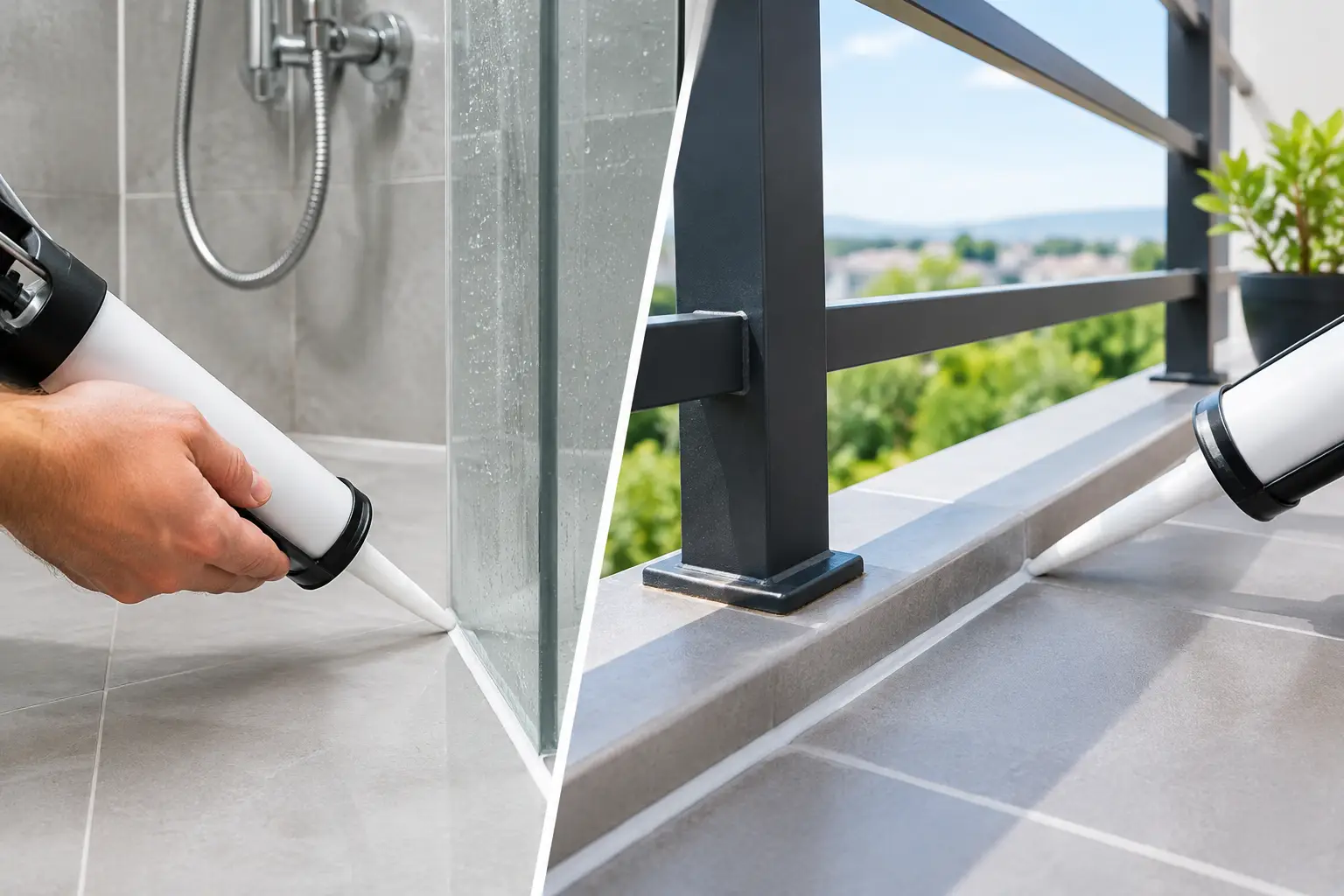
A clean silicone joint can make a shower or balcony look sound, even when it is no longer doing its job. For Melbourne property owners asking how long silicone lasts, the practical answer is usually around five to ten years - but high-use showers, poor ventilation, movement and incorrect installation can shorten that life considerably. Once silicone loses adhesion or splits at a joint, water can pass behind tiles and into areas that are far more expensive to repair.
Silicone is not a cosmetic finishing touch. In tiled wet areas, it forms a flexible seal where different surfaces meet: wall-to-floor corners, shower screens, baths, vanities, balcony edges and penetrations around fixtures. These are the places that move slightly over time. Grout is rigid, so silicone is needed to accommodate movement while helping keep water out.
How long silicone lasts in a shower or balcony
Most professionally applied sanitary-grade silicone should provide reliable service for five to ten years. That range is broad because the condition of a sealant joint depends much more on its environment than its age alone.
A family shower used several times a day is exposed to heat, steam, soaps, shampoos and regular cleaning. A poorly ventilated bathroom may keep silicone damp for long periods, encouraging mould and reducing its bond to the tile or shower base. By comparison, silicone in a well-ventilated ensuite with careful cleaning may remain flexible and watertight for many years.
Balcony silicone faces a different set of pressures. Melbourne weather brings strong UV exposure, rain, temperature changes and building movement. Joints around balcony perimeters, door thresholds and wall junctions can deteriorate faster when water ponds on tiles or drainage is poor. A balcony seal that looks acceptable from above may still have separated at the edge, allowing water to enter beneath the tiled surface.
The key point is this: silicone does not need to look completely missing before it becomes a problem. Even a narrow gap between the silicone and tile can provide a path for water.
What shortens the life of silicone?
The quality of the original preparation and application has a major effect on how long a silicone joint lasts. Silicone needs a clean, dry, stable surface to bond properly. Applying new silicone over old residue, soap build-up, moisture or loose grout often results in early failure.
Movement is another common cause. Buildings settle, shower bases flex slightly under load and balconies expand and contract with changing temperatures. Silicone is designed to move, but it has limits. If the joint was too thin, too shallow or bonded incorrectly, it may tear or pull away from one side.
Cleaning habits also matter. Abrasive scourers, strong bleach used repeatedly and harsh bathroom chemicals can damage the surface of the sealant. They can make silicone brittle or rough, which allows mould to take hold more easily. This does not mean a bathroom should be cleaned less often. It means using suitable products and rinsing residue away rather than relying on aggressive chemicals to hide an underlying issue.
Poor ventilation speeds up mould growth, particularly in showers. An exhaust fan that is not used, a window that remains closed and wet towels drying in a small bathroom all keep humidity high. Mould on its own is not always proof of a leak, but persistent mould that returns soon after cleaning can indicate that the silicone is failing or moisture is being retained behind the joint.
Signs your silicone needs renewal
A close inspection can reveal early failure before water damage becomes obvious. Look along every change-of-plane joint, not only the most visible shower corner. In a balcony, check junctions where tiles meet walls, balustrade bases, thresholds and drainage points.
Silicone should be renewed when it is cracked, split, lifting from the tile, shrinking away from the joint or becoming hard and brittle. Black mould that has penetrated the silicone and will not clean away is also a common reason for replacement. Discolouration alone may be cosmetic, but widespread staining often comes with surface deterioration.
In showers, other warning signs include loose or drummy tiles, damaged grout, a persistent musty smell, peeling paint on an adjoining wall or staining to the ceiling below. On balconies, watch for efflorescence, water marks below the slab, cracking around perimeter joints or dampness inside the room next to the balcony. These symptoms do not always come from silicone alone, but they justify a proper assessment of the whole tiled area.
For apartments and townhouses, acting early is especially important. Water entering through a balcony or shower can affect common property, neighbouring lots or the ceiling below. The visible gap may be small, while the repair scope behind it is not.
Silicone renewal is not simply applying a new bead
A lasting repair starts with removing all failed silicone. The joint then needs to be cleaned thoroughly, dried and checked for loose grout, cracked tiles or movement that may have contributed to the problem. If old silicone remains on the surface, new material may not bond correctly, regardless of how neat it looks on the day.
The correct silicone also matters. Wet-area and exterior joints need a suitable high-quality product for their exposure conditions. A shower requires mould-resistant sanitary silicone. A balcony may need a sealant with the flexibility and UV resistance required for an outdoor tiled area. Using a general-purpose product in the wrong location can lead to an early repeat repair.
The new silicone must be applied at the right depth and tooled into the joint so it adheres to both sides. The joint must then be left to cure before regular water exposure. Using a shower too soon can compromise the seal before it has properly set.
If grout is also cracked, missing or porous, silicone replacement by itself may not stop water ingress. Grout and silicone perform different jobs, but both need to be in sound condition. A targeted repair can include removing deteriorated grout, renewing flexible joints and addressing the weak points that are allowing water into the substrate - all without removing otherwise sound tiles.
Can you extend the life of shower silicone?
You cannot stop normal ageing, but regular care can help silicone reach its expected lifespan. Wipe down shower walls and joints after heavy use where practical, run the exhaust fan during and after showering, and keep the room ventilated. Clean with a non-abrasive bathroom cleaner rather than scraping or heavily scouring the joint.
Avoid applying fresh silicone over mouldy or lifting silicone as a temporary patch. Water may already be getting behind the existing joint, and the new layer is unlikely to bond properly. It can make the problem less visible while moisture continues to affect the wall, floor or shower base.
For balconies, keep drains clear and avoid allowing wet leaves, dirt or outdoor furniture to trap water against joints. Check the seal around door thresholds and perimeter edges after periods of heavy rain. These simple checks are particularly worthwhile before Melbourne's wetter months.
When to arrange a professional inspection
If a silicone joint is visibly lifting or cracking, it is sensible to have it renewed before the surrounding materials are affected. If there are signs of a leak, persistent mould, damaged grout or water staining, the issue needs more than a visual silicone replacement. The source of water ingress should be identified first.
A specialist inspection can determine whether failed silicone is the main issue or part of a wider shower or balcony waterproofing problem. This avoids paying for unnecessary demolition when the existing tiles can be retained and the failed joints and grout can be repaired directly.
For Melbourne homeowners, landlords and property managers, a free inspection and fixed quote provide clarity before work begins. Mr. Regrout assesses tiled showers and balconies with the aim of restoring the seal, retaining existing tiles where possible and providing a five-year waterproof warranty on eligible remedial work.
A small split in silicone is easy to postpone. Treat it as an early maintenance signal instead: renewing failed joints while the problem is contained is usually the simplest way to protect the rooms and property beneath them.