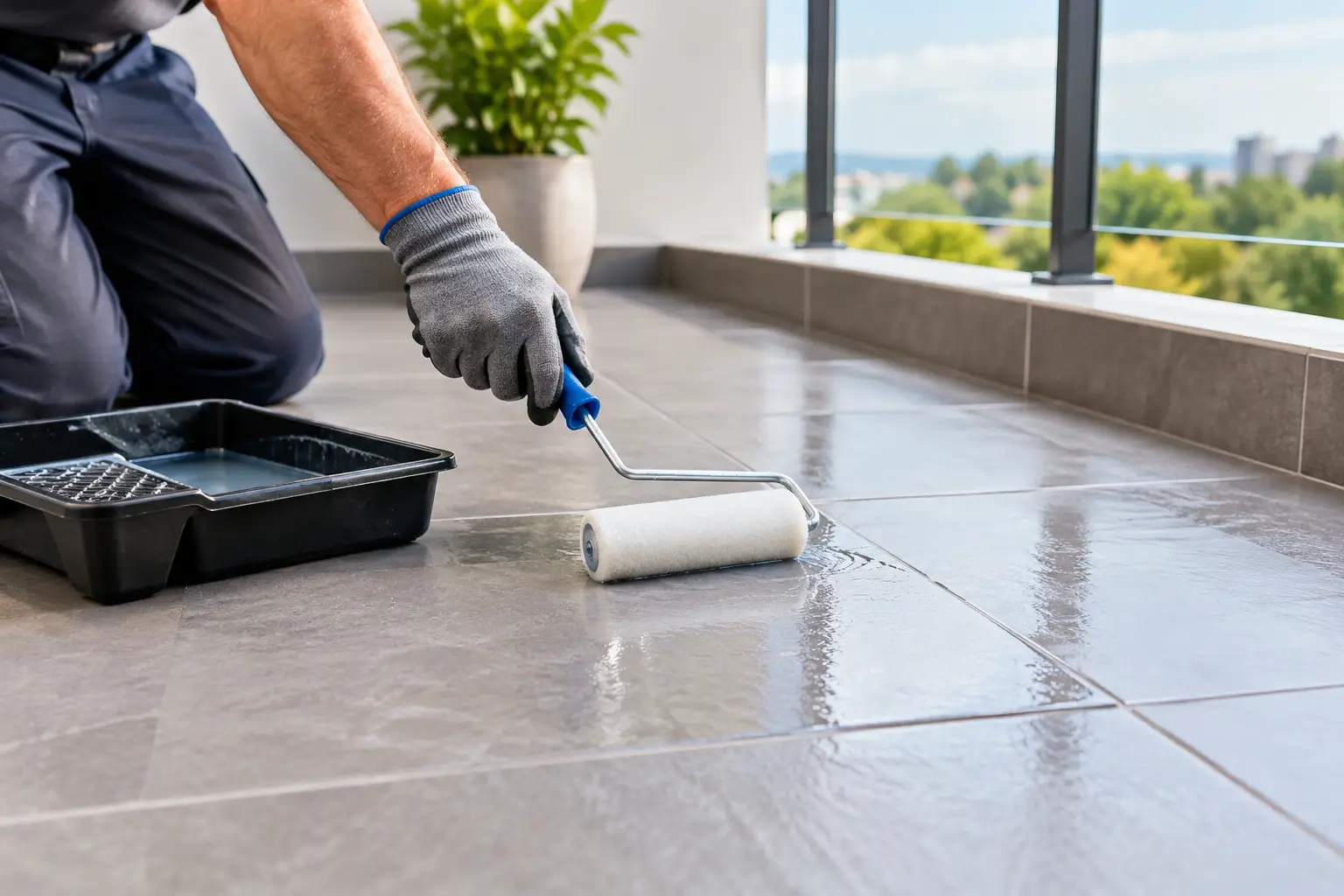
A balcony can look perfectly serviceable from above while water is quietly tracking through cracked grout, failed silicone or gaps at the wall junction. Knowing how to reseal balcony tiles can help you act before moisture damages the substrate, the room below or a neighbouring apartment.
The key point is that tiles and grout are not the waterproofing system on their own. A properly built balcony has waterproofing beneath the tiled surface, along with falls that direct water to the drain. Resealing can restore the surface protection and close common entry points, but it cannot correct a failed membrane, poor drainage or structural movement. The right repair depends on where the water is getting in.
Start by finding the real source of the leak
Do not apply a clear sealer over a dirty or damaged balcony and assume the problem is fixed. Surface sealers may reduce absorption for a time, but they do not bridge cracks, replace missing grout or repair failed joints. In some cases, they can make later repairs harder by trapping moisture or preventing new materials from bonding properly.
Inspect the balcony when it is dry, then again after rain or washing. Look closely at grout joints, tile edges, corners, door thresholds, drains and the joint where the balcony meets walls or balustrades. Signs that resealing work is needed include loose or powdery grout, hairline cracks, black mould around silicone, gaps at edges, white salt deposits and water staining on the ceiling below.
Pay attention to timing. If water only appears below after heavy rain, the issue may be on the balcony. If it happens when pots are watered or the surface is cleaned, check whether water is pooling around the drain, wall junctions or doorway. Persistent ponding is a drainage problem as well as a sealing concern.
For apartment owners, water damage can also affect common property. Check your strata requirements before work starts, particularly if the balcony membrane, drainage outlet or external building fabric may be involved.
When can balcony tiles be resealed?
Resealing is generally a practical option when the tiles are sound and well bonded, the damage is limited to grout and silicone joints, and there is no evidence that the waterproof membrane has failed. This approach keeps existing tiles in place, avoids demolition and targets the areas most likely to allow water ingress.
It is less suitable where tiles are drummy, loose or cracked across a wide area; where there are major cracks in the substrate; or where water is clearly entering beneath the tiles. A balcony with inadequate fall towards the drain may also continue to leak or hold water even after fresh grout and silicone are applied.
A specialist inspection is worthwhile if there is staining beneath the balcony, swollen timber, bubbling paint, recurring mould or a musty smell indoors. These signs suggest the repair needs to go beyond a surface treatment.
Prepare the balcony properly
Good preparation determines whether new grout and silicone last. Start by removing furniture, planters and loose debris. Sweep the balcony, then wash it using a suitable tile and grout cleaner. Avoid harsh acids or products that can damage natural stone, metal fittings or surrounding finishes.
The surface must be allowed to dry fully before repairs begin. Melbourne weather can make this the slow part of the job. After rain, moisture may remain in grout lines and beneath pots for longer than expected. Working on a damp surface can prevent silicone, grout or sealers from bonding as intended.
Before applying anything new, remove all loose, cracked or contaminated grout from affected joints. This is not a case of spreading fresh grout over damaged material. The failed sections need to be cut or raked out cleanly so the replacement grout has a stable edge to bond to.
Old silicone should also be completely removed from movement joints. These are usually found where the tiled floor meets the wall, around posts, at door thresholds and beside other fixed building elements. Grout is rigid. Silicone is flexible. Using grout in a movement joint often leads to cracking as the balcony expands, contracts and moves over time.
How to reseal balcony tiles step by step
Once the balcony is clean, dry and properly prepared, the repair sequence is straightforward in principle.
First, renew damaged grout joints with an exterior-appropriate grout that suits the tile type and joint width. Press the grout firmly into the prepared joints, clean excess material from tile faces and allow it to cure according to the manufacturer’s directions. Do not rush this stage by hosing down the balcony or exposing it to rain too soon.
Next, apply a quality exterior-grade silicone to all movement joints. The joint needs to be dry, clean and free from old silicone residue. Apply an even bead, tool it neatly and make sure it adheres to both sides of the joint. A thin smear over a gap will not provide a dependable seal.
After the grout has cured, a penetrating sealer may be applied where appropriate. This is most useful for porous grout and certain tile types because it helps reduce water absorption and staining. It is not always suitable for dense porcelain tiles, glazed ceramic tiles or some natural stones, so product selection matters. Test a small, inconspicuous area first and follow the drying and application instructions exactly.
Finally, keep the balcony dry and clear until all materials have cured. Cure times vary with the product, temperature and humidity. Putting furniture, mats and pot plants back too early can mark fresh silicone, trap moisture and create a weak point in the repair.
Do not overlook drains, edges and doorways
The most vulnerable balcony areas are often not in the middle of the floor. Water commonly enters at the perimeter, especially at the doorway, wall junctions and around drainage outlets.
Clear leaves, dirt and potting mix from drains regularly. A blocked drain can force water to pond against joints that were never designed for constant immersion. Check that planters are raised on feet rather than sitting directly on tiles, as trapped water can cause staining and keep grout damp.
The threshold at an external door needs particular care. If silicone has pulled away, grout has cracked or water is sitting against the frame, there is a risk of moisture entering the building. This is an area where a neat-looking DIY repair may not be enough, particularly if the internal floor or skirting boards show signs of swelling.
Common mistakes that lead to repeat leaks
The most common error is treating grout sealer as a waterproof membrane. It can help protect porous grout, but it cannot stop water travelling through a failed joint, crack or damaged substrate. Another mistake is applying new silicone over old silicone. The new bead may look tidy initially but can detach quickly.
Using indoor products outside is also a false economy. Balconies are exposed to sun, temperature changes and wet weather, so repair materials need to be suitable for exterior use. Colour-matched grout matters aesthetically, but flexibility, adhesion and water resistance matter more.
Avoid coating the entire tiled surface with a film-forming product unless it has been specifically selected for that tile and balcony condition. Some coatings can become slippery when wet, peel under UV exposure or alter the appearance of the tiles.
When to call a balcony repair specialist
If the balcony is leaking into the space below, has recurring cracked grout or silicone, or has visible signs of movement, a professional assessment can prevent a small repair from becoming a larger building issue. The aim should be to identify whether targeted regrouting and silicone renewal will solve the problem without removing tiles, rather than defaulting to a full retile.
For Melbourne property owners, Mr. Regrout provides free inspections and fixed quotes for balcony regrouting and sealing repairs, with a 5-year waterproof warranty on eligible work. This gives you a clear view of the cause, the repair scope and whether your existing tiles can be retained.
A dry, well-maintained balcony protects more than its finish. Address failed grout and silicone early, keep drains clear, and seek advice promptly when water shows up where it should not.