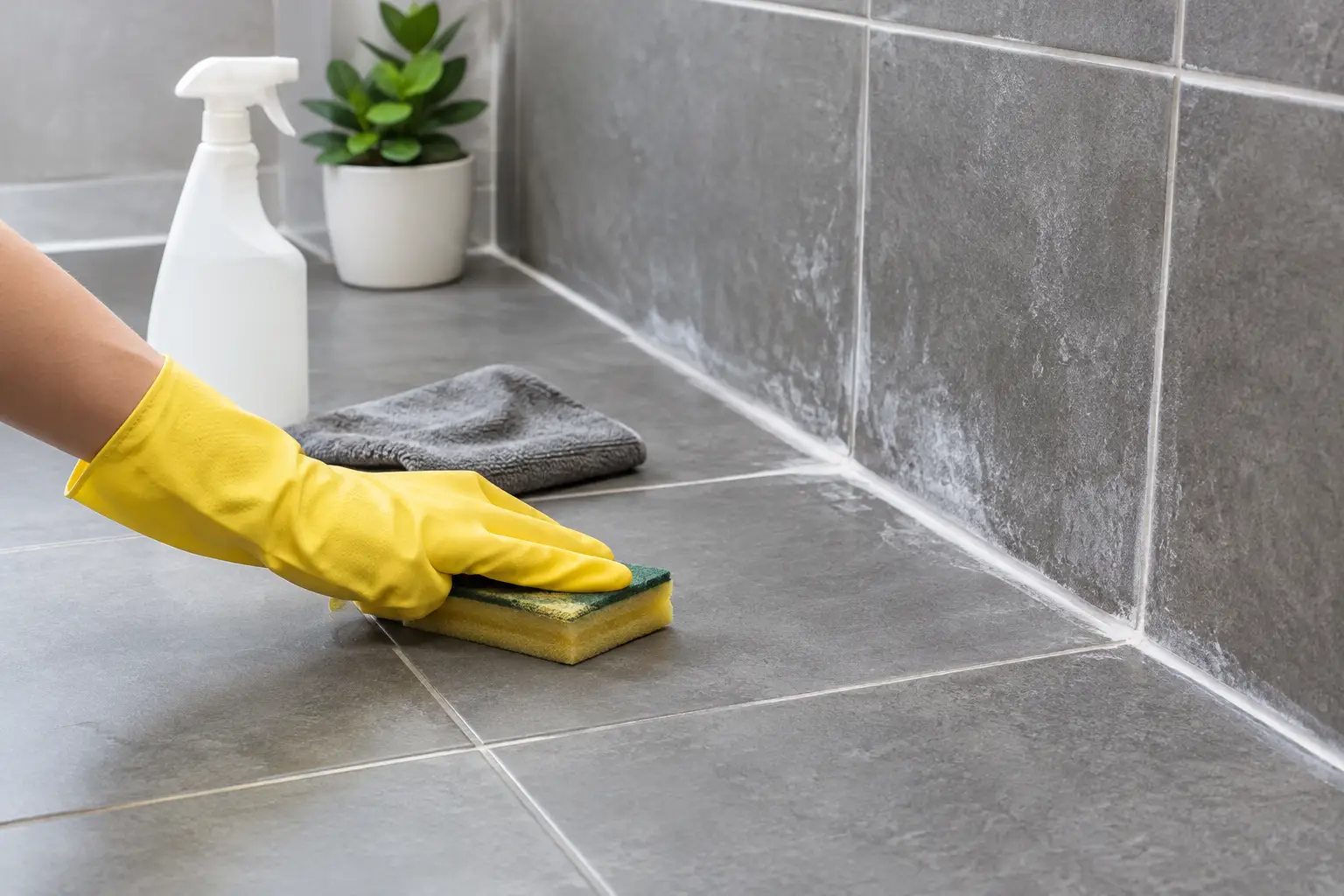
A white, chalky deposit appearing across shower tiles, balcony grout or along tile edges is more than a cleaning nuisance. Knowing how to stop tile efflorescence means finding out where water is getting in, because the white residue is usually evidence of moisture travelling through the tiled surface or the materials behind it.
Efflorescence can be wiped away, but it will often return if the source of water remains. In a shower, that may be cracked grout or failed silicone around corners and fittings. On a balcony, it may be rainwater entering through open joints, deteriorated grout, poor drainage or a problem with the waterproofing below the tiles. The right repair protects the area before a cosmetic issue becomes damage to walls, ceilings, subfloors or neighbouring properties.
How to stop tile efflorescence starts with the moisture source
Efflorescence is made up of salts. Water dissolves naturally occurring salts in concrete, cement-based grout, screeds or masonry, then carries them towards the tile surface. When that water evaporates, the salts are left behind as a white powder, crust or streak.
The tiles are not necessarily at fault. In fact, most ceramic and porcelain tiles are relatively non-porous. The issue is usually water finding a route through grout joints, movement joints, cracks, unsealed edges or failed silicone. That distinction matters. Replacing sound tiles or repeatedly applying a cleaner will not stop the problem if moisture can still enter behind them.
In Melbourne, balconies are particularly exposed to changing weather, wind-driven rain and slow-drying winter conditions. A shower has a different water source, but the principle is the same: water needs to drain into the waste, not soak through deteriorated joints and sit behind the tiled finish.
First, confirm that it is efflorescence
Efflorescence is generally dry, white and powdery or crystalline. It may appear on grout lines, tile faces, the lower section of a tiled wall, balcony perimeters or near cracks. It can sometimes look like a pale haze after the surface dries.
It is different from mould, which is more likely to be black, green, pink or dark grey and tends to develop where moisture and poor ventilation combine. It is also different from soap scum, which is often waxy and concentrated in shower spray areas. These problems can occur together, so a shower with efflorescence may also have mould staining in silicone joints.
If the deposit keeps returning after cleaning, if grout is cracking or falling away, or if there are signs of dampness on the other side of a wall or below a balcony, treat it as a water-ingress issue rather than a surface-cleaning job.
Clean the salts carefully, but do not mistake cleaning for repair
Once the area is dry, loose efflorescence can often be removed with a dry nylon brush or vacuumed up. A mild, tile-safe cleaner may help with remaining residue. Avoid aggressive scraping that damages grout, and be cautious with acidic cleaners.
Acid-based products can etch natural stone, affect some glazed finishes and weaken cement-based grout if used repeatedly. They may also create a cleaner-looking surface while leaving the water pathway untouched. For natural stone, terrazzo or older tiles where the finish is uncertain, professional advice is the safer option.
Allowing the surface to dry is useful because it helps show where the salts are returning. However, drying alone does not solve a leaking shower or balcony. The moisture will simply reappear when the area is used again or when the next heavy rain arrives.
Check grout, silicone and movement joints
Grout and silicone have different jobs. Grout fills the gaps between tiles, while flexible silicone seals areas where movement is expected, including wall-to-floor junctions, internal shower corners and around fixtures. Both need to be in sound condition to reduce water entry.
Look closely for grout that has cracked, become soft, worn down, changed colour in isolated patches or pulled away from tile edges. In a shower, pay special attention to the lower wall tiles, shower floor, corners, around the hob and where the screen meets the wall. On a balcony, inspect the edges, door thresholds, balustrade connections and any sections where water ponds after rain.
Silicone should be flexible, well-adhered and free from gaps. If it is split, lifting, mould-stained beyond cleaning or missing altogether, water can get behind the tiles at one of the most vulnerable parts of the area. Applying new silicone over failed material is rarely reliable. The old silicone needs to be removed properly and the joint prepared before renewal.
Repair the entry points without removing sound tiles
Where tiles are firmly bonded and the underlying waterproofing has not suffered major failure, targeted repair can be an effective way to stop further moisture entry without the cost and disruption of a full renovation. This typically involves removing failing grout, renewing grout joints, replacing deteriorated silicone and sealing the vulnerable junctions correctly.
The trade-off is that regrouting is not a cure for every situation. If tiles are loose, the substrate is water-damaged, a balcony has inadequate falls, or there is a major membrane failure, more extensive rectification may be needed. A proper assessment should identify whether the tiled surface can be restored or whether the issue sits deeper beneath it.
For showers, water testing and inspection of grout, silicone and surrounding walls can help narrow down the source. For balconies, the inspection should also consider drainage, pooling water, outlets, perimeter details and evidence of moisture below the slab. Guessing can lead to unnecessary work, while a targeted diagnosis keeps the repair focused.
Keep water moving in the right direction
Stopping efflorescence is not only about sealing joints. Water needs a practical path away from the tiled area. In a shower, the floor should drain freely to the waste and the screen or door should contain spray. A blocked waste, persistent pooling or water escaping beyond the shower area puts extra pressure on grout, silicone and waterproofing.
On a balcony, clear leaves, soil and debris from drains and outlets regularly. Check after rain to see whether water remains in the same locations for hours or days. Persistent ponding can increase the chance of water working into small defects. Planters and outdoor furniture can also trap moisture against the surface, particularly around corners and walls.
If you notice efflorescence concentrated near one edge, doorway or drain, that pattern can be useful. It may point to the location where water is entering or where it is unable to escape.
Do not seal over an active moisture problem
A penetrating sealer can provide stain resistance or help reduce absorption in suitable grout and porous tile surfaces, but it is not a substitute for repairing failed joints or waterproofing. Sealing over damp grout can trap moisture and make diagnosis harder. It can also give a false sense of security while water continues travelling behind the tiles.
The surface should be repaired, cleaned and allowed to dry before any appropriate sealer is considered. Even then, product selection depends on the tile type, grout condition and location. A shower floor, natural stone balcony and glazed wall tile do not all need the same treatment.
When to arrange a professional inspection
A recurring white deposit is worth investigating when it comes with deteriorated grout, splitting silicone, mould, loose tiles, water stains, peeling paint or damp smells. The same applies if a balcony sits above another room, garage or neighbouring apartment. Water damage in these areas can spread beyond the visible tiled surface.
For Melbourne homeowners and property managers, a specialist assessment can often determine whether renewing grout and silicone will address the problem without removing tiles. Mr. Regrout provides free inspections and fixed quotes for suitable shower and balcony repairs, with a 5-year waterproof warranty on completed remedial work.
The sooner the moisture route is identified, the more likely it is that the existing tiled finish can be retained. A small white bloom may be the first visible warning - dealing with it properly can keep a manageable repair from becoming a disruptive renovation.