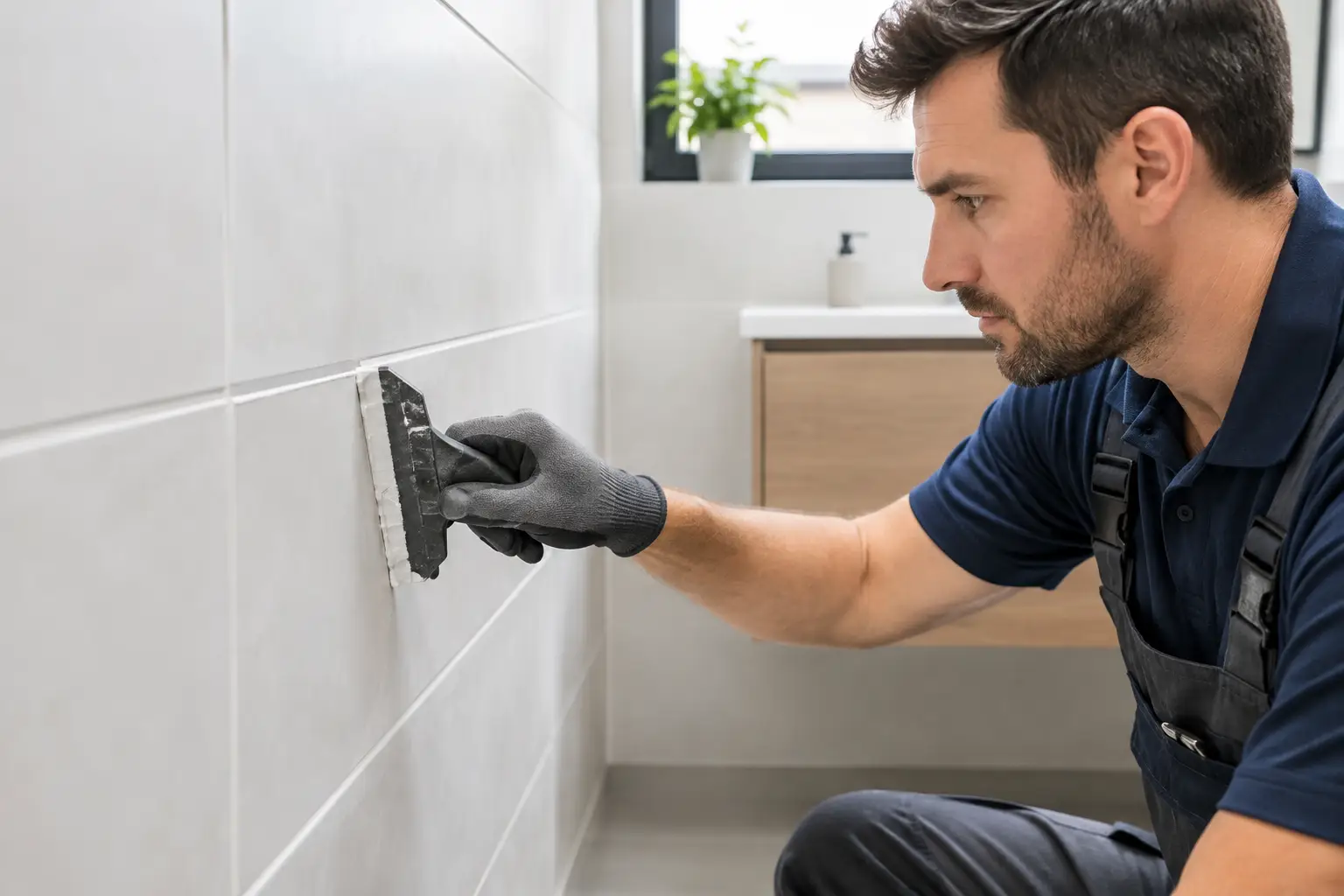
A shower can look clean again the day it is regrouted, but the question homeowners should ask is: is regrouting permanent? Not in the sense that it will never need attention again. However, when deteriorated grout and failed silicone are the source of water entry, professional regrouting can provide a long-lasting repair that protects the area without removing otherwise sound tiles.
For Melbourne property owners, that distinction matters. Water escaping from a shower recess or balcony does not stay neatly behind the tiles. It can affect wall linings, flooring, ceilings below, adjoining apartments and timber framing. The right repair is not simply about making grout look new. It is about identifying where water is getting through, renewing the failed components and restoring a properly sealed tiled surface.
Is regrouting permanent in a shower or balcony?
Regrouting is best described as a durable remedial repair, rather than a permanent, maintenance-free solution. Grout, silicone and tiled surfaces are exposed to moisture, cleaning products, movement and regular wear. Over time, any of these materials can deteriorate.
A correctly completed regrouting job should last for years, particularly where the tiles are stable and the existing waterproofing system remains functional. Its lifespan depends on the condition of the area before work begins, the quality of preparation, the materials used and how the shower or balcony is maintained afterwards.
The word “permanent” can also be misleading because grout is only one part of the system. Cement-based grout fills and supports the spaces between tiles, but it is not the main waterproof barrier behind them. Silicone seals the movement joints where walls meet floors, around shower screens and along other changes of direction. The waterproof membrane below the tiles is the final line of defence.
If the membrane has failed extensively, or the tiles and substrate are moving, regrouting alone may not resolve the leak. That is why a proper assessment comes before any promise of a lasting repair.
When regrouting is likely to provide a lasting result
Regrouting is often an effective tile-preserving repair when water ingress is caused by worn, porous, cracked or missing grout, together with old silicone that has separated or gone mouldy. These are common problems in established Melbourne homes, rental properties and apartment bathrooms.
In a shower, repeated wetting and drying can cause grout to break down. Soap residue and harsh cleaning can make the surface harder to keep clean, while small cracks provide pathways for moisture. Silicone is especially vulnerable at corners and wall-to-floor joints because these areas move slightly as the building settles and materials expand or contract.
On balconies, the conditions are tougher again. UV exposure, rain, temperature changes and building movement all place pressure on grout and sealant. A balcony with cracked joints, loose silicone around the perimeter or open gaps near doors may allow water to travel below the tiled surface.
Where tiles remain well bonded and there is no evidence of major membrane failure, removing failed grout, renewing silicone joints and sealing the surface can stop the source of water entry without the cost and disruption of demolition. This approach retains the existing tiles and avoids turning a targeted repair into a full renovation.
The condition of the tiles still matters
Sound tiles are essential to a successful regrouting repair. If tiles are drummy, loose, cracked through the body of the tile or lifting from the substrate, the issue may be more than deteriorated grout. Likewise, recurring leaks despite previous repairs can indicate a deeper fault that needs further investigation.
An experienced specialist should assess the whole wet area, not just the most visible crack. The source of a leak is not always directly above the damage it causes. Water can travel beneath tiles or through surrounding building materials before showing up as staining, swelling or mould elsewhere.
Why some regrouting jobs fail early
A poor regrouting job can look acceptable at first and still fail within a short period. The common issue is inadequate preparation. Applying fresh grout over old, loose or contaminated material does not create a reliable repair. The failed grout needs to be properly removed so the new material can bond within a clean joint.
Silicone requires the same care. New sealant placed over old silicone, soap residue or moisture may not adhere correctly. It can pull away at the edges, leaving the joint open again. Corners, floor junctions and shower screen edges should be treated as flexible movement joints, not filled with rigid grout.
There is also a practical difference between a cosmetic refresh and remedial work. A cosmetic job may brighten the appearance of tiled areas, but it does not necessarily address water paths, perimeter joints or the condition of sealant around fixtures. For a leaking shower or balcony, the aim must be to restore the waterproof integrity of the tiled surface, not just improve its finish.
Regrouting versus a full renovation
Homeowners are sometimes told that a leaking shower automatically requires tiles to be removed and the bathroom rebuilt. In some cases, particularly where the membrane or substrate has failed, that may be necessary. But it should not be the default recommendation when the problem is localised grout and silicone failure.
Professional regrouting offers clear advantages when it is suitable. It is generally less disruptive, creates far less waste and allows you to retain tiles that are still in good condition. It can also be completed more quickly than a renovation, which is valuable for occupied homes, investment properties and apartments where access and noise are concerns.
The trade-off is that regrouting is not a cure for every underlying building defect. A reputable repairer should be clear about the likely cause of the leak and whether the tiled area is a suitable candidate for tile-preserving work. An honest diagnosis protects you from paying for a repair that cannot reasonably deliver the result you need.
How to help newly regrouted areas last longer
Once grout and silicone have been renewed, simple maintenance helps preserve the result. In a shower, use an exhaust fan during and after bathing, wipe down excess water where practical and avoid aggressive acidic cleaners that can wear away grout or affect sealants. Check corners and shower screen edges occasionally for gaps, lifting or discolouration.
For balconies, keep drains and weep holes clear so water can leave the area as intended. Avoid allowing pot plants, outdoor furniture or leaf litter to trap water against perimeter joints. If you see cracking, crumbling grout or sealant pulling away from the wall or doorway, arrange an inspection before the next period of heavy rain.
Maintenance is not about constantly worrying over the surface. It is about acting while a small joint failure is still a targeted repair, rather than waiting until moisture affects the room or structure around it.
What a professional regrouting assessment should cover
Before proceeding, the inspection should consider the grout condition, silicone joints, tile stability, drainage and visible signs of water damage. In a shower, that may include the floor-to-wall junctions, hob, shower screen and penetrations around taps. For a balcony, attention should extend to perimeter joints, door thresholds, drainage points and cracks around the tiled area.
You should also receive a clear explanation of the recommended scope. Fixed quotes are useful because they make it easier to understand what is being repaired and avoid surprise costs once work has started. For work intended to stop water ingress, a written waterproof warranty provides further confidence that the contractor stands behind the repair.
Mr. Regrout provides free inspections, fixed-price quotes and a 5-year waterproof warranty for suitable shower and balcony repairs across metropolitan Melbourne. That gives property owners a practical alternative to unnecessary tile removal where the existing tiled surface can be restored.
If your grout is cracking, silicone is peeling away or water damage is beginning to appear nearby, do not wait for the problem to become a renovation. A prompt inspection can determine whether regrouting is the durable, low-disruption repair your property needs.