A bathroom leak rarely starts with water pouring through the ceiling. More often, it begins as a hairline crack in grout, a lifting silicone joint or a patch of mould returning at the shower edge. This landlord guide bathroom leak prevention advice is designed to help Melbourne property owners act while repairs are targeted, affordable and far less disruptive than a renovation.
For landlords and property managers, a leaking shower is not simply a maintenance item to revisit at the next vacancy. Water can travel behind tiles, into wall framing, through flooring and into the apartment below before the visible signs become obvious. Early checks protect the property, reduce tenant disruption and help avoid an urgent insurance or strata issue later.
Why bathroom leaks become expensive
Tiles are not the waterproof layer in a shower. Grout is porous to a degree, and its purpose is to fill and finish the joints between tiles. The waterproofing system sits behind the tiled surface. When grout breaks down, silicone fails at movement joints or water finds a gap around a fitting, repeated moisture exposure can compromise the area behind the tiles.
That is why a bathroom can look generally presentable while still leaking. A few missing grout sections, cracking at the shower floor-to-wall junction or blackened silicone are easy to dismiss. Yet these are often the points where shower water is being directed into places it should never reach.
The cost can grow quickly if moisture affects plaster, skirting boards, timber flooring, ceilings or a neighbouring lot. In an occupied rental, there is also the practical cost of arranging access, drying affected areas and resolving a problem that has become more disruptive than it needed to be.
What to check at routine inspections
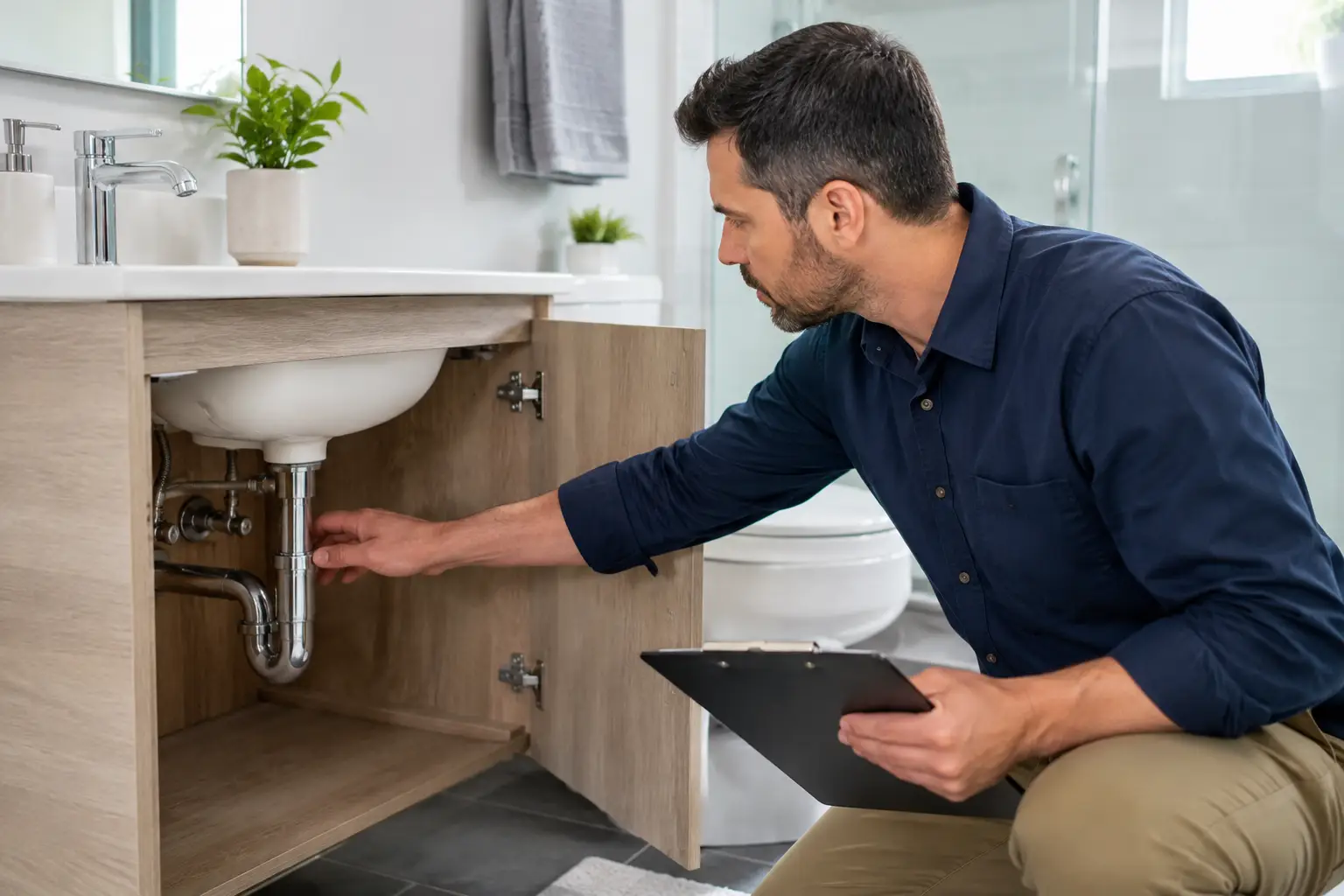
A routine inspection is an opportunity to look beyond the obvious cleanliness of the bathroom. You are not trying to diagnose every defect on the spot. You are looking for change: cracked joints, persistent mould, loose tiles, stains and signs that water is escaping the shower area.
Pay particular attention to the shower floor, the wall-to-floor junctions and the vertical corners. These areas move slightly over time and rely on flexible silicone, not rigid grout, to remain sealed. Silicone that has split, peeled away or developed mould beneath its edge should be treated as a maintenance issue, not a cosmetic one.
Look at the grout lines around the shower screen, soap recesses and taps as well. Missing or powdery grout can create a route for water behind tiles. If tiles sound hollow, feel loose or have cracked, arrange an assessment promptly. The cause may be water ingress, movement in the substrate or both.
Outside the shower, check for swollen architraves, bubbling paint, discoloured walls and damp smells. In a ground-floor bathroom, inspect adjoining rooms and nearby flooring. In an apartment, ask whether the occupant below has reported ceiling marks or drips. These clues do not always identify the source, but they indicate the matter should not wait.
Listen to tenant reports early
Tenants are usually the first people to notice a bathroom behaving differently. A musty smell, mould that reappears soon after cleaning, water pooling outside the shower screen or a soft patch near a wall should be reported and assessed early.
Clear communication makes this easier. Ask tenants to report water stains, loose tiles, cracked grout, failed silicone and shower-screen leaks as soon as they see them. A simple photo taken when the issue first appears can also help establish whether the condition is changing.
Not every report means the shower waterproofing has failed. Condensation, poor ventilation and an overflowing shower screen can also cause moisture problems. But it is better to investigate the source than assume regular cleaning or extra ventilation will solve it.
The practical landlord guide to bathroom leak prevention
Preventing bathroom leaks is largely about keeping water contained and maintaining the vulnerable joints before deterioration becomes widespread. For most established properties, the priorities are straightforward: sound grout, intact silicone, a functioning shower screen and good ventilation.
Renew failed silicone before water gets behind it
Silicone seals the corners and movement joints where tiled surfaces meet. It is flexible by design, which allows it to cope with minor movement that grout cannot. Once silicone has separated from the tile, hardened, cracked or become mould-affected, water can work behind it with every shower.
Replacing failed silicone is a small job compared with repairing water-damaged linings or flooring. It should be removed and renewed properly rather than patched over. Applying fresh silicone over loose, mouldy or deteriorated material may improve appearance briefly, but it will not create a reliable seal.
Keep grout in good condition
Grout should be checked for cracks, gaps, crumbling sections and persistent staining. A local repair may be suitable where deterioration is limited. When grout is worn across the shower or has been repeatedly patched, complete grout replacement can provide a more consistent finish and better protection.
Avoid assuming that a grout sealer alone will fix a shower that is already leaking. Sealers can assist with maintenance in suitable situations, but they cannot bridge failed joints, replace silicone or repair damage behind tiles. The right approach depends on the condition of the tiled surface and where water is entering.
Make sure water stays inside the shower
A shower screen with worn seals, poor alignment or a damaged door sweep can allow water to spill onto the bathroom floor at every use. Check that doors close correctly and that water drains towards the shower waste rather than pooling at the entry.
The shower base should also drain freely. Slow drainage may be a plumbing issue, a blockage or a fall problem. If water regularly sits against corners and joints, those areas experience more exposure and are more likely to deteriorate. Address drainage concerns early rather than treating them as a tenant housekeeping issue.
Manage moisture, but do not confuse it with leak prevention
An exhaust fan and adequate ventilation reduce condensation, mould and moisture build-up. They are worthwhile in every rental bathroom, particularly where there is no opening window. However, ventilation does not stop water entering through failed silicone, damaged grout or a leaking shower screen.
Encourage tenants to use the exhaust fan during and after showers, and to report mould that returns despite normal cleaning. Recurring mould in the same corner can be a surface ventilation issue, but it can also point to trapped moisture behind a failed joint.
When a tile-preserving repair may be the right option
Many landlords assume a leaking tiled shower automatically means demolition and retiling. That is sometimes necessary, particularly where the waterproof membrane has failed extensively, tiles are unstable or underlying damage is significant. But it is not the only answer in every case.
Where the tiled surface is otherwise sound, targeted regrouting and silicone renewal may address the pathways allowing water ingress without removing existing tiles. This approach can reduce cost, mess and downtime for the tenant while retaining a bathroom that still has years of useful life.
A proper assessment matters because the visible defect is not always the full cause. For example, cracked grout may be the main issue, or it may be a symptom of movement, poor drainage or a shower screen allowing water outside the wet area. A specialist should identify the likely entry point before recommending work.
For Melbourne landlords, Mr. Regrout provides free inspections and fixed quotes for leaking shower repairs, grout replacement and silicone renewal. The work is designed to restore tiled wet areas without unnecessary tile removal, with a 5-year waterproof warranty on eligible repair work. That clarity can be particularly useful when coordinating a repair around a tenancy or preparing a property for lease.
Plan repairs around the tenancy
The best time to repair a known bathroom issue is before it becomes an emergency, not necessarily only when the property is vacant. Targeted grout and silicone work generally causes far less disruption than demolition, but the bathroom may need to remain dry for a specified curing period after repairs. Set expectations with the tenant before work is booked.
Give proper notice, confirm access arrangements and explain what the resident needs to do before and after the visit. If one bathroom serves the household, timing matters. A planned repair on a suitable day is easier for everyone than arranging urgent access after water has reached the ceiling below.
Keep photographs, inspection notes, invoices and any warranty documents with the property records. This creates a useful maintenance history, helps with future decisions and demonstrates that reported issues were addressed in a timely way.
A well-maintained shower does more than look clean at an inspection. It keeps water where it belongs, protects the rooms around it and gives tenants confidence that small problems will be dealt with before they become costly ones.