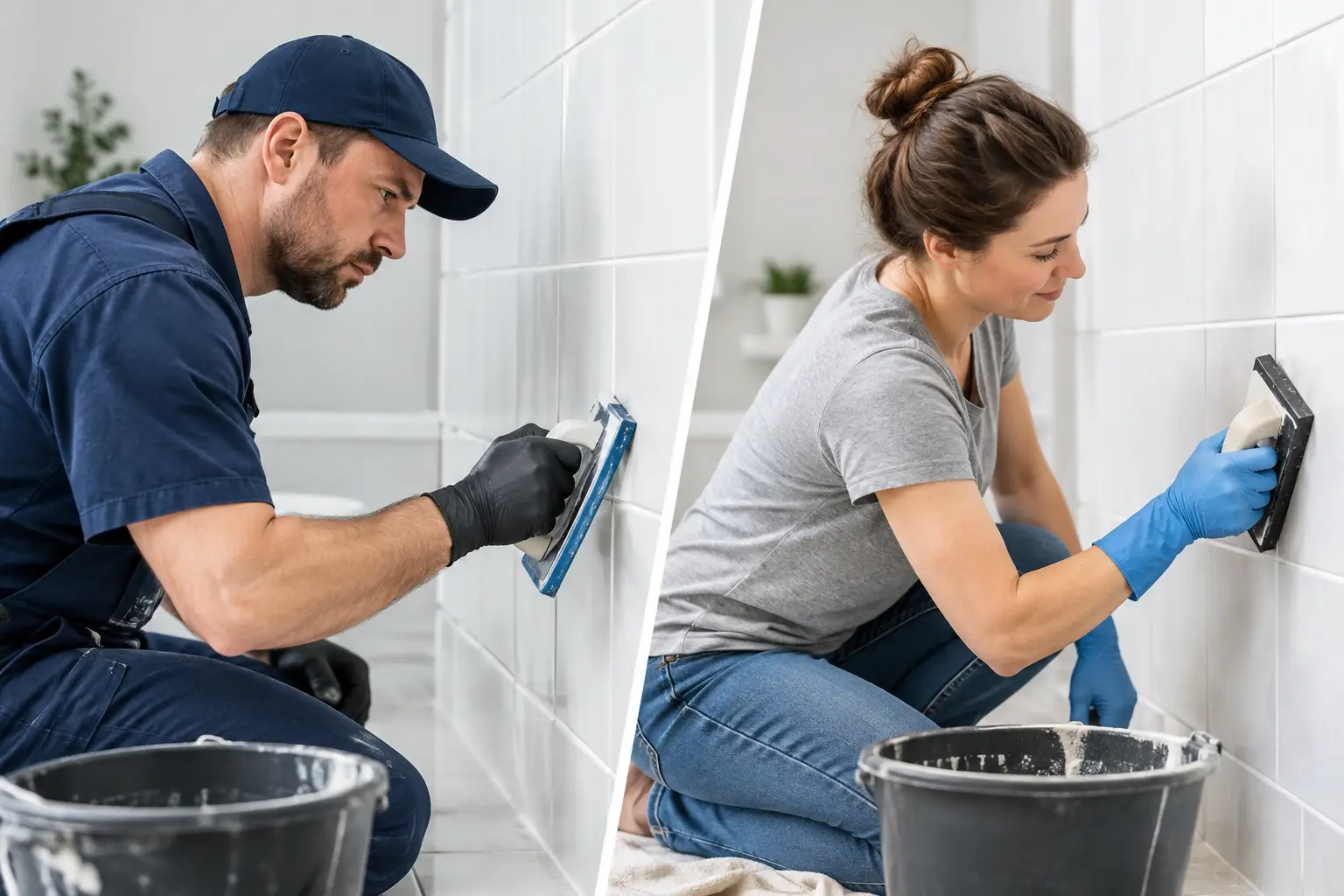
A shower can look tired long before it looks like a leak risk. Darkened grout, cracked corners and mould around the silicone often seem cosmetic, but they can allow water to move behind tiles and into surrounding walls or floors. When weighing up professional versus DIY regrouting, the real question is not simply who can scrape out and replace grout. It is whether the work will stop water ingress, protect the existing waterproofing and last.
For a small surface refresh, a careful DIY job can have a place. For a shower or balcony showing signs of leakage, however, the source of the problem needs to be properly assessed before any new grout goes in. Covering a failed joint can make an area look better while water continues travelling where it should not.
What Professional Versus DIY Regrouting Really Involves
DIY regrouting usually means removing loose or stained grout from tile joints, cleaning the area and applying new grout from a hardware store. Some homeowners also apply a grout sealer afterwards. Done carefully on a dry, sound tiled surface, this can improve the finish and address minor wear.
Professional regrouting is a repair process rather than a cosmetic tidy-up. It starts with identifying whether failed grout, deteriorated silicone, movement in the tiled surface, blocked drainage or a deeper waterproofing issue is allowing water through. The old material must be removed to an appropriate depth, joints prepared properly, grout renewed, and all movement joints sealed with the right flexible silicone.
That distinction matters in showers and balconies. Cement-based grout is not the waterproof barrier on its own. It helps protect and finish tile joints, but corners, wall-to-floor junctions, shower screens, drains and balcony perimeters depend heavily on sound flexible joints and the waterproofing system beneath the tiles.
When DIY Regrouting Can Be a Reasonable Option
A DIY approach can be sensible when the issue is limited, the area is dry and there is no evidence of water damage. For example, a few chipped grout lines on a splashback, laundry wall or low-exposure tiled area may only need careful local repairs. A homeowner who has the time, steady hand and patience to prepare joints correctly can achieve a neat cosmetic result.
It may also suit a recently tiled area where a small section of grout has cracked because it was poorly finished, provided the surrounding silicone is intact and no moisture is getting behind the tiles. The key is being realistic about the scope. Regrouting a handful of joints is very different from restoring a leaking shower recess or a balcony exposed to Melbourne rain.
DIY work becomes less suitable when grout is crumbling across a large area, silicone is blackened or lifting, tiles sound hollow, paint is peeling on an adjoining wall, or a downstairs ceiling shows staining. Those signs suggest the problem may be beyond what a new surface layer can solve.
Where DIY Regrouting Often Goes Wrong
The most common problem is incomplete removal. Applying new grout over old, loose or contaminated grout may fill the joint briefly, but it does not create a durable repair. Old material, soap residue, mould and moisture can prevent proper bonding, leaving the replacement grout vulnerable to early cracking or discolouration.
Corners are another frequent weak point. A shower wall meeting a shower base, two tiled walls meeting, or tiles joining a balcony edge are movement joints. They should generally be finished with flexible sanitary-grade silicone, not rigid grout. Houses move slightly with temperature, settlement and everyday use. Rigid material in these junctions can crack and reopen a path for water.
Preparation is also harder than it appears. Removing grout too aggressively can chip tile edges or damage adjacent surfaces. Removing too little leaves an inadequate joint for the new material to bond within. Dust must be cleared, joints must be dry, and the selected products need to suit wet-area use. If a shower is put back into service before materials have cured, the repair can fail early.
There is also the diagnosis issue. Water does not always enter at the most obvious crack. A leaking shower may have failed silicone around a screen, a compromised drain connection, gaps at the base of tiles or water escaping beyond the shower area. On balconies, poor falls, damaged perimeter seals and worn joints can all contribute. Regrouting the visible section without finding the entry point can delay the proper repair while moisture continues causing damage.
What a Specialist Regrouting Repair Should Cover
A professional assessment should focus on the whole wet area, not just the grout colour. The aim is to identify where water is likely entering and whether a tile-preserving repair is appropriate. In many cases, failed grout and silicone can be renewed without removing existing tiles, avoiding the cost, mess and disruption of demolition.
The repair should include thorough removal of failed grout where required, cleaning and preparation of the joints, replacement with suitable grout, and renewal of deteriorated silicone at corners, junctions and around relevant fittings. The finish should be neat, but appearance is secondary to restoring the area’s ability to manage water properly.
For Melbourne property owners, accountability matters as much as the repair method. A specialist should explain the condition found, the scope of work proposed and what the repair is designed to address. Mr. Regrout provides free inspections, fixed quotes and a 5-year waterproof warranty for eligible repair work, giving homeowners, landlords and property managers a clear path forward without committing to a full retile before it is necessary.
Not every shower or balcony can be saved with regrouting alone. If tiles are extensively loose, the substrate is badly damaged, drainage is fundamentally wrong or the waterproof membrane has failed beyond a practical remedial repair, more substantial work may be needed. A straightforward assessment is valuable because it prevents money being spent on a repair that is unlikely to hold.
Cost: The Cheapest Job Is Not Always the Cheapest Result
DIY regrouting has an obvious upfront advantage. The materials may cost far less than professional labour, particularly if you already own the tools. But the initial saving needs to be weighed against the consequences of a missed leak. Water damage can affect plaster, timber framing, ceilings, cabinetry, carpets and neighbouring apartments in multi-storey properties.
Professional work costs more because it includes diagnosis, preparation, specialist materials, labour and workmanship accountability. For a leaking shower or balcony, that cost can be far lower than removing tiles, replacing damaged linings and rebuilding the area later. It can also reduce vacancy or tenant disruption for landlords who need a practical repair completed promptly.
The right comparison is therefore not a bag of grout against a trade quote. It is a cosmetic patch against a targeted repair intended to protect the property. If the tiled area is a genuine wet-area risk, the more useful question is whether the work addresses the reason water is getting through.
Signs It Is Time to Call a Regrouting Specialist
A professional inspection is worth considering when you notice several of the following issues:
- Grout is cracked, missing, soft or falling out across shower walls, floors or balcony tiles.
- Silicone at corners, screens or wall-to-floor joins is split, mouldy, shrinking or lifting away.
- A musty smell, peeling paint or swollen skirting appears beside the shower or on the other side of a tiled wall.
- Water stains develop on a ceiling below a bathroom or balcony.
- Mould returns quickly after cleaning, particularly around joints that remain damp.
- A balcony leaks after rain, or water pools instead of draining away.
These symptoms do not automatically mean a complete renovation is required. They do mean the area deserves closer attention before a small joint failure becomes a larger repair.
Choosing Between DIY and Professional Regrouting
Choose DIY regrouting when the task is genuinely cosmetic, localised and away from an active leak path. Work slowly, remove failed material rather than covering it, keep rigid grout out of movement joints, and follow curing times exactly.
Choose a professional when the area is a shower, balcony or other high-exposure surface with recurring mould, widespread deterioration or any sign of water escaping beyond the tiles. The value is not just a cleaner finish. It is knowing the likely cause has been assessed and the repair scope is designed around long-term protection.
If you are unsure, avoid sealing over the problem just to make it disappear from view. A clear inspection and fixed repair plan can protect the tiles you already have, while giving water far fewer places to go.