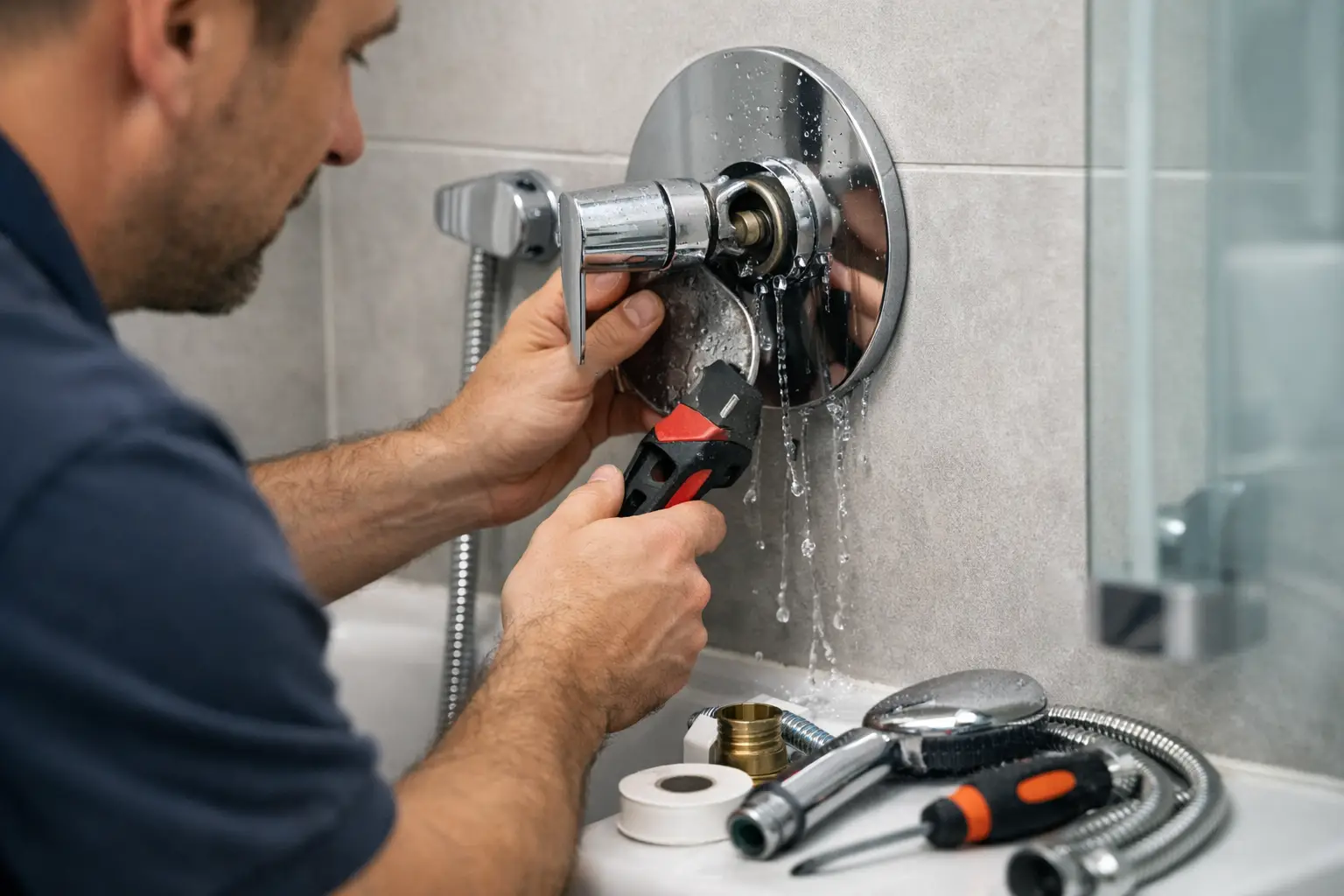
A shower leak in an apartment rarely stays contained in the shower. Water can track beneath tiles, into wall linings and down to the ceiling below before the visible signs become obvious. If you need to repair a leaking shower in an apartment, acting early can protect your bathroom, your neighbours and your position with the owners corporation.
The good news is that a leaking tiled shower does not automatically mean a full bathroom renovation. Many leaks are caused by failed grout, cracked joints or deteriorated silicone around the shower perimeter. These issues can often be repaired without removing tiles, provided the underlying waterproofing system has not suffered major failure.
Signs your apartment shower is leaking
A leaking shower is not always a puddle on the bathroom floor. In apartments, the first warning may appear in the room next door or the property below. Peeling paint, swollen skirting boards, mould that returns after cleaning, loose tiles and a musty smell all warrant investigation.
Watch for discoloured patches on a ceiling beneath the bathroom, bubbling paint on a shared wall, or water appearing outside the shower after use. Grout that is cracked, missing or constantly dark can also allow water to enter behind the tiles. Blackened, split or lifting silicone is another common failure point, particularly at wall-to-floor junctions and around shower screens.
Not every damp area means the shower itself is at fault. A leaking pipe, waste connection, shower screen seal or neighbouring plumbing issue can produce similar symptoms. That is why a proper inspection matters before anyone starts sealing surfaces or discussing demolition.
Who is responsible for a leaking shower in an apartment?
Responsibility depends on the source of the leak and your building’s strata plan. As a general guide, fixtures and finishes within your lot, such as tiles, grout and silicone, may be the lot owner’s responsibility. Common property plumbing, structural elements and waterproofing arrangements can be more complicated, especially where damage has spread beyond the apartment.
If you are an owner, notify your strata manager or owners corporation as soon as you suspect a leak. Keep photographs, dates and details of any damage, including reports from the apartment below. Landlords should respond quickly and keep tenants informed, while property managers should document the issue and arrange assessment before moisture damage escalates.
Do not assume that responsibility means waiting for approval before reducing the risk. Stop using the shower where practical, improve ventilation and report the problem in writing. Your strata manager can advise on building-specific responsibilities, insurance processes and access requirements.
Why grout and silicone failures cause shower leaks
Tiles are a hard-wearing finish, but they are not a waterproof layer on their own. The joints between tiles and the flexible junctions around the shower need to keep surface water from finding a path behind the tiled finish.
Cement-based grout can crack, become porous or break away over time. Movement in the building, regular cleaning, harsh chemicals and normal wear all contribute. Silicone is designed to accommodate movement where different surfaces meet, but it eventually dries out, splits, loses adhesion or develops mould.
Once water gets through those weak points, it may soak into the bedding behind the tiles. Repeated shower use keeps the area wet and can lead to damage in wall linings, flooring and adjacent rooms. In an apartment building, the cost of waiting can be far greater than the original repair.
Repair a leaking shower apartment without removing tiles
A targeted repair begins with identifying whether the leak is coming through the tiled shower area or from plumbing. Where worn grout and failed silicone are the cause, the repair usually focuses on restoring the surface joints and sealing vulnerable areas while retaining the existing tiles.
The process commonly involves removing deteriorated grout from affected joints, preparing the tiled surfaces, applying suitable new grout and renewing old silicone at corners, wall-to-floor junctions and around the shower screen. The exact approach depends on the tile type, condition of the joints and evidence of water ingress.
This is not the same as applying a bead of silicone over old, mouldy sealant or brushing a coating across cracked grout. Surface patching can hide a problem for a short time while water continues to enter behind the tiles. Failed materials need to be removed and the area properly prepared for the repair to last.
A tile-preserving repair has clear advantages. It avoids the dust, noise, waste and expense of ripping out a functional bathroom. It is also far less disruptive for tenants, owner-occupiers and apartment buildings where access, lifts and work hours need to be managed carefully.
There are limits, however. If testing or inspection indicates significant waterproof membrane failure, damaged substrates, loose tiles across a broad area or a plumbing leak behind the wall, more extensive work may be needed. A trustworthy specialist should explain that distinction clearly rather than promising that regrouting will solve every leak.
What to do while you arrange repairs
The best short-term measure is to stop using the affected shower where possible. If it is the only shower in the apartment, keep use brief and avoid directing water at visibly damaged joints. Dry the floor and shower screen after use, and use the exhaust fan to reduce humidity.
Avoid filling gaps with household sealant, grout pens or tape. These products can make diagnosis harder and may need to be removed before a proper repair can begin. Also avoid aggressive scrubbing and bleach-heavy cleaning on failing silicone, as they can worsen deterioration and mask the extent of the damage.
Take clear photos before any work is done. Photograph damaged grout, silicone, walls, ceilings and any water marks in neighbouring areas. This record can assist communication with your strata manager, insurer, landlord or tenant.
Choosing the right shower repair specialist
For an apartment shower leak, experience with tiled wet areas matters more than a quick cosmetic fix. Ask whether the contractor will inspect the shower before quoting, explain the likely source of water entry and outline what the repair includes.
Clear pricing is equally important. A fixed quote gives owners and property managers a defined scope and helps avoid unexpected additions once work has started. If the bathroom can be repaired without removing tiles, the contractor should explain why that approach is suitable and what condition the existing surfaces need to be in.
Warranty support is another practical consideration. A repair backed by a 5-year waterproof warranty gives you a clear point of accountability if the treated area fails within the warranty terms. For Melbourne apartment owners, that assurance is particularly valuable where a leak could affect another lot or common property.
Mr Regrout provides free inspections, fixed quotes and targeted shower repairs designed to restore failed grout and silicone without unnecessary tile removal. The focus is on stopping water ingress before a manageable repair becomes a larger building issue.
Preventing the next shower leak
Once repairs are complete, simple maintenance helps protect the result. Keep the shower well ventilated, dry excess water from the floor and screen, and inspect silicone and grout every few months for splits, gaps or persistent mould. Clean with suitable non-abrasive products rather than harsh chemicals that can wear away joints.
Apartment bathrooms experience regular moisture, and small defects are easier to repair before they become hidden water damage. If a shower starts showing the same warning signs again, arrange an inspection promptly. A timely, properly scoped repair is often the most practical way to protect the bathroom you already have.