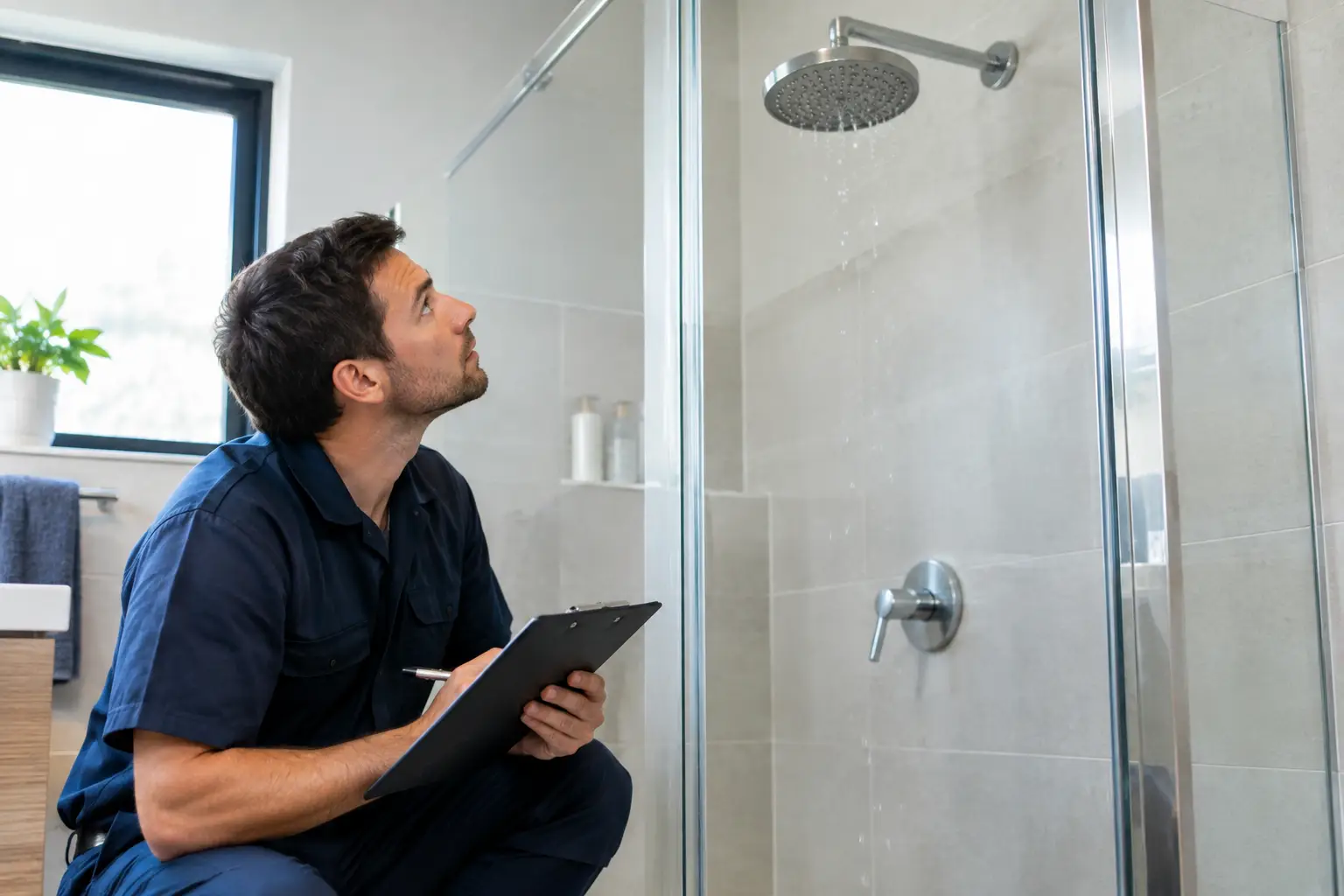
A shower can look perfectly serviceable while water is quietly reaching the wall framing, adjoining room or ceiling below. Shower leak causes are not always obvious from inside the bathroom, which is why a small patch of mould, loose silicone or discoloured paint deserves attention before the damage spreads.
For many Melbourne homes, the issue is not the tiles themselves. It is the material around them: failed silicone joints, worn grout, poor drainage or a compromised waterproofing system behind the tiled surface. The right repair depends on identifying where water is entering, not simply covering the visible symptom.
The most common shower leak causes
1. Failed silicone at corners and junctions
Silicone seals the movement joints where shower walls meet each other, where walls meet the floor, and around fittings or shower screens. These areas move slightly as a building settles and materials expand or contract. Grout is too rigid for these junctions, so silicone is needed to maintain a flexible seal.
Over time, silicone can split, shrink, peel away from the tile or develop mould underneath. Once it loses adhesion, water can run behind the tiled surface every time the shower is used. Failed silicone is one of the most common and repairable causes of water ingress in tiled showers.
A dark line in a corner is not always just surface mould. If the silicone feels loose, has gaps or is separating from the tile, it may no longer be doing its job.
2. Cracked, missing or deteriorated grout
Grout fills and supports the joints between tiles, but it is exposed to daily water, cleaning products and movement. Hairline cracks, pinholes, missing sections and crumbling grout create pathways for moisture to work behind the tile bed.
Grout alone is not the primary waterproof barrier in a correctly built shower. There should be a waterproof membrane behind the tiles. However, damaged grout allows far more water into the system than it should, increasing the chance of hidden deterioration and exposing weaknesses in the membrane or substrate.
The practical answer is not always a full bathroom renovation. Where the tiles remain sound and the leak is linked to worn joints, targeted grout replacement and sealing can restore the shower’s protective finish without removing tiles.
3. A failed waterproof membrane behind the tiles
The waterproof membrane is the barrier intended to protect the structure beneath a shower. If it was poorly installed, damaged during earlier work or has deteriorated over many years, water may pass beyond the tiled surface and into surrounding building materials.
Membrane failure can be harder to confirm because the visible tiles may still look intact. Common clues include paint bubbling on the other side of a shower wall, a damp or stained ceiling below an upstairs bathroom, persistent musty smells, swollen skirting boards or recurring mould that returns soon after cleaning.
This is where diagnosis matters. A shower leak is not automatically proof that every tile and waterproof layer must be removed. Equally, simply applying new sealant over a major underlying failure may only delay a larger problem. A specialist inspection helps determine whether a tile-preserving repair is appropriate.
4. Drain, waste or puddle flange problems
Water should fall toward the drain and enter the waste system without escaping beneath the shower floor. If the drain connection, puddle flange or surrounding waterproofing detail has failed, water can collect underneath the tiled base.
You may notice dampness around the outside of the shower, water marks on a ceiling below, or a leak that appears only while the shower is running. In some cases, slow drainage makes the issue worse by allowing water to sit on the floor and find its way through compromised joints.
Drain-related leaks require a careful assessment because the repair method depends on the exact failure point. The goal is to address the source rather than assume the floor tiles are the problem.
5. Plumbing leaks mistaken for tile leaks
Not every wet wall is caused by the shower’s tiled surface. A leaking mixer, shower arm, pipe connection or water supply line can create similar symptoms. If water damage appears even when nobody has showered, or the water meter continues to move when all taps are off, plumbing should be investigated.
A plumbing leak often needs a plumber, while deteriorated grout and silicone need tiled wet-area repair. Getting the distinction right prevents unnecessary work and avoids spending money on a surface repair when the leak is inside the wall.
6. Shower screen and door seal failures
A shower screen that leaks onto the bathroom floor can cause problems beyond the shower recess. Worn bottom seals, damaged door sweeps, gaps at the screen channel or a poorly adjusted door can let water escape with every use.
This tends to produce puddles outside the shower, lifting flooring near the doorway, damaged vanity kickboards or mould around nearby skirting boards. It may be a simple screen issue, but repeated overflow onto a tiled floor can also expose failed silicone at wall-floor junctions.
7. Cracked tiles or movement in the shower base
A cracked tile does not always leak, but it should never be ignored in a wet area. Cracks can result from impact, movement in the substrate, building settlement or inadequate support beneath the tile. If several tiles sound hollow, move underfoot or crack along a similar line, there may be a broader issue beneath the surface.
The trade-off here is straightforward: a single stable cracked tile may be repairable, while widespread movement may call for more extensive work. A proper inspection avoids both extremes - ignoring structural clues or recommending demolition before it is justified.
Warning signs that should not wait
Leaks often show up away from the shower itself. Keep an eye out for peeling paint, water stains, swollen timber, loose tiles, a persistent damp smell, mould around shower corners, or discolouration on the ceiling below. In apartments and townhouses, water may also affect a neighbour’s ceiling or a shared wall before the source is clear.
Another warning sign is silicone that repeatedly goes black or pulls away soon after being replaced. Cleaning can improve appearance, but it cannot restore a failed seal. If mould keeps returning in the same joints, there may be trapped moisture or a gap allowing water behind the tiles.
Why surface patching often fails
A tube of bathroom sealant can look like a quick fix, but applying new silicone over old, contaminated silicone rarely produces a reliable bond. Likewise, brushing sealer over cracked or loose grout does not replace missing material or correct failed movement joints.
A lasting repair starts with removing failed grout and silicone, preparing the joints properly, renewing the affected areas and checking the condition of the surrounding tiled surface. This approach retains existing tiles where suitable while dealing with the pathways water actually uses.
For established homes, this can be a sensible alternative to the cost, mess and waste of a full strip-out. It also means less disruption to daily life, which matters when the bathroom is the only one in the home or the property is tenanted.
What happens during a professional shower leak assessment
A useful assessment looks beyond the most visible crack. The shower floor, wall junctions, silicone joints, grout condition, tiles, screen area and signs of water damage outside the shower all need to be considered. The age of the bathroom, the location of the damage and whether the leak occurs during use or at other times can help narrow down the cause.
At Mr. Regrout, the focus is on whether failed grout and silicone are allowing water ingress and whether the shower can be repaired without removing tiles. Homeowners receive a free inspection and fixed quote before work begins, so the recommended scope is clear rather than open-ended. Where a tile-preserving repair is suitable, the work is backed by a 5-year waterproof warranty.
Act before a small leak becomes a building repair
Water damage rarely improves with time. The longer moisture reaches plaster, timber, adhesives or framing, the greater the likelihood of mould, staining and more costly repairs outside the bathroom. Landlords and property managers also need to act promptly, particularly where a leak could affect another residence.
If you can see failed silicone, damaged grout or water marks near a shower, arrange an assessment while the repair is still likely to be contained. Protecting the tiles you already have can be the practical first step towards protecting everything behind them.