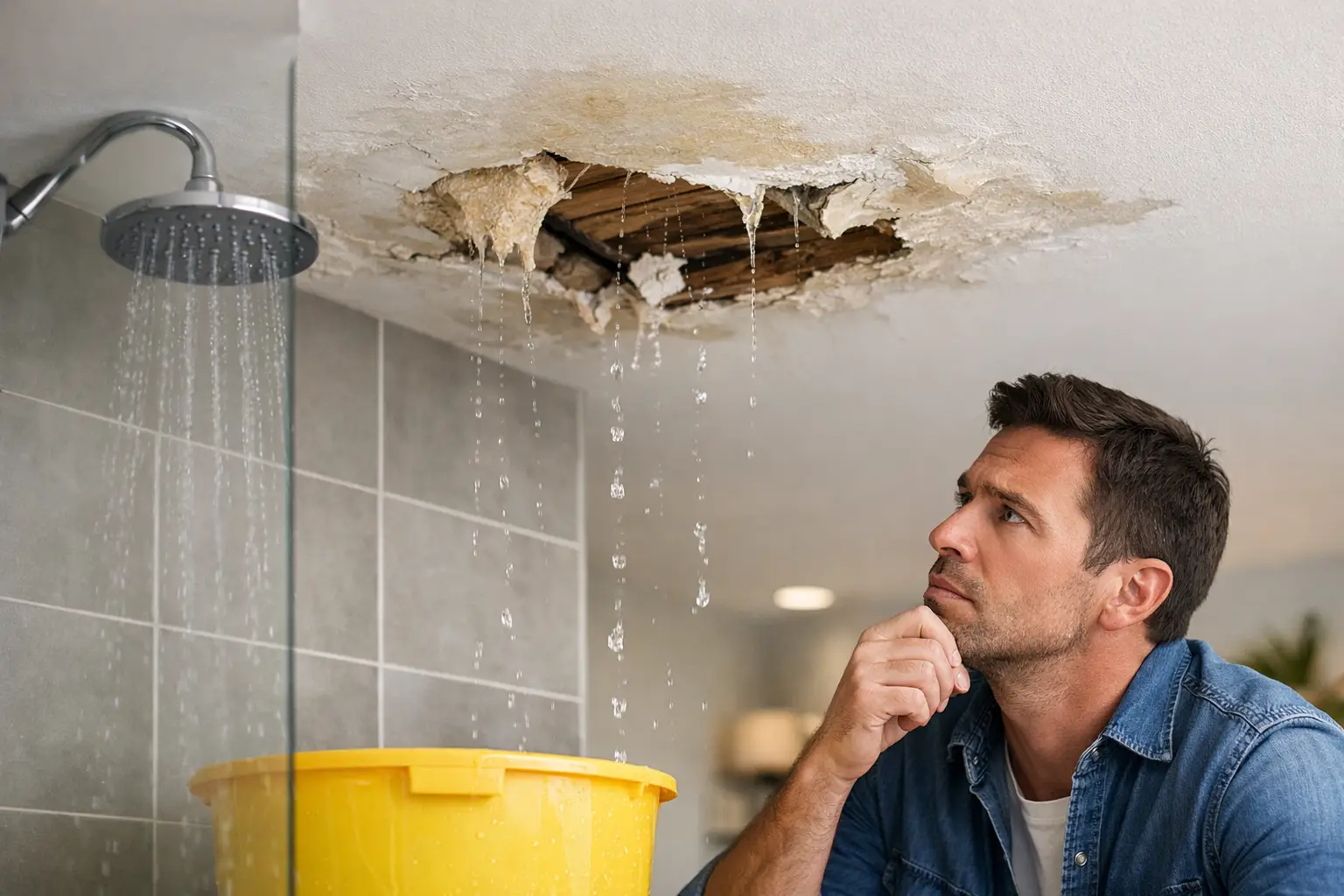
A brown ceiling stain, bubbling paint or a steady drip under the bathroom is not a problem to watch for a few more weeks. A shower leak ceiling below usually means water has already travelled beyond the shower recess. The faster the source is identified and stopped, the better the chance of avoiding damaged plaster, mould growth and a larger repair bill.
For Melbourne homes, units and apartments, the leak is often caused by worn grout or failed silicone joints around an otherwise sound tiled shower. That does not automatically mean the bathroom needs to be demolished and retiled. But it does mean the area needs a proper assessment before water affects the ceiling, wall framing or a neighbour’s property.
First, make the area safe and limit further damage
If water is actively dripping from a ceiling light fitting, turn off power to that circuit at the switchboard if it is safe to do so. Do not touch a wet fitting, remove the light cover or stand beneath a sagging section of plasterboard. Water and electrical wiring are a serious combination, so call an electrician if there is any doubt.
Stop using the shower until the cause is checked. Put a bucket under drips, move furniture and rugs from the affected area, and take clear photos of the ceiling stain, damaged paint and shower recess. These photos can help a strata manager, insurer or repair specialist understand the progression of the damage.
It is tempting to keep showering carefully, perhaps by avoiding one corner. Unfortunately, water does not follow those rules. Once a grout line, silicone joint or penetration has failed, even a short shower can send water behind tiles and into the structure below.
Why a shower leak appears in the ceiling below
A tiled shower is designed to direct water to the drain, while the waterproofing system behind the tiles manages any moisture that passes through surface joints. Grout is not waterproof on its own, and silicone is the flexible seal that protects movement joints where walls meet floors, screens and fixtures.
Over time, grout can crack, become porous or fall away. Silicone can split, shrink, lift from the tile or develop mould beneath its edge. Water then finds a path behind the tiled finish. In a two-storey home, it may show up as staining on the ceiling directly underneath. In an apartment, it can affect the unit below or shared building elements.
The visible ceiling damage is rarely a reliable map of the leak source. Water can travel along pipes, timber, plasterboard edges and framing before it finds a low point to emerge. A stain near the shower drain may be related to the drain, but it could also be water entering at a shower screen channel or a wall-to-floor joint and travelling across the substrate.
It may not be the shower surface
Not every leak that appears after a shower is caused by grout or silicone. A cracked waste pipe, leaking mixer connection, damaged shower arm, failed drain seal or plumbing leak inside a wall can produce similar symptoms. That is why a targeted diagnosis matters.
A useful clue is when the leak occurs. If the ceiling below becomes wet only while someone is showering, surface water entry or drainage is more likely. If it continues when the shower has not been used, or appears when a tap is running into the basin, a plumbing issue becomes more likely. These clues are helpful, but they are not a substitute for inspection.
Signs the shower enclosure needs attention
Look closely at the shower once it is dry. Cracked or missing grout, especially along the floor and lower wall tiles, deserves attention. So does silicone that has black mould, gaps, peeling edges or visible separation from the tiles.
Other warning signs include loose-sounding tiles, persistent musty odours, paint blistering on the wall outside the shower, swollen skirting boards, or water pooling where it should drain away. A shower screen that is poorly sealed or an unsealed penetration around taps and pipes can also allow water into the wall cavity.
Do not assume that applying a new bead of silicone over old, mouldy silicone will solve it. The existing material needs to be removed correctly, the joint cleaned and dried, and the replacement silicone applied to a sound surface. The same principle applies to grout repairs. Covering a failed joint without addressing loose or deteriorated material can leave the water path open behind the tiles.
What a proper leak assessment should establish
The goal is not simply to find a stain and seal the nearest crack. A worthwhile assessment should identify whether the issue is a tiled shower surface failure, a plumbing fault, a drainage issue, or a combination of problems.
A specialist will inspect grout lines, silicone joints, shower screen edges, wall and floor junctions, tile condition, drainage and visible signs of water escape. Where appropriate, controlled water testing can help isolate which part of the shower is allowing water through. This avoids spending money on broad renovation work when a focused repair may be sufficient.
For apartment owners and landlords, prompt assessment is particularly important. Water can cross lot boundaries, damage a neighbour’s ceiling and create disputes over responsibility. Notify your building manager or owners corporation early, follow any reporting process, and keep records of the leak and repair work.
Can the leak be repaired without removing tiles?
Often, yes. Where existing tiles are stable and the problem is deteriorated grout or failed silicone, a shower can frequently be repaired without removing tiles. Old grout can be removed and replaced, failed silicone joints can be renewed, and vulnerable gaps around the enclosure can be properly sealed.
This approach is designed to restore the shower’s finish and reduce water ingress while retaining tiles that are still in good condition. It is generally less disruptive than demolition, avoids the waste of removing sound tiles and can be completed without turning a leaking shower into a full bathroom renovation.
However, it depends on the condition beneath the tiles. If tiles are loose, the shower base is moving, a plumbing pipe is leaking, or the waterproof membrane has failed extensively, regrouting alone may not be the right answer. A straightforward contractor will explain that distinction rather than promising a surface repair can solve every type of leak.
Mr. Regrout provides free inspections and fixed quotes for Melbourne tiled shower repairs, with a 5-year waterproof warranty on eligible remedial work. That gives property owners a clear scope before committing to repairs, rather than an open-ended renovation process.
Do not repair the ceiling before the leak is stopped
Painting over a water stain can make a room look better for a short time, but it does nothing to stop moisture entering from above. The same applies to replacing damaged plasterboard before the shower leak has been resolved. Fresh paint can bubble, new plaster can soften and mould can return if the moisture source remains active.
Once the shower has been repaired and the surrounding structure has had time to dry, the ceiling can be assessed for cosmetic or structural repair. Minor staining may only need stain-blocking preparation and repainting. Soft, swollen or sagging plasterboard may need replacement. If mould is visible or there is a persistent musty smell, arrange appropriate remediation rather than simply covering it.
Protect the property from the next leak
After repair, keep an eye on the shower’s joints as part of normal home maintenance. Clean silicone gently rather than scraping it with abrasive tools. Address cracked grout early, maintain good bathroom ventilation and avoid leaving water sitting around the shower screen or floor edges.
For landlords and property managers, inspecting wet areas between tenancies can prevent a small joint failure from becoming a ceiling claim or an urgent complaint from downstairs. A shower that looks tidy can still have failing silicone, so focus on joint condition rather than appearances alone.
A leaking ceiling below a shower is unsettling, but it is also an early warning that should be acted on. Stop using the shower, make the area safe and arrange a focused inspection before the water has more time to travel.