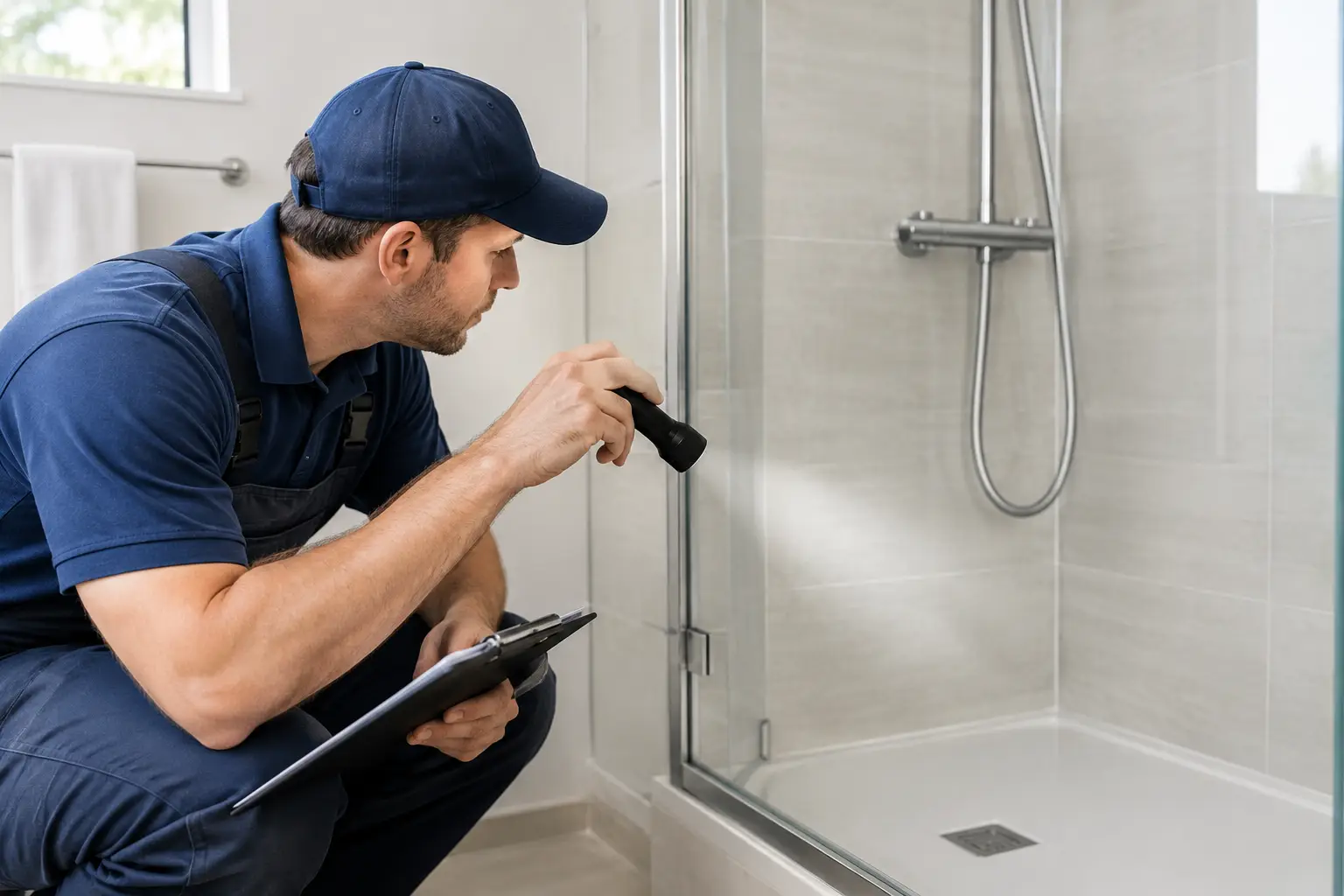
A damp patch on the wall beside the shower, peeling paint in the next room or a stain on the ceiling below is rarely just a cosmetic issue. A proper shower leak diagnosis identifies where water is escaping before damage spreads through plaster, timber, cabinetry or neighbouring apartments. The key is finding the actual entry point, not simply sealing the area that looks worst.
For many Melbourne homes, the cause is deteriorated grout or failed silicone around the shower floor, wall junctions, screen and plumbing penetrations. These issues can often be repaired without removing tiles. But leaks can also come from a plumbing connection, shower screen, drain or damaged waterproof membrane, so the diagnosis needs to be methodical.
Why the Visible Damage Is Not Always the Leak Source
Water does not always appear where it enters. It can travel behind tiles, along a wall frame or beneath flooring before showing up as bubbling paint, mould or a discoloured ceiling. A stain outside the shower may be caused by a failed silicone joint inside it. Likewise, mould around the base of a shower screen may point to water escaping through a gap, poor screen sealing or water pooling against the frame.
That is why applying new sealant over one suspect area can be a short-lived fix. If the underlying joint is loose, the grout has become porous, or water is bypassing the shower screen, the leak may continue out of sight.
A specialist assessment separates surface wear from an active water ingress problem. It also helps avoid an unnecessary full bathroom renovation when the tiles are sound and the failure is confined to grout and silicone joints.
Common Signs That Call for Shower Leak Diagnosis
Some leaks announce themselves quickly, while others develop slowly. A persistent musty smell, recurring mould, swollen skirting boards and cracked grout should not be ignored, particularly in an upstairs bathroom or apartment.
Other warning signs include damp or peeling paint on an adjoining wall, loose tiles around the shower base, darkened grout that does not dry out, and water collecting outside the shower after use. In a ground-floor bathroom, you may notice damaged flooring or moisture in an adjacent room. In a first-floor bathroom, ceiling staining below is a more urgent sign because water may already be affecting the structure between levels.
Not every cracked grout line causes a leak, and not every patch of mould means the waterproofing has failed. Condensation, inadequate ventilation and poor cleaning can contribute to surface mould. The difference is whether moisture is repeatedly getting behind the tiled finish or escaping the shower enclosure.
Failed Silicone at Corners and Junctions
Silicone is designed to flex where tiled surfaces meet. It is commonly used at wall-to-floor junctions, vertical corners, around shower screens and around taps or mixers. Over time, silicone can shrink, split, lift from the tile edge or develop mould beneath its surface.
Once a joint opens, shower water can enter behind the tiles every day. This is especially common at the shower base, where movement and regular wetting place constant pressure on the seal. Replacing failed silicone is not simply a matter of adding a new bead over the old one. The existing material needs to be removed, the joint cleaned and dried, and new silicone applied correctly so it bonds to both surfaces.
Deteriorated or Missing Grout
Grout fills the spaces between tiles, but it is not the waterproof layer beneath the shower. Still, cracked, worn or missing grout allows more water to reach the substrate and can worsen an existing weakness in the waterproofing system.
Grout often fails first in high-use areas: the shower floor, lower wall tiles and corners near the shower screen. Harsh cleaning products, movement in the building and years of moisture can all contribute. Regrouting can restore the finish and reduce water entry, provided the surrounding tiles remain stable and the underlying waterproofing has not suffered extensive damage.
Shower Screen, Drain and Plumbing Problems
A leaking shower is not always a tiling issue. Water may escape through worn screen seals, gaps at the wall channel, a door that does not close properly or a shower base that drains slowly. If water runs towards the bathroom floor instead of the drain, the screen and surrounding joints may be overwhelmed even when they appear intact.
A plumbing leak behaves differently from a shower leak. If moisture appears when the shower has not been used, or the water meter continues to move with all taps off, a concealed pipe or fitting may be involved. Water around a mixer, shower rose or plumbing penetration also needs careful assessment. Tiling repairs cannot resolve a leaking pipe.
How a Professional Diagnosis Narrows It Down
A reliable inspection begins with the shower’s condition and the pattern of damage around it. The assessor checks grout lines, silicone joints, tile movement, the shower screen, drain and visible plumbing points. They also look at adjoining walls, floors and ceilings for signs that indicate how far moisture may have travelled.
Controlled water testing can then help isolate the problem. Different parts of the shower may be tested separately, such as the wall junctions, screen edges and floor area. This is more useful than flooding the entire shower at once, because it helps identify which area triggers the leak.
The shower also needs to be considered as a complete system. A cracked corner joint may be obvious, but poor drainage or a loose tile nearby can be part of the same failure. The best repair addresses the water path, rather than treating each visible defect as unrelated.
When Repairs Can Be Completed Without Removing Tiles
Many tiled shower leaks can be resolved without demolition when the tiles are well bonded and the issue is limited to failed grout, silicone or screen-related seals. Removing deteriorated grout, renewing joints and resealing vulnerable areas can restore the shower’s protective finish while retaining the existing tiles.
This approach is generally faster, less disruptive and less wasteful than stripping out a bathroom. It is particularly practical for occupied homes, rental properties and apartments where a full renovation creates added cost and access complications.
There are limits. If tiles are loose across a broad area, the shower base has significant movement, water damage is advanced, or testing points to a failed membrane beneath the tiled surface, more extensive rectification may be needed. A straightforward diagnosis should explain that distinction clearly rather than promising a surface repair will solve every leak.
What to Do While You Arrange an Inspection
If you suspect a leak, reduce shower use where possible. Continued daily soaking can turn a manageable repair into damaged plasterboard, flooring or structural timber. Dry visible water after use and avoid directing the shower rose at obvious gaps or failed joints.
Do not fill cracks with household sealant as a permanent fix, particularly if the area is damp or mouldy. Sealant applied over old silicone, loose grout or trapped moisture often fails quickly and can make the later repair more time-consuming. Avoid harsh acid cleaners as well, as they can erode grout and affect surrounding finishes.
For landlords and property managers, document the symptoms and when they occur. Note whether water appears only after showering, whether the damage is worsening, and whether the bathroom is above another room. These details help the inspection focus on the likely source sooner.
A Clear Repair Path for Melbourne Property Owners
The value of a shower leak diagnosis is certainty. It gives you a practical answer to three questions: where water is entering, whether the existing tiles can be retained, and what work is needed to stop the leak properly.
Mr Regrout provides Melbourne homeowners and property managers with free inspections and fixed quotes for suitable tiled shower repairs. Where deteriorated grout and silicone are the cause, targeted remedial work can protect the waterproofing without the cost and disruption of removing tiles, backed by a 5-year waterproof warranty.
If a shower is showing early signs of water ingress, acting before the next season of use can protect far more than the tiles. A careful inspection now is often the simplest way to keep a small leak from becoming a much larger repair.