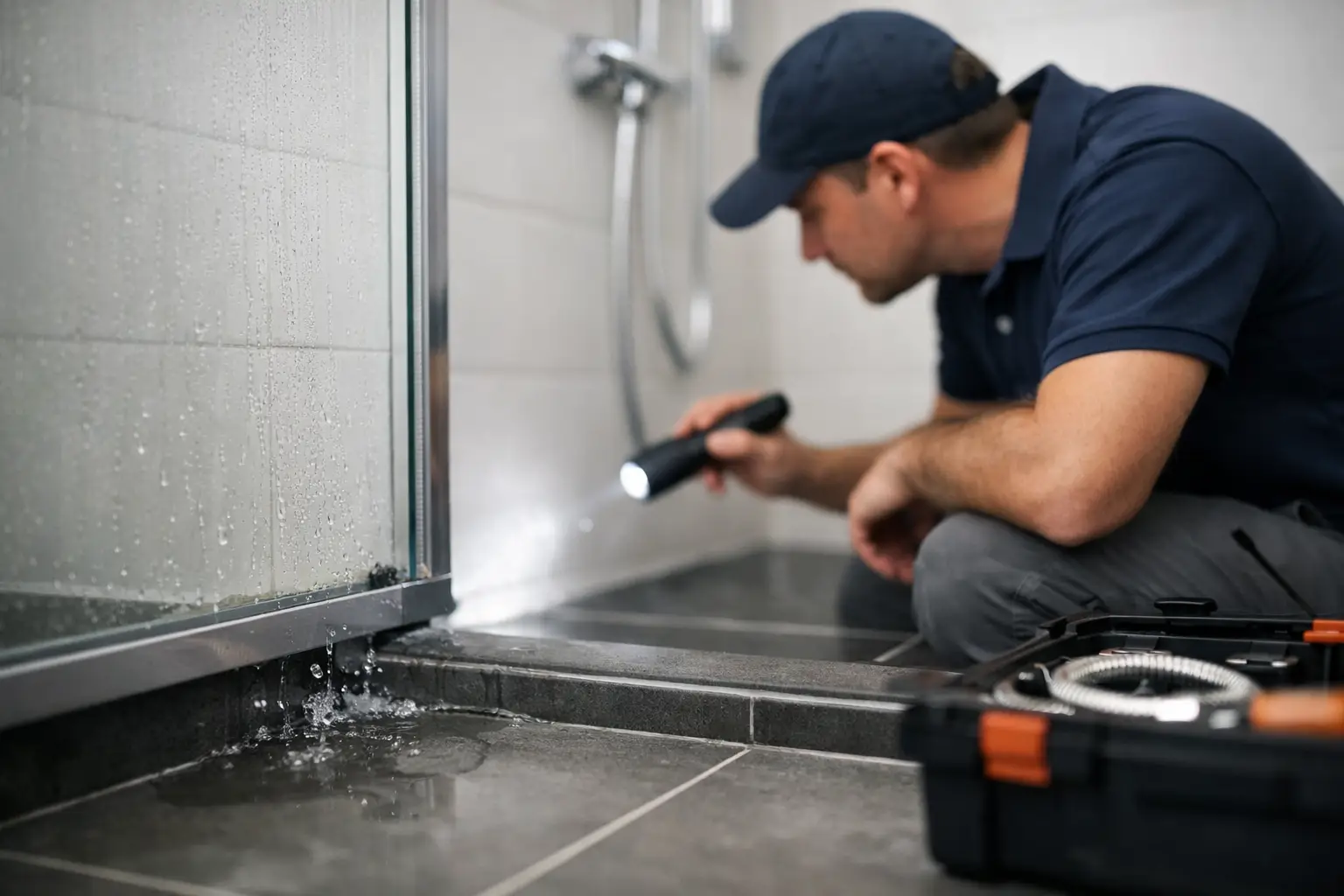
A shower leak specialist can often stop water ingress before it becomes a damaged ceiling, swollen skirting board or mould problem behind the wall. For Melbourne property owners, the first signs are rarely dramatic: dark grout, cracked silicone around the shower screen, loose tiles, a musty smell or water marks in the room below. The sensible time to act is before a small shower leak turns into a larger repair.
A leaking tiled shower does not automatically mean the bathroom needs to be demolished and rebuilt. In many cases, the tiles are still sound. The failure is in the joints between them - worn grout, cracked corners or silicone that has separated from the wall, floor or shower screen. Targeted repair can restore the shower's protective surface without removing existing tiles.
What a shower leak specialist looks for
Shower leaks are not always visible at the point where water is escaping. Water follows the easiest path, moving through failed joints and into surrounding building materials. That means a stain on an adjacent wall or a ceiling below the bathroom may be a symptom, not the source.
A proper inspection looks closely at the tiled area and the common points of failure. These include deteriorated grout lines, missing grout, movement cracks, failed silicone in wall-to-floor corners and gaps around the shower screen. The condition of the tiles, floor waste area and surrounding surfaces also matters.
The goal is to identify whether water is getting through the tiled surface because seals have failed, or whether there may be a deeper plumbing or waterproofing issue. This distinction matters. Regrouting and silicone renewal are effective when failed surface joints are allowing water ingress. If a pipe is leaking or the underlying waterproof membrane has a major failure, a different repair approach may be required.
That is why a specialist assessment is more useful than applying more silicone over an old, mouldy joint. Covering a failed joint without removing the deteriorated material can leave gaps underneath and may only delay the problem.
Signs your shower needs attention
The clearest warning sign is damaged grout or silicone in the shower itself. Grout that is cracked, crumbling, stained dark or missing in sections can allow water behind the tiles. Silicone that has lifted, split, shrunk away from corners or developed persistent mould is another common entry point.
Outside the shower, watch for paint that is bubbling or peeling on the adjoining wall, soft or swollen skirting boards, a persistent damp smell, mould that returns quickly after cleaning, or water marks on a lower-level ceiling. In apartments, a shower leak can also affect the property below, making prompt action particularly important for owners and property managers.
Not every sign confirms a leaking shower. Condensation, poor ventilation and a plumbing fault can create similar symptoms. But waiting for certainty while water continues to enter the structure is rarely a good trade-off. An inspection gives you a clearer basis for deciding what needs to be repaired.
Why failed grout and silicone cause leaks
Tiles are hard-wearing, but a tiled shower is not protected by tiles alone. Grout fills the joints and helps create a finished, stable surface. Silicone is used where materials meet or where movement is expected, such as internal corners, wall-to-floor junctions and around shower screens.
Over time, showers are exposed to daily heat, moisture, cleaning products and building movement. Grout can become porous or crack. Silicone can lose adhesion and pull away from one side of a joint. Once a gap forms, repeated shower use can send water into areas that are meant to stay dry.
The repair needs to match the cause. Sound tiles with failed joints usually do not need to be removed simply because the shower is leaking. Removing tiles can add cost, dust, waste and disruption, and may create additional work where surrounding surfaces are disturbed. A tile-preserving repair is often the more practical option when the underlying tiled area remains in good condition.
What targeted shower leak repairs involve
A quality repair is not just a cosmetic tidy-up. Existing failed grout and silicone need to be properly removed from the affected areas before new materials are applied. This creates a clean, stable surface for the replacement grout and silicone to bond correctly.
The shower is then regrouted where needed, with movement joints renewed using appropriate sanitary silicone. Careful finishing is important because the joints must be continuous, neat and properly sealed at the places water is most likely to collect.
The exact scope depends on the shower. Some bathrooms need localised joint repairs, while others need a more complete grout replacement and silicone renewal across the shower recess. A specialist should explain what is included, why it is required and what the repair can realistically address.
For homeowners, the key benefit is straightforward: the work is designed to stop water getting through failed tiled joints without the cost and upheaval of a full renovation. For landlords and property managers, it can also reduce the risk of a manageable maintenance issue becoming a claim, tenant disruption or damage to another residence.
Questions to ask before booking a repair
Before engaging a shower leak specialist, ask how the source of the leak will be assessed and whether the quote covers removal of old grout and silicone, not merely resealing over the top. It is also worth confirming which areas will be repaired, how long the shower must remain unused afterwards and what warranty applies to the work.
Price should be clear before work begins. A fixed quote helps avoid uncertainty, particularly where a bathroom issue is already causing concern. Free inspections can be valuable because they let you understand the likely cause and repair scope before committing to a larger project.
Warranty terms matter as well. A 5-year waterproof warranty provides reassurance that the repair is backed by accountability, not simply completed and forgotten. Read what the warranty covers and ensure the advice is specific to your shower's condition.
When a surface repair may not be enough
Targeted regrouting and silicone replacement are not a cure for every leak. If the inspection points to a burst or leaking pipe, extensive tile movement, structural damage, a failed shower base or a compromised waterproof membrane beyond the tiled joints, further investigation may be needed.
This is not a reason to assume the worst. It is a reason to get an honest assessment. The right repair is the smallest effective repair that addresses the actual source of water ingress. Sometimes that means renewing joints without removing tiles; sometimes it means involving another qualified trade for plumbing or more extensive rectification.
A specialist who explains that difference protects you from two costly mistakes: paying for a renovation that is not necessary, or spending money on a surface repair that cannot solve a deeper fault.
Protecting the rest of the property
A shower leak is easy to put off because the bathroom may still look presentable. Yet water does not stop at the visible tile line. It can affect plaster, framing, flooring, cabinetry and ceilings over time. In multi-level homes and apartments, the repair costs can grow quickly once water reaches another room or property.
If you suspect a leak, limit unnecessary water exposure until the shower has been assessed. Keep the area ventilated, avoid aggressive scrubbing on damaged grout or silicone, and take photos of any stains or changes. These simple steps can help track the issue and support a clearer discussion during inspection.
For Melbourne homeowners, landlords and managers, Mr. Regrout provides free inspections and fixed quotes for tiled shower repairs focused on renewing failed grout and silicone without removing tiles. Where the problem is suited to targeted remedial work, it is a practical way to protect the bathroom and avoid renovation-level disruption.
A shower should contain water, not quietly feed it into the rest of the building. Addressing worn joints early gives you the best chance of keeping the repair contained, the tiles in place and the property protected.