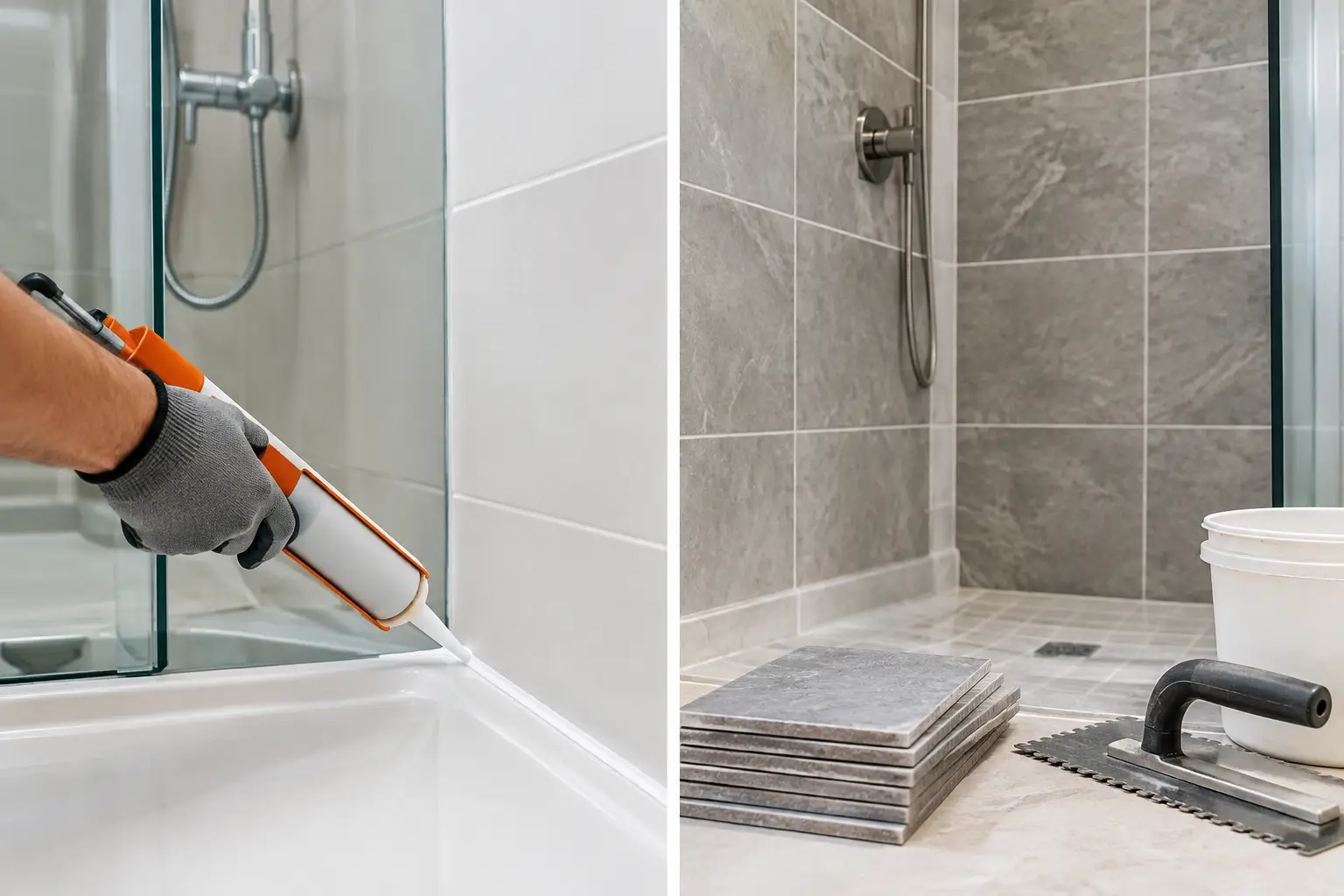
A shower can leak long before it looks like a renovation project. Darkened grout, mouldy corners, cracked silicone or peeling paint outside the shower are often signs that water is getting through failed joints, not that every tile needs to come off. When weighing up shower resealing versus tile replacement, the right choice depends on where the water is entering and whether the tiled surface is still sound.
For many Melbourne homes, a targeted resealing repair can restore the shower’s protective finish without removing tiles, creating dust, or leaving the bathroom out of action for weeks. But resealing is not a shortcut for a shower with loose tiles, major structural movement or a failed waterproof membrane. A proper inspection is what separates a durable repair from money spent twice.
What shower resealing actually fixes
Shower resealing is a remedial repair focused on the vulnerable joints around a tiled shower. Over time, grout can crack, wear away or become porous, while silicone can split, shrink, lift away from the surface or develop persistent mould. These gaps allow water to travel behind tiles and into the wall or floor structure.
A specialist resealing service generally involves removing failed grout where required, renewing grout joints, stripping out old silicone and applying new flexible silicone to corners, wall-to-floor junctions, screens and fittings. The aim is to close the paths where water is entering while retaining tiles that are otherwise in good condition.
This matters because grout and silicone do different jobs. Grout fills and supports the joints between tiles, while silicone accommodates small movements where different surfaces meet. A rigid grout line in a shower corner is far more likely to crack than a properly finished silicone joint. Renewing both materials in the appropriate locations is central to stopping many common shower leaks.
Resealing can be a practical option when the tiles are firmly bonded, the shower base is stable and the damage is limited to deteriorated joints or failed sealant. It is particularly useful in established bathrooms where the tiles still suit the room and a full renovation is neither necessary nor desired.
Shower resealing versus tile replacement: the real difference
Tile replacement is more invasive because tiles must be removed before the surface behind them can be assessed and rebuilt. Depending on the condition of the shower, that may mean repairing wall linings, renewing waterproofing, replacing screed, installing new tiles and allowing time for each layer to cure. It can be the correct solution, but it comes with greater cost, disruption and waste.
Resealing works from the tiled surface to address identifiable joint failures. Tile replacement rebuilds part or all of the shower when the surface or the structure beneath it has failed. One is a targeted maintenance repair; the other is a reconstruction project.
The key question is not whether a few grout lines look tired. It is whether the existing tiled system can still be protected. If it can, retaining the tiles is usually the more efficient path. If it cannot, retiling may prevent deeper problems from continuing behind a cosmetic repair.
When resealing is usually the sensible option
A resealing repair is commonly appropriate where grout is cracked, stained, missing or breaking down, but the tiles remain secure. It can also suit showers with failed silicone around internal corners, shower screens, soap shelves or plumbing penetrations. These are high-risk areas for water ingress because they move slightly as the building settles and as materials expand and contract.
Other positive signs include isolated dampness outside the shower, mould that returns along old silicone, or water escaping through a visibly open joint. None of these signs should be ignored, but they do not automatically mean the bathroom needs demolition.
For landlords and property managers, resealing can reduce vacancy disruption and help protect adjoining rooms or apartments before a small leak becomes a larger maintenance issue. For homeowners, it can preserve a bathroom that is otherwise functional and avoid replacing tiles simply because the sealant has reached the end of its service life.
A targeted repair also makes sense where matching replacement tiles would be difficult to find. Removing a few tiles can create a patchwork result, especially in older Melbourne properties where original ranges have been discontinued.
When tile replacement may be necessary
There are circumstances where resealing alone is unlikely to provide a lasting answer. Loose, drummy or cracked tiles may indicate that moisture has affected the adhesive bed or substrate. Widespread movement in the shower floor, a damaged base, major cracks through multiple tiles, or soft and swollen wall linings require closer investigation.
Persistent leaks after previous sealing work can also point to a problem behind the tiles rather than at the joints. If the waterproof membrane has failed extensively, water may be bypassing the tiled finish and travelling into surrounding building materials. In that situation, retaining every tile may not be realistic.
Tile replacement may also be the better choice when a bathroom is already due for a full renovation, the layout needs changing, or plumbing works require walls or floors to be opened. It is not automatically excessive work if the shower system itself has reached the end of its useful life.
The important point is to avoid deciding based on appearance alone. Fresh grout can make a shower look better, but appearance is not the same as resolving the source of water ingress. Equally, visible mould or worn silicone does not by itself prove that full replacement is required.
Costs, disruption and the risk of waiting
The cost gap between resealing and tile replacement is usually significant. A resealing repair is limited to the failed joints and can often be completed without the expense of demolition, new tiles, waterproofing rebuilds, plumbing alterations and rubbish removal. It also avoids the challenge of coordinating several trades.
Full tile replacement can be worthwhile where needed, but owners should allow for more than the tile quote. There may be costs for waterproofing, substrate repairs, screen removal and replacement, fittings, painting and time without a usable shower. In an apartment, access restrictions and body corporate requirements can add further complexity.
Waiting is rarely a cost-saving strategy when a shower is leaking. Water can migrate into plaster, timber framing, floor coverings, ceilings below or neighbouring properties. By the time a damp patch is obvious, the leak may have been active for some time. Early assessment gives you more chance of fixing the cause while the repair remains contained.
How to make the right call before work starts
Start with an inspection that considers the whole shower, not just the most visible crack. The condition of the grout, silicone, tiles, shower screen, floor junctions and nearby walls all provides useful evidence. A specialist should explain what has failed, what can be retained and why the recommended scope is appropriate.
Ask whether the tiles are stable and whether there are signs of movement or damage behind them. Clarify which joints will be renewed, how old silicone will be removed, and what preparation is needed before new materials are applied. A vague proposal to “seal the shower” is not enough when water damage is at stake.
It is also reasonable to seek certainty on price and workmanship. Mr. Regrout provides free inspections, fixed quotes and a 5-year waterproof warranty for eligible remedial work, giving Melbourne property owners a clear alternative to unnecessary tile removal.
Protecting a repaired shower
Once a shower has been resealed, regular cleaning and early attention to damaged joints will help protect the repair. Use non-abrasive bathroom cleaners, avoid scraping grout or silicone with hard tools, and keep an eye on corners and screen edges where water sits most often. Good ventilation also limits mould growth and helps joints dry between uses.
If you see a new crack, lifting silicone, loose tile or recurring damp mark, arrange an assessment rather than covering it with more sealant from the hardware shop. The best outcome is not the biggest repair. It is the repair that stops water at the source, keeps sound tiles in place and protects the property around them.