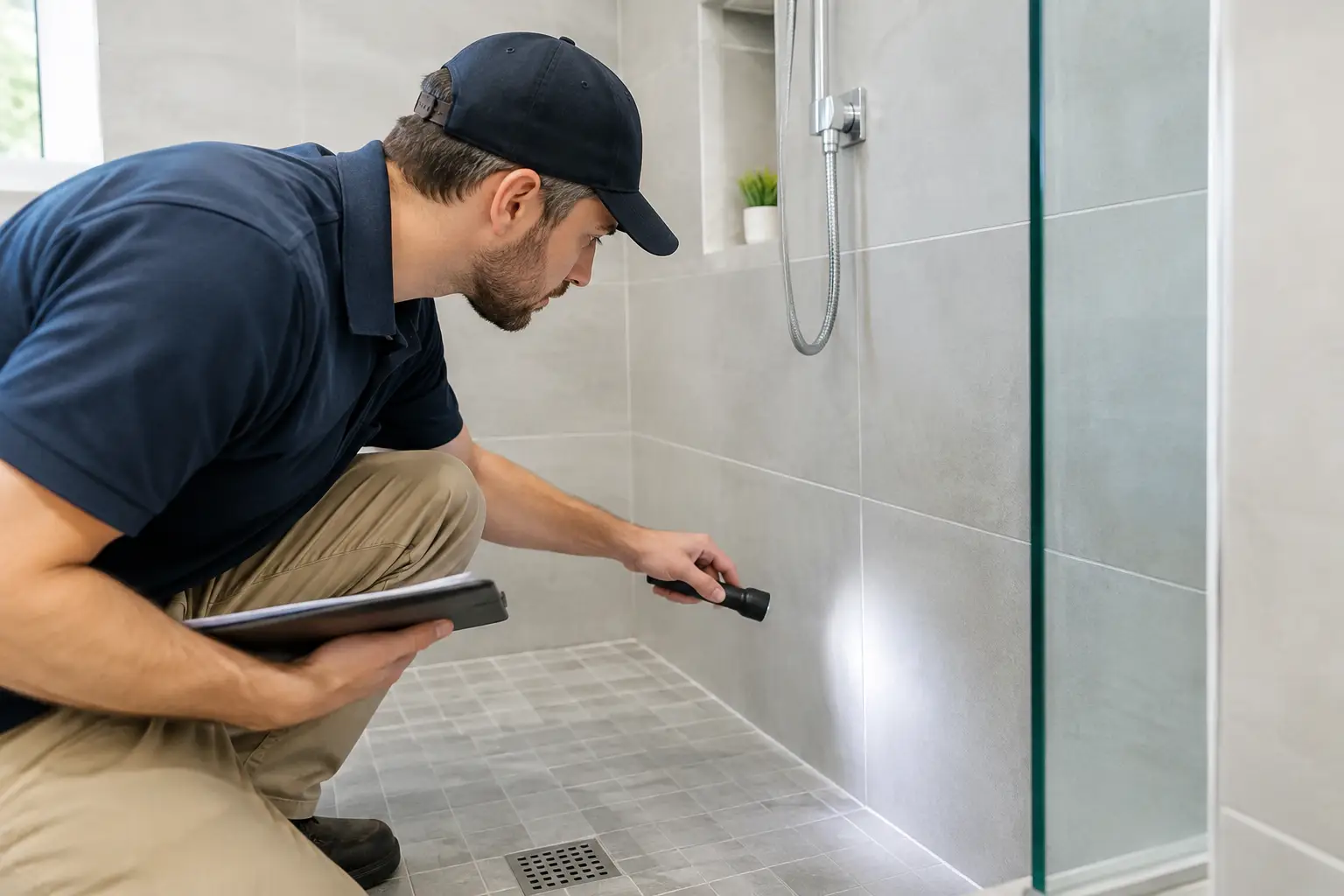
A shower that looks clean can still be allowing water into the wall, floor or ceiling below. A shower waterproofing inspection looks beyond the obvious to identify where water is getting past the tiled surface and whether the problem can be repaired without removing tiles.
For Melbourne homeowners, landlords and property managers, early assessment can mean the difference between renewing grout and silicone now or dealing with damaged plaster, swollen skirting boards, loose tiles and a much larger repair later. The aim is not to sell a renovation. It is to locate the likely source of water ingress and recommend the most practical way to stop it.
Why shower leaks are often hard to spot
Tiles are not waterproof on their own. The protection behind a shower relies on several parts working together: grout between tiles, flexible silicone at junctions, drainage around the shower base and the waterproof membrane beneath the tile surface.
Grout can crack, wear away or become porous over time. Silicone can shrink, split, lift away from the wall or develop mould that makes failure difficult to see. Water then reaches areas it was never meant to reach, especially where walls meet the floor, around screens, at tap penetrations and along shower hob edges.
The first sign is not always a puddle on the bathroom floor. You may notice peeling paint on the other side of a shower wall, a damp patch on the ceiling below, persistent musty smells or mould returning soon after cleaning. In apartments and townhouses, a leak can also affect a neighbouring property, making prompt diagnosis especially worthwhile.
What happens during a shower waterproofing inspection
A proper inspection starts with the shower’s visible condition and the pattern of any reported damage. The assessor will look at the tiled surfaces, but also at the areas where tiled showers commonly fail: wall-to-floor joints, vertical corners, around shower screens, drains, soap recesses, taps and mixers.
Grout is checked for cracks, gaps, powdering, discolouration and movement. Silicone is checked for separation from the tile, gaps in corners, mould growth and brittle or missing sections. These joints need to remain flexible as the building moves slightly over time. Hard, cracked or poorly bonded silicone is a common path for water ingress.
The inspection should also consider whether tiles sound hollow, whether there is movement at the shower base, and whether moisture damage appears outside the shower enclosure. These clues help distinguish a surface sealing failure from a more extensive issue beneath the tiles.
Where suitable, controlled water testing may help narrow down the affected area. This needs to be done carefully. Flooding a shower indiscriminately can worsen an active leak, so testing should be targeted and based on what the visual inspection shows.
What an inspection can confirm
In many cases, an inspection can identify clear signs that failed grout or silicone is allowing water through the tiled surface. If the tiles are sound and the problem is localised, a remedial repair can often restore protection without demolition.
This usually involves removing deteriorated grout where needed, renewing failed silicone joints and applying a specialised sealing system to the relevant tiled area. The existing tiles remain in place, which avoids the mess, cost and delay of a full retile.
What needs further investigation
No visual assessment can see through every wall or beneath every tile. If there is extensive movement, widespread hollow tiles, major cracking, a damaged shower base or evidence that the membrane itself has failed across a large area, more invasive work may be necessary.
That is the trade-off. Tile-preserving repairs are an excellent option when water is entering through failed surface joints and grout. They are not a substitute for structural rectification or a full rebuild where the underlying construction has significantly deteriorated. A straightforward inspection should explain that distinction clearly rather than promising the same fix for every shower.
Signs you should arrange an inspection soon
A shower leak rarely improves by itself. If any of the following signs are present, it is sensible to have the area checked before water damage spreads:
- Cracked, missing, stained or crumbling grout around the shower walls or floor.
- Silicone that is mouldy, split, lifting, brittle or missing from corners and edges.
- Damp patches, bubbling paint or peeling plaster on adjacent walls or ceilings.
- Loose tiles, a persistent musty smell, or mould that returns after regular cleaning.
- Water appearing outside the shower, near the vanity, in an adjoining room or below the bathroom.
For landlords and property managers, tenant reports of mould, dampness or leaking should be treated as maintenance issues rather than cosmetic complaints. Documenting the condition early and arranging a specialist assessment can protect both the property and the people living in it.
Why failed grout and silicone matter
Grout and silicone are sometimes treated as finishing details. In a shower, they are part of the water-management system. Their condition matters because they protect the vulnerable gaps between otherwise hard surfaces.
Cement-based grout can absorb moisture over time, particularly when it has not been maintained or sealed. Small cracks can widen as buildings settle and as the shower floor experiences daily use. Silicone is designed to handle movement, but only while it remains properly bonded and intact.
Replacing a strip of silicone yourself may be suitable for a very small, clearly visible gap. However, applying new silicone over mould, old residue or damp surfaces often creates a short-lived result. Likewise, patching only the most obvious grout crack can miss the surrounding areas that are already failing. The value of an inspection is that it assesses the system, not just the visible symptom.
Protecting your property without a full renovation
Many homeowners delay repairs because they assume a leaking shower means removing tiles, losing use of the bathroom for weeks and facing an open-ended bill. That is sometimes necessary, but it is not the starting point for every leak.
When the tiles are generally stable and the water ingress is linked to deteriorated grout and joints, targeted regrouting and silicone renewal can provide a lower-disruption alternative. The bathroom remains largely intact, there is less waste, and the work is focused on restoring the protective barrier where it has broken down.
This approach is particularly useful in established Melbourne homes, investment properties and apartments where a full renovation may not be practical or justified. It also gives owners a chance to deal with a developing issue before it reaches framing, flooring, ceilings or neighbouring lots.
A clear quote matters here. The inspection should lead to a defined scope of work, not vague recommendations that leave you guessing about cost. Fixed-price quoting allows you to decide based on the condition of the shower and the likely repair outcome.
Choosing the right repair response
The right repair depends on the shower’s condition, not its age alone. A 20-year-old shower with sound tiles and isolated grout failure may be a strong candidate for targeted waterproofing repairs. A newer shower with poor silicone application or inadequate detailing may also leak. Conversely, a shower that has widespread tile movement and long-term structural moisture damage may need more than surface work.
Ask what the inspection found, where the water is most likely entering and why the recommended repair suits that condition. You should also ask what preparation is involved, how long the shower needs to remain dry after the work, and what warranty applies to the completed repair.
Mr. Regrout provides free inspections, fixed quotes and a 5-year waterproof warranty for suitable tiled shower repairs. That gives Melbourne property owners a practical path to address failed grout and silicone without automatically committing to tile removal.
A leaking shower deserves attention before the evidence becomes impossible to ignore. An inspection gives you a clear starting point: identify the weak points, repair what can be repaired, and protect the rooms and properties around it.