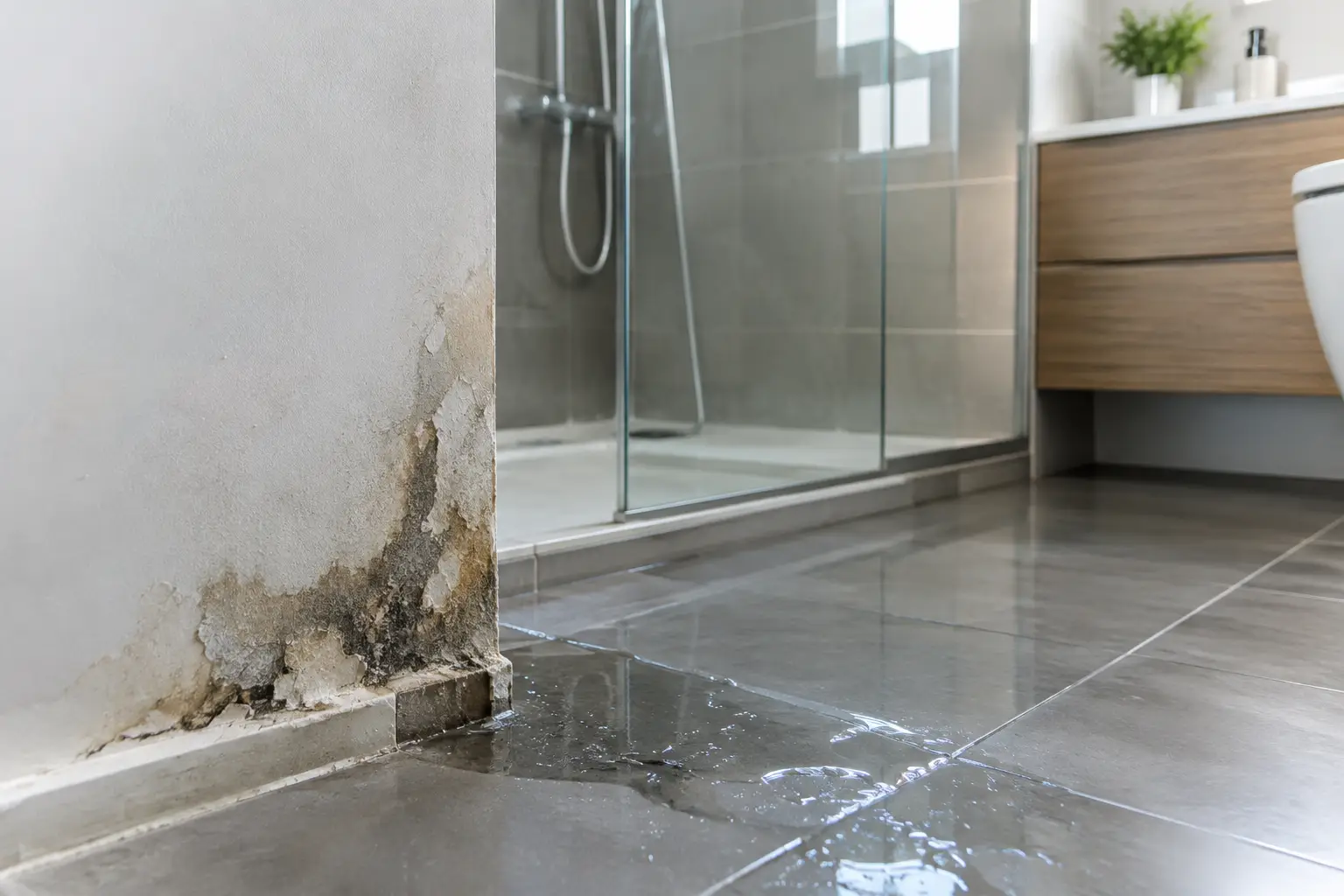
A shower can look perfectly serviceable from the doorway while water is quietly travelling behind the tiles. Knowing the signs bathroom waterproofing has failed helps you act before a small leak becomes damaged plaster, swollen flooring, mould growth or a stain on the ceiling below.
In many Melbourne bathrooms, the visible problem is not always a completely failed waterproof membrane. Cracked grout, missing grout and deteriorated silicone around shower corners, screens and plumbing penetrations can allow water into places it should not reach. The right repair depends on where the water is getting in, which is why an inspection should come before any work is quoted.
1. Mould that returns after cleaning
A little surface mould can occur in a poorly ventilated bathroom. But mould that repeatedly appears in the same shower corner, along silicone joints or on the wall beside the shower is a warning sign. If you clean it thoroughly and it comes back quickly, moisture may be sitting behind failed sealant or within gaps in the tiled surface.
Pay particular attention to blackened or peeling silicone. Silicone is designed to seal movement joints where walls meet floors, where two walls meet and around fixtures. Once it splits, lifts or separates from the tile, water can pass behind it during every shower.
2. Cracked, missing or powdery grout
Grout should be firm, continuous and well bonded between tiles. Hairline cracks, open joints and sections that crumble when rubbed are not just cosmetic defects. They create pathways for water to get behind the tiled finish.
Grout is not the waterproof membrane itself, so sound grout alone does not prove a bathroom is watertight. However, damaged grout can expose an already vulnerable area to far more water. Targeted grout replacement and sealing can be an effective repair when the problem is confined to surface joints and the underlying structure has not been compromised.
3. Silicone joints have split or pulled away
Failed silicone is one of the clearest signs to investigate. Look at the vertical corners of the shower, the joint between wall and floor tiles, around the shower screen and around taps or pipes. Gaps may be thin and difficult to see, but they matter.
Bathrooms move slightly over time. Buildings settle, materials expand and contract, and shower bases can flex under load. Grout is too rigid for these movement points. A flexible silicone joint is needed to keep water out, so replacing old silicone correctly is more than a cosmetic tidy-up.
4. Loose, drummy or lifting tiles
Tiles that sound hollow when tapped are often described as drummy. A hollow sound does not automatically mean waterproofing has failed - it can result from the original tiling method. But tiles that are loosening, moving, lifting or cracking should be checked promptly, particularly inside a shower.
Water behind tiles can weaken adhesives and affect the wall or floor beneath. If multiple tiles are loose or there is obvious movement in the substrate, regrouting alone may not be enough. This is where a specialist assessment can separate a surface sealing issue from damage that needs more extensive rectification.
5. Staining or peeling paint on the other side of the wall
Check rooms adjoining the bathroom, including the wall behind the shower. Peeling paint, bubbling plaster, brown marks, swollen skirting boards or a musty smell can indicate water is escaping the wet area.
These signs can take time to appear. By the time a stain is visible, water may have been entering through a failed shower joint for weeks or months. It is sensible to arrange an inspection rather than repainting over the area. Covering the stain does not stop the cause.
6. A ceiling stain below the bathroom
For upstairs bathrooms, a discoloured patch, blistered paint or sagging plasterboard on the ceiling below needs urgent attention. The source could be a plumbing leak, a waste pipe issue or water escaping from the shower enclosure. Either way, it should not be ignored.
Try to notice whether the stain worsens after showers rather than after using the basin or bath. That detail can help narrow down the source. Avoid using the shower excessively until the issue has been assessed, particularly if the ceiling is soft or visibly sagging.
7. Damp flooring outside the shower
Water on the bathroom floor after a shower can be as simple as a poorly adjusted shower screen or a worn door seal. If the floor remains damp around the shower base, however, inspect the silicone and grout at the perimeter.
Water should drain towards the waste and remain contained inside the shower area. Persistent dampness outside the enclosure can travel under flooring, affect adjoining rooms and create slip hazards. In apartments and townhouses, it can also become a problem for neighbouring properties or strata managers.
8. A musty smell that does not go away
Bathrooms should smell clean once they have dried and been aired out. A persistent damp or musty odour may point to trapped moisture behind tiles, walls or flooring, even when there is no obvious stain.
This is especially common in older bathrooms where the shower is used daily and ventilation is limited. Run the exhaust fan during and after showers, but do not assume ventilation is the whole answer if the smell continues. Moisture from a leak needs to be located and stopped.
9. Water damage near a shower screen or door frame
Timber door frames, architraves and skirting boards near showers can reveal what is happening at floor level. Swelling, dark staining, softened timber or flaking paint may mean water is repeatedly leaving the shower area.
The cause may be failed silicone, a gap around the shower screen, a cracked tile or poor water containment. The longer timber and plasterboard are exposed to moisture, the more likely the repair will extend beyond the tiled area.
When a no-tile-removal repair may be suitable
Not every leaking bathroom needs to be demolished and retiled. Where tiles are generally sound and the leak is caused by worn grout, open joints or failed silicone, remedial regrouting and resealing can restore the protective finish without removing existing tiles.
This approach keeps disruption, waste and cost under control. It is particularly practical for owners preparing a property for sale, landlords managing an occupied home and households that cannot accommodate a full bathroom renovation.
There are limits. If testing and inspection indicate a failed waterproof membrane beneath the tiles, significant substrate damage, widespread loose tiles or plumbing faults, a surface repair may not be the right long-term solution. A reliable contractor should explain that clearly rather than treating every leak with the same fix.
What to do when you spot a warning sign
Start by reducing unnecessary water exposure. Do not keep using a leaking shower as normal while waiting for the problem to worsen. Take photos of stains, cracked grout, mould or damaged silicone, especially if you manage a rental property or need to report an issue to an owners corporation.
Then arrange a proper assessment. Mr. Regrout provides free inspections and fixed quotes for suitable shower and balcony repairs across metropolitan Melbourne. Where surface joint failure is the cause, renewing grout and silicone without removing tiles can provide a practical repair backed by a 5-year waterproof warranty.
A bathroom leak rarely fixes itself. Acting when the first joint opens or the first stain appears gives you the best chance of protecting the rooms, ceilings and structures around it without turning a targeted repair into a major renovation.