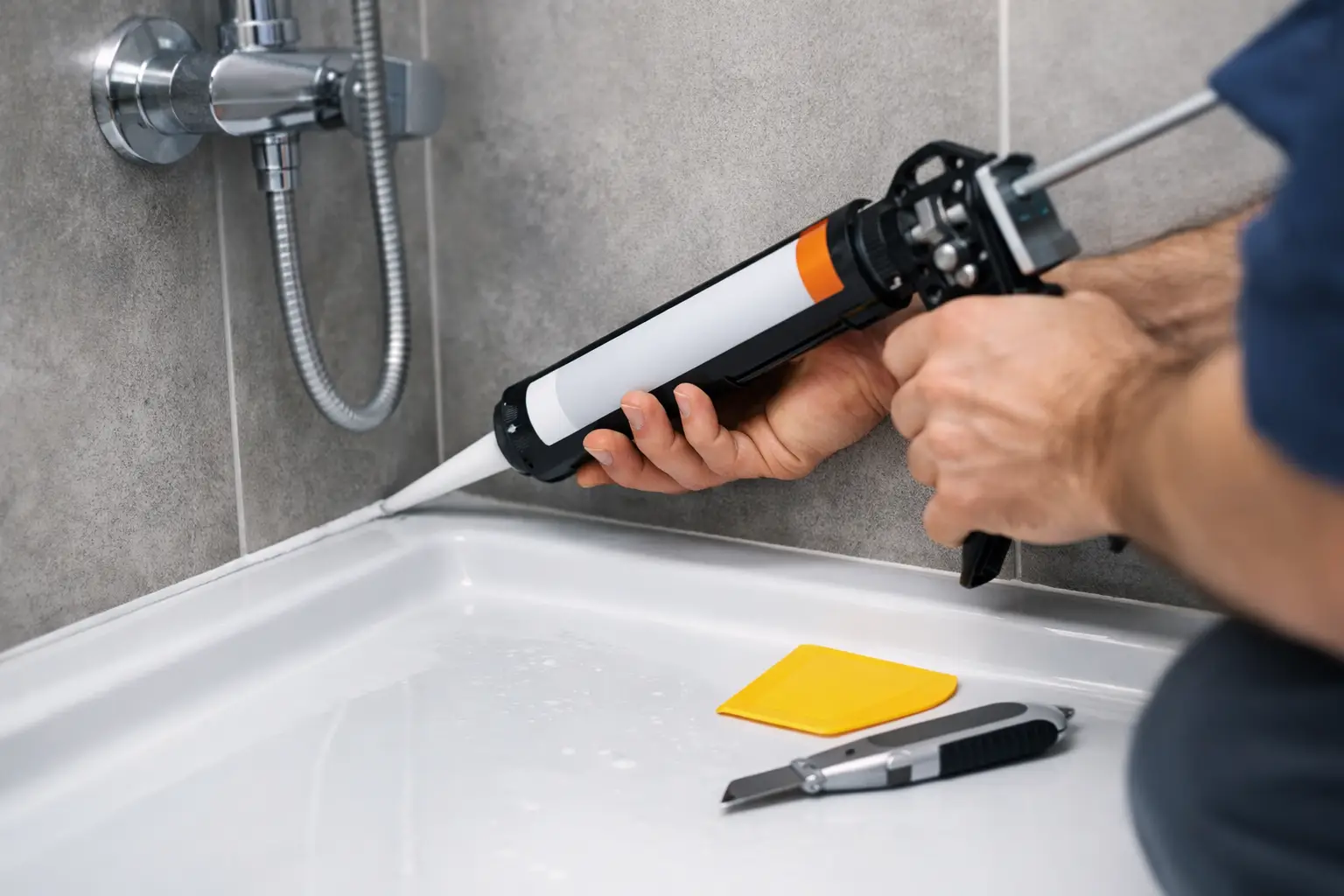
A dark line of mould around the shower edge is rarely just a cleaning problem. When silicone pulls away from tiles, cracks at a corner or feels loose under a fingernail, water can pass behind the visible surface every time the shower is used. Silicone replacement bathroom work addresses these failed joints before a small gap becomes damage to plaster, flooring, cabinetry or the ceiling below.
In a tiled bathroom, silicone is not decoration. It is the flexible seal that closes movement joints where walls meet floors, where shower screens meet tiles, and around fixtures. Grout is hard and cannot flex with normal building movement. Silicone can, but only while it remains properly bonded, intact and free from deterioration.
Why bathroom silicone fails
Bathrooms are tough environments for sealants. They are exposed to hot water, steam, cleaning products and regular movement between different building materials. Over time, silicone can lose adhesion at its edges, become brittle, split, discolour or develop mould that cannot be properly removed.
The shower floor-to-wall junction is one of the most common failure points. It moves slightly as the structure settles and as materials expand and contract. Corners are also vulnerable, particularly where tiled walls meet. If old silicone has been applied over residue, loose grout, damp surfaces or previous sealant, it may fail much sooner than expected.
Mould is another warning sign, although not every mould mark means the seal has failed. Surface mould can sometimes be cleaned. However, staining that returns quickly, grows beneath the silicone, or appears alongside cracking and separation usually means replacement is the sensible option. Applying more sealant over the top is not a lasting repair. The old material and contamination underneath remain, preventing the new bead from bonding correctly.
Signs silicone replacement is needed in your bathroom
A failed silicone joint is often easy to see once you know where to look. Check the perimeter of the shower base, internal wall corners, around the bath and along the shower screen. Look for gaps between silicone and tile, splits through the bead, shrinking, peeling edges and black mould embedded below the surface.
There may also be signs outside the shower itself. Peeling paint on the adjoining wall, swollen skirting boards, a musty smell, loose tiles, or staining on a ceiling below can indicate ongoing water ingress. In apartments and townhouses, a leaking shower can affect a neighbouring property, making a prompt assessment particularly important.
Still, visible silicone damage does not automatically prove it is the only source of a leak. Water can also enter through cracked grout, failed floor joints, plumbing connections, shower screen fixings or a problem beneath the tiles. A proper inspection matters because replacing one joint will not resolve a leak caused elsewhere.
When the issue is more than surface sealant
If a shower leaks only when water is directed at a particular wall or corner, failed silicone or grout is a likely suspect. If it leaks even when the shower is not used, plumbing may be involved. If moisture appears after long showers but not short ones, water may be escaping through multiple worn joints.
This is why a specialist should assess the full tiled area rather than simply run a new bead around the shower. The aim is to identify the path water is taking and repair the failed components without removing sound tiles unnecessarily.
What professional silicone replacement involves
Effective silicone renewal starts with removal, not application. The existing sealant must be cut out completely from the affected joint. Any remaining fragments, mould residue, soap build-up and loose material can compromise adhesion and shorten the life of the repair.
The joint is then cleaned and prepared so the new silicone can bond to stable, dry surfaces. Where deteriorated grout or damaged joints are contributing to the issue, those areas may need repair as part of the same work. This is particularly relevant in older Melbourne bathrooms where several joints can fail around the same time.
New sanitary-grade silicone is applied with the correct depth, width and finish for the location. It needs to form a continuous flexible seal, not just cover a gap. Corners, shower trays, tiled floors and screen edges each require care because they are common points for water to sit or move.
The final step is curing. Fresh silicone should not be exposed to water before it has cured properly. The required time varies with the product, joint size and bathroom conditions, so follow the advice provided after the work is completed. Using the shower too early can compromise a new seal before it has had the chance to perform.
Why DIY touch-ups often fail
A tube of silicone from the hardware shop can seem like the quickest answer, especially if the leak appears minor. For a small cosmetic gap in an otherwise sound bathroom, a careful homeowner may achieve a neat result. The risk is that shower leaks are rarely forgiving of shortcuts.
The most common DIY issue is applying fresh silicone over old silicone. New material does not reliably adhere to cured, contaminated sealant, even when it looks clean. Other problems include sealing over damp joints, using the wrong product, leaving hidden gaps behind a shower screen, or cutting away sealant without checking damaged grout beside it.
There is also a practical trade-off. A poor repair may look acceptable for a few weeks while water continues behind the tiles. By the time paint blisters or a downstairs ceiling stains, the scope and cost of rectification can be much greater. If there are signs of water damage, recurring mould, loose tiles or a known shower leak, professional assessment is usually the lower-risk choice.
Silicone replacement bathroom repairs without removing tiles
For many bathrooms, failed silicone and grout can be renewed without a full strip-out. That means retaining existing tiles while addressing the joints that allow water into surrounding building materials. It is a targeted repair approach designed to reduce disruption, waste and the cost of unnecessary renovation.
This does not mean every leaking bathroom can be repaired from the surface. If tiles are extensively loose, the substrate has deteriorated, waterproofing has failed beyond the repairable area, or there is significant structural damage, more extensive work may be required. A trustworthy contractor should explain that clearly rather than promise a one-size-fits-all solution.
For repairable showers, the benefits are straightforward: the bathroom remains largely usable, tiles are not needlessly removed, and the repair focuses on stopping the source of water ingress. For landlords and property managers, this can be especially valuable where a vacancy, tenant disruption or escalating maintenance issue needs to be managed promptly.
Choosing a Melbourne specialist
Ask how the leak source will be assessed, whether the quote covers removal of existing silicone, and whether adjacent grout or movement joints will be inspected. A clear scope matters more than a vague promise to “reseal the shower”. You should also know the curing requirements and what warranty applies to the waterproof repair work.
Mr. Regrout provides free inspections and fixed quotes for Melbourne property owners who need failed shower or balcony joints assessed without assuming tiles must be removed. Where a tiled wet area is suitable for remedial sealing and regrouting, the work is supported by a 5-year waterproof warranty.
If your shower silicone is lifting, splitting or repeatedly growing mould, avoid waiting for visible damage outside the bathroom. Arrange an inspection while the problem is still contained - early repair can protect the tiles you want to keep and the property behind them.