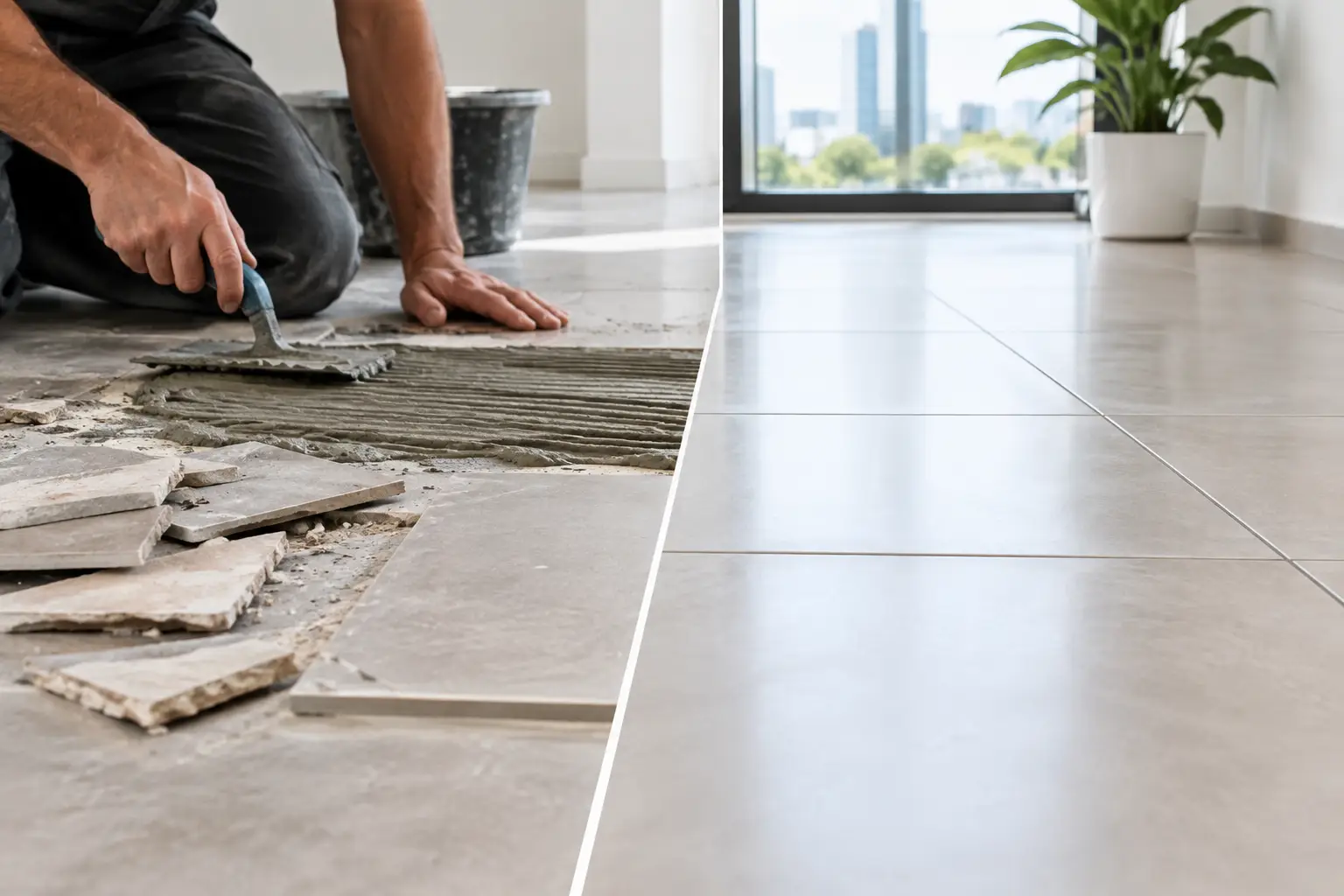
A shower leak showing up on the ceiling below, or a balcony with loose grout around the edges, does not automatically mean the tiles need to come out. Tile repair versus replacement costs can differ dramatically because the right solution depends on where water is getting in and whether the existing tiled surface can be retained.
For many Melbourne properties, deteriorated grout and failed silicone joints are the immediate problem. Renewing these areas can restore the finish, reduce water ingress and avoid the disruption of a full strip-out. But where tiles are loose, the substrate is damaged or the waterproof membrane has failed, replacement may be the more responsible option.
What drives tile repair versus replacement costs?
The biggest difference is not simply the price of new tiles. Full replacement usually involves demolition, rubbish removal, surface preparation, waterproofing, tiling, grouting and silicone work. In a bathroom, it may also affect shower screens, vanities, plumbing fixtures and the ability to use the room while work is underway.
A targeted tile repair is different. Rather than removing the tiled surface, a specialist assesses the grout lines, silicone joints, tile condition and likely path of water ingress. If the tiles are sound and the issue is confined to failed joints or worn grout, regrouting and resealing can be completed without removing tiles.
The cost of either approach is influenced by the size of the area, access, the extent of deterioration and whether damage has spread beyond the visible tiled surface. A small shower with tired silicone around its perimeter is a very different job from a balcony leaking into the unit below.
Labour and demolition change the equation
Demolition is where replacement costs can rise quickly. Tiles need to be removed carefully, but there is still noise, dust and waste to manage. Once the old surface is off, hidden problems can become apparent, including damaged wall linings, cracked screeds, timber decay or a failed waterproof membrane.
Those discoveries are sometimes necessary to address, but they can make a renovation difficult to price precisely before work begins. Replacement can also take longer, particularly when waterproofing and tiling need curing time before the area can be used again.
A repair that preserves the existing tiles generally requires less disruption. There is no large-scale demolition, no need to select matching replacement tiles and far less rubbish leaving the property. This can be particularly helpful in occupied homes, rental properties and apartment buildings where access, noise and shared areas need consideration.
The condition of the tiles matters
Tiles that are secure, reasonably level and free from widespread cracking are good candidates for a tile-preserving repair. Surface staining, mould around silicone, crumbly grout and small gaps at wall-to-floor junctions can all point to maintenance failure rather than a need for total replacement.
On the other hand, hollow-sounding or loose tiles, significant movement, extensive cracking and tiles lifting from the substrate should not be covered over with new grout. These signs may indicate a deeper issue beneath the surface. In that situation, targeted repair may only delay the inevitable and replacement could provide better value over time.
When repair is usually the lower-cost option
Repair is often the practical choice when water is entering through grout joints or perished silicone, while the tiled structure itself remains stable. Showers and balconies are exposed to regular moisture and movement. Silicone is designed to seal junctions where different surfaces meet, such as where walls meet floors or tiles meet a shower screen. When it splits, shrinks or detaches, water can pass behind the visible finish.
Old grout can also become porous, cracked or missing in places. Replacing damaged grout and renewing silicone gives the area a clean, sealed finish without the expense of rebuilding it from scratch. It also avoids the problem of trying to source tiles that match an older bathroom or balcony.
For a landlord or property manager, this approach can limit vacancy periods and reduce the chance of a minor leak becoming a claim for damaged plaster, flooring or a neighbouring lot. For homeowners, it can keep a functional bathroom in service and protect the value of a room that does not otherwise need renovating.
That said, repair should never be treated as a cosmetic shortcut. The work needs to address the reason the leak occurred, not simply make the joints look newer. A proper inspection should check the tiled area, corners, penetrations, shower screen junctions, drainage points and surrounding signs of moisture.
When replacement can be worth the added cost
Replacement makes sense when the existing tiled area has reached the end of its serviceable life or where there is evidence that the waterproofing system below the tiles is no longer performing. Regrouting cannot rebuild a failed membrane, correct poor falls that cause water to pond, or stabilise tiles that have lost their bond.
A full replacement may also be appropriate when a bathroom is being redesigned, plumbing is being moved or the owner wants to change the layout. In those cases, the cost is not just about fixing a leak. It is part of a broader renovation decision.
Balconies need especially careful assessment. Water may enter through failed joints, cracked grout, damaged flashing or movement around door thresholds and balustrade connections. If the underlying structure has been affected, a more extensive repair may be required. Leaving a structural or membrane failure untreated to save money can lead to much larger costs later, particularly in multi-storey properties.
The useful question is not, “Which option is cheapest today?” It is, “Which option properly addresses the source of the problem with the least unnecessary work?” A suitable repair can save thousands compared with replacement. An unsuitable repair can become an added expense if the leak continues.
Comparing the hidden costs of each option
Replacement has obvious costs, but repair decisions have hidden considerations too. A low quote that only covers a quick cosmetic touch-up may not include proper preparation, removal of failed materials or sealing of critical joints. If water ingress returns, the initial saving disappears quickly.
When comparing quotes, ask what work is included and what condition the contractor expects to find. It is reasonable to clarify whether the price covers removal of old grout where needed, mould treatment, silicone renewal, sealing, clean-up and any warranty on waterproof performance.
For replacement, ask how the quote handles demolition, disposal, waterproofing, tiling, fixture removal and reinstatement. Confirm whether there may be additional costs if concealed damage is uncovered. A fixed quote is valuable because it makes the scope clear before the work starts, but it should also be based on a proper site assessment rather than a guess from photographs alone.
Timing also has a cost. A bathroom renovation can affect daily routines for weeks, while balcony work may require residents to keep the area clear and dry. A targeted repair is often completed with much less interruption, provided the area is suitable for it.
How to make the right decision before water damage spreads
Start with the symptoms. Mould returning around shower corners, cracked or missing grout, peeling paint outside a bathroom wall, water marks on a ceiling and staining below a balcony all deserve attention. These signs do not confirm the exact cause, but they are a reason to arrange an assessment promptly.
Avoid relying on surface sealers or patch products as a long-term answer for active leaks. They can make the area look better temporarily while water continues to travel behind tiles or through failed joints. The source needs to be identified before money is spent on either repair or replacement.
A specialist inspection can establish whether your tiles can stay in place and provide a clear scope for the work. Mr. Regrout offers free inspections, fixed quotes and a 5-year waterproof warranty for suitable shower and balcony repairs, giving Melbourne property owners a practical alternative to unnecessary demolition.
If your tiled shower or balcony is showing early signs of failure, acting before surrounding walls, floors or ceilings are affected gives you more choices. The best outcome is often the one that stops the leak properly, retains sound tiles and keeps the cost and disruption in proportion to the problem.