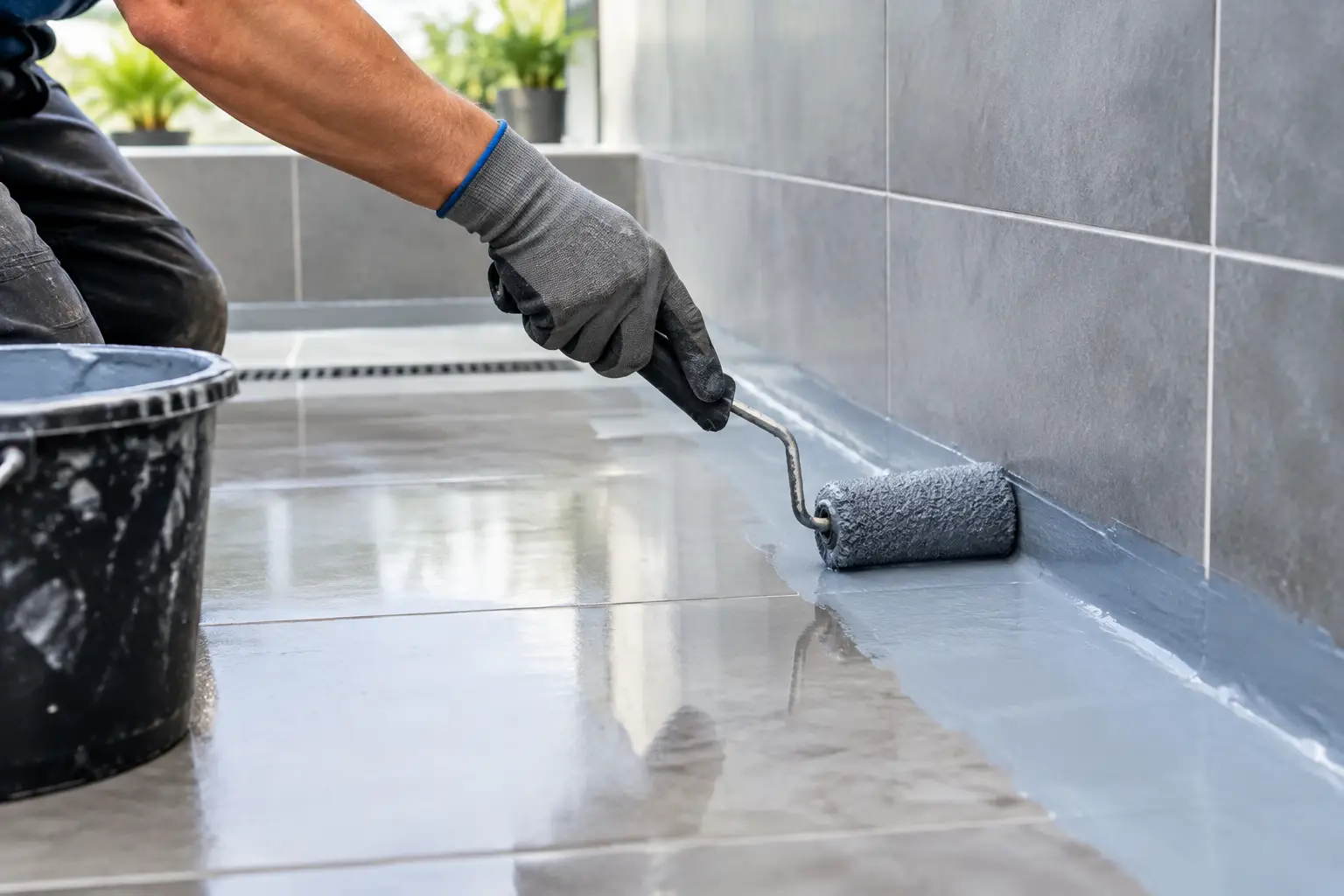
A shower leak rarely starts with water dripping through the ceiling. More often, it begins with cracked grout around a floor tile, mouldy silicone in a corner, or a loose balcony joint that lets rainwater travel behind the surface. Knowing the top waterproofing repair methods helps Melbourne property owners act before a small tiled-area failure becomes damaged plaster, swollen flooring or a dispute with a neighbour below.
The right repair depends on where water is entering, the condition of the tiles and whether the underlying waterproof membrane is still sound. A full renovation is sometimes necessary, but it should not be the automatic answer when the failure is limited to grout and silicone joints.
Start with the source of the leak
Water can travel a long way from the point where it enters. A damp patch on the wall beside a shower may be caused by a failed vertical silicone joint, a cracked shower floor grout line, plumbing behind the wall, or a drainage issue. On a balcony, water may enter through worn grout, perimeter joints, cracks around penetrations or poor falls that leave water sitting on tiles.
That is why a proper inspection comes before selecting a repair method. The visible damage is useful evidence, but it is not always the source. An effective repair targets the failed junction or surface rather than simply covering a stain, applying sealant over dirty joints or replacing tiles at random.
Warning signs worth acting on include persistent mould at silicone edges, grout that is powdery or missing, tiles that sound hollow or move underfoot, peeling paint outside the shower, bubbling skirting boards, and water marks on a ceiling below. For apartments, prompt action is particularly important because moisture can affect common property or the residence underneath.
Top waterproofing repair methods for showers and balconies
Grout replacement and regrouting
Cement-based grout is not a waterproof membrane. It fills and supports tile joints, but as it ages it can crack, become porous or detach from tile edges. Once that happens, regular shower use or rainfall can send water into gaps that were previously protected.
Regrouting involves removing deteriorated grout from the joints and installing new grout correctly. For a tiled shower or balcony with sound, well-bonded tiles, it is often one of the most practical waterproofing repairs. It restores the finished surface, removes places where moisture and mould can collect, and can be completed without removing tiles.
The result depends on preparation. New grout will not perform well if loose material remains in the joints, if the surface is contaminated, or if there is movement beneath the tiles. Regrouting also needs to be paired with silicone renewal at changes of plane, such as wall-to-floor corners, wall junctions and around fittings. Grout is not the correct material for these movement joints.
Silicone joint renewal
Silicone is a flexible sealant used where tiled surfaces meet, move or change direction. In showers, this includes corners, floor-to-wall joints, the shower screen edge and penetrations around taps. On balconies, it may include perimeter joints, door thresholds, balustrade penetrations and areas where tile work meets another surface.
Old silicone can shrink, split, lift away from the tile or become heavily mould-stained. Applying fresh silicone over failed material is not a reliable repair. The existing silicone should be removed, the joint cleaned and dried, and new quality sealant installed with a continuous bond to both sides of the joint.
Silicone renewal is a targeted solution when the failure is localised. It is also a sensible preventative measure for older showers before water has a chance to reach adjacent walls or flooring. However, silicone alone cannot fix widespread cracked grout, loose tiles or a failed membrane below the tile bed.
Tile and joint sealing
Penetrating sealers can reduce water absorption in suitable porous grout and tile surfaces. They can be useful as part of maintenance after repairs, particularly on a balcony exposed to Melbourne's wet weather, but they are not a substitute for sound grout, silicone or waterproofing.
Surface sealing is often misunderstood as a cure for a leaking shower. If water is entering through open joints, failed corners or a break in the membrane, a sealer may mask the issue briefly while moisture continues to travel below the tiles. It should be viewed as an added layer of protection where the underlying tiled surface has already been repaired and is in good condition.
Localised tile repair
A cracked or loose tile can create a direct path for water and may point to movement or moisture beneath the surface. Where the damage is isolated and surrounding tiles are secure, carefully replacing a small number of tiles can be appropriate. The repair needs compatible adhesive, properly finished grout and flexible sealant at adjoining movement joints.
The trade-off is that a replacement tile does not address a broader waterproofing problem. If several tiles are loose, the substrate is damp, or cracking continues across the area, local tile replacement may only delay a larger repair. An inspection should establish whether the tile is the cause or merely a symptom.
Membrane repair and partial retile work
Tiled wet areas rely on a waterproof membrane beneath the surface. If that membrane has failed extensively, water may bypass otherwise tidy grout and silicone. Signs can include ongoing leaking after surface repairs, widespread tile movement, persistent dampness, or damage in adjoining rooms despite no obvious joint failures.
In these circumstances, sections of tilework may need to be removed so the substrate and membrane can be repaired or replaced. This is more disruptive and costly than regrouting, but it may be the durable option where the membrane cannot be protected from above. The scope should be based on evidence, not an assumption that every leak requires a complete bathroom demolition.
Full bathroom or balcony waterproofing replacement
A full strip-out and retile is generally reserved for extensive membrane failure, major substrate damage, widespread tile debonding, poor original construction or a planned renovation. It provides access to rebuild the wet area from the substrate up, including falls, drainage details and waterproofing.
It is the most invasive option. It also creates more cost, time and household disruption, particularly where matching replacement tiles are unavailable. For many established Melbourne homes, a targeted grout and silicone repair offers a better first outcome when the tiles and underlying structure remain sound. The key is not choosing the biggest repair, but choosing the repair that addresses the actual failure.
When can repairs be completed without removing tiles?
Tile-preserving repair is usually worth considering when tiles are firmly bonded, there is no evidence of widespread membrane failure, and the water entry points are deteriorated grout or failed silicone. This approach can restore the waterproof integrity of the tiled finish while avoiding demolition, replacement tiles and unnecessary waste.
It is especially relevant for owners who need to stop a leaking shower before selling, landlords arranging maintenance between tenancies, or strata managers responding to water ingress in an apartment building. It can also be the sensible choice for a balcony that is otherwise structurally sound but has weathered joints and cracked grout.
A specialist should still be clear about limitations. No surface repair can guarantee success if the waterproof membrane has already broken down across the area or if water is coming from plumbing. Good advice explains what can be repaired from the tiled surface, what needs further investigation and why.
Choosing a repairer for a lasting result
Ask whether the assessment identifies the likely entry point, whether failed material will be removed rather than covered, and whether the quote clearly separates the recommended work from optional extras. Fixed quotes help avoid uncertainty once work begins, while a written warranty gives property owners confidence that the repairer stands behind the outcome.
For shower and balcony repairs, experience with tiled wet areas matters. The work may look straightforward, but joint preparation, product selection and finishing details determine whether water is kept out or finds a new gap within months. Mr. Regrout provides free inspections, fixed-price quotes and a 5-year waterproof warranty for suitable remedial work across metropolitan Melbourne.
Do not wait for a ceiling stain to decide a leak needs attention. If grout is breaking down or silicone has separated from the tiles, arranging an inspection now may be the simplest way to protect the rooms, finishes and people on the other side of the wall or floor.