A balcony can look perfectly serviceable from the outside while water is working its way beneath the tiles. The most common warning signs balcony water damage is developing are often small at first: cracked grout, lifting silicone, damp marks or a musty smell near the balcony door. Acting at this stage can prevent a repairable tiled surface from becoming damage to walls, ceilings, framing or the apartment below.
For Melbourne property owners, balconies face regular rain, changing temperatures and exposure to wind-driven water. When grout and sealant joints deteriorate, water can pass through the tiled finish and remain trapped where it should not be. The earlier the source is identified, the more likely it is that the balcony can be repaired without removing tiles.
1. Cracked, missing or crumbling grout
Grout is not just a cosmetic finish between balcony tiles. It helps close the joints and support the tiled surface, particularly where rainwater regularly sits or flows across the balcony. Fine cracks, gaps, loose sections and powdery grout are all signs that the joints are no longer doing their job properly.
Pay close attention to grout around the perimeter, near drains, along thresholds and in areas exposed to the most weather. A single hairline crack does not always mean widespread water damage, but a pattern of failed grout is a reason to arrange an inspection. Water follows the easiest path, and open joints provide one.
2. Failed silicone around edges and door thresholds
Silicone seals movement joints where tiles meet walls, balustrades, door frames and other fixed surfaces. These are high-risk areas because buildings move slightly over time while tiles remain rigid. Silicone that has split, shrunk, detached from the edge or become mouldy can allow water behind the tiled surface.
The balcony doorway deserves particular attention. If water enters around the threshold, it can affect the internal floor, skirting boards and wall linings as well as the balcony structure. Dark staining, swelling timber finishes or bubbling paint inside the adjoining room should be treated as an urgent sign of possible water ingress.
3. Water pooling instead of draining away
After rainfall, a balcony should drain efficiently towards its outlet. Small amounts of water may remain briefly on textured tiles, but persistent puddles are different. Pooling water puts added pressure on grout, silicone and the waterproofing system below the tiles.
A blocked drain can be the immediate issue, so clear leaves and debris where it is safe to do so. However, if water continues to pond despite a clear drain, there may be a drainage or fall issue. Regrouting and resealing can address failed surface joints, but they cannot correct every underlying drainage problem. A proper assessment should distinguish between the two before work begins.
4. White deposits, loose tiles or hollow sounds
White, chalky residue on grout, tile edges or nearby masonry is often called efflorescence. It occurs when moisture carries salts through materials and leaves them behind as the water evaporates. It is not proof of a balcony leak on its own, but it is a useful clue that moisture is moving through the assembly.
Tiles that rock underfoot, sound hollow when tapped or have begun to lift need prompt attention. Water beneath tiles can weaken the adhesive bond, and movement can then crack more grout and create further entry points. Do not keep patching loose tiles with sealant from the top. The cause of the movement needs to be checked first.
5. Damp marks below or beside the balcony
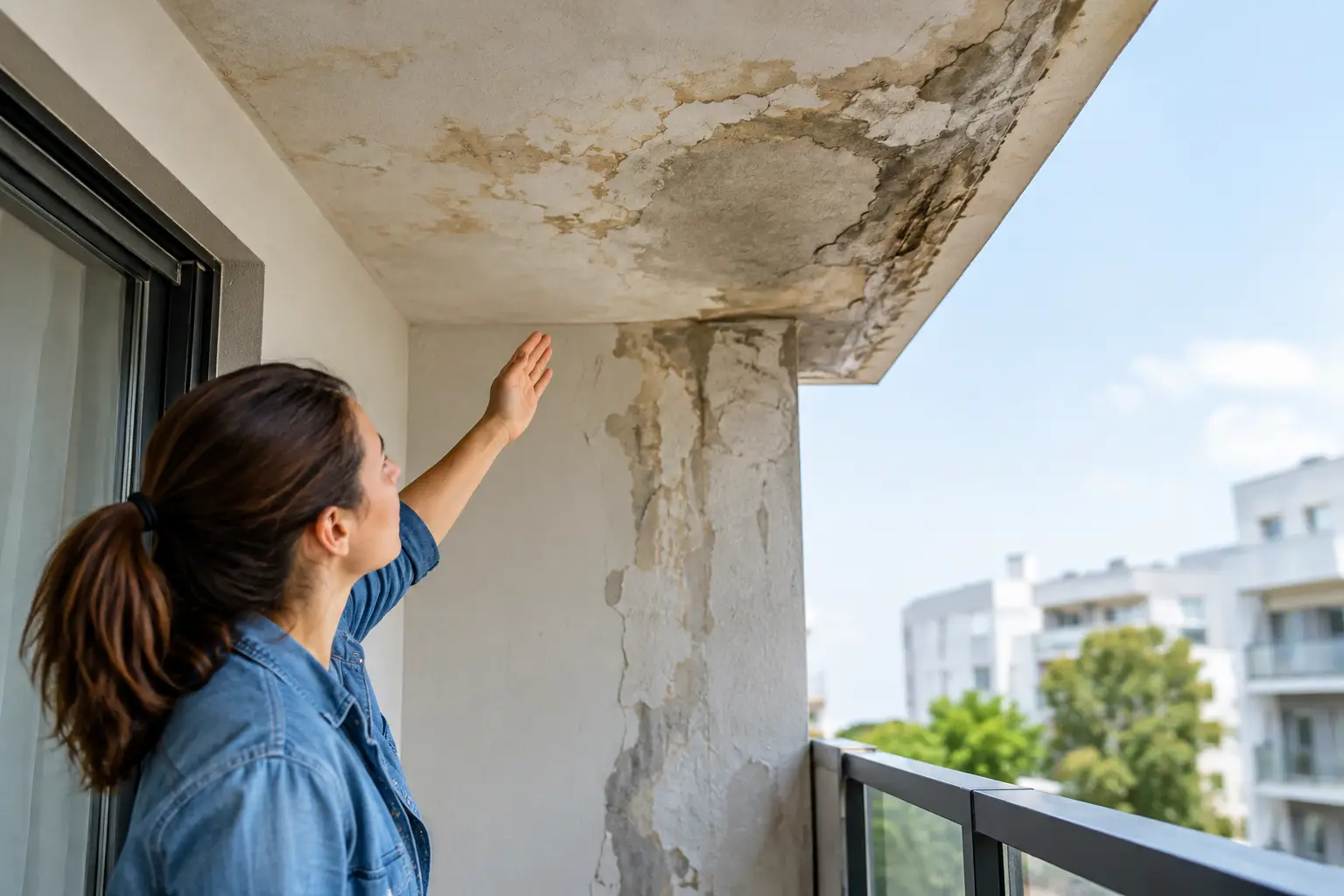
One of the clearest warning signs of balcony water damage is staining on the ceiling or wall beneath the balcony. You may notice discolouration, peeling paint, blistering render, a brown tide mark or mould growth. In a multi-storey home or apartment building, this can appear in a room below, a garage, a neighbour's ceiling or on an external wall.
The location of a stain does not always identify the exact entry point. Water can travel along framing, concrete or other concealed surfaces before becoming visible. That is why simply repainting the mark is rarely a solution. The water source should be addressed and the area allowed to dry before cosmetic repairs are considered.
6. Mould, musty odours or recurring discolouration
Outdoor balconies are exposed to moisture, so a little surface dirt after wet weather is normal. Recurring black mould around silicone, persistent green growth in grout lines or a musty smell from the room beside the balcony is not something to ignore. These signs can indicate that moisture is being retained around joints or behind finishes.
Cleaning mould may improve the appearance temporarily, but it will not restore failed silicone or missing grout. If mould returns soon after cleaning, it is worth checking the condition of the joints rather than treating it as a housekeeping issue. This is especially relevant for rental properties, where small defects can become larger maintenance disputes if left unresolved.
7. Damage around the balcony perimeter
Inspect the areas where the balcony meets walls, balustrade posts, planter boxes and external cladding. Look for cracking paint, deteriorating sealant, rust marks, swollen trim or soft material around penetrations. These junctions receive concentrated water and are more vulnerable than the open tiled field.
Planter boxes can add another layer of risk. Overflowing irrigation, blocked drainage or wet soil against adjoining surfaces may be contributing to the problem. A balcony repair should account for how water is being introduced and where it is meant to drain, rather than focusing only on the most visible cracked grout line.
8. A leak that only appears after heavy rain
Intermittent leaks are easy to postpone because they disappear when the weather clears. Yet a stain that appears only after a storm can still indicate an active pathway for water. Heavy rain tests balcony joints in a way that ordinary cleaning or light showers may not.
Take dated photos of puddling, staining, failed grout and any changes inside the property. For landlords and property managers, clear records also help establish when the issue was first observed and support timely maintenance decisions. Avoid relying on a dry-day visual check alone if the problem is clearly weather-related.
What to do when you spot balcony water damage
Start by reducing unnecessary water exposure. Keep drains clear, do not hose the balcony unnecessarily and avoid placing heavy items over damaged tiles or joints. Do not apply new silicone over loose, dirty or mould-affected sealant, as it may not bond properly and can conceal the condition of the joint.
The next step is to have the balcony assessed by a specialist who understands tiled wet-area failures. The inspection should consider grout condition, silicone movement joints, drainage, tile movement and evidence of water impact around the balcony. In many cases, deteriorated grout and failed silicone can be removed and renewed without the cost, disruption and waste of stripping out sound tiles.
There are limits to any tile-preserving repair. If tiles are extensively loose, the substrate has failed, the balcony has major structural defects or drainage falls are fundamentally wrong, more substantial work may be required. A straightforward assessment is valuable because it identifies whether targeted regrouting and resealing is appropriate before money is spent on unnecessary renovation.
Repairing balcony joints without removing tiles
Where the tiled surface is stable and the main problem is failed grout or silicone, a targeted repair can restore the balcony's protective finish. Old, damaged material is removed, joints are prepared correctly, new grout is installed where required and flexible silicone is renewed at movement joints. The aim is to close the water-entry points while retaining the existing tiles.
For Melbourne homeowners, Mr. Regrout provides free inspections and fixed quotes for this type of work, with a 5-year waterproof warranty on qualifying repairs. That gives owners a clear path forward without committing to demolition before the cause has been assessed.
A balcony leak rarely improves by waiting for the next dry spell. If you can see failing grout, split silicone or dampness around the balcony, arrange an inspection while the signs are still localised and the repair options are likely to be simpler.