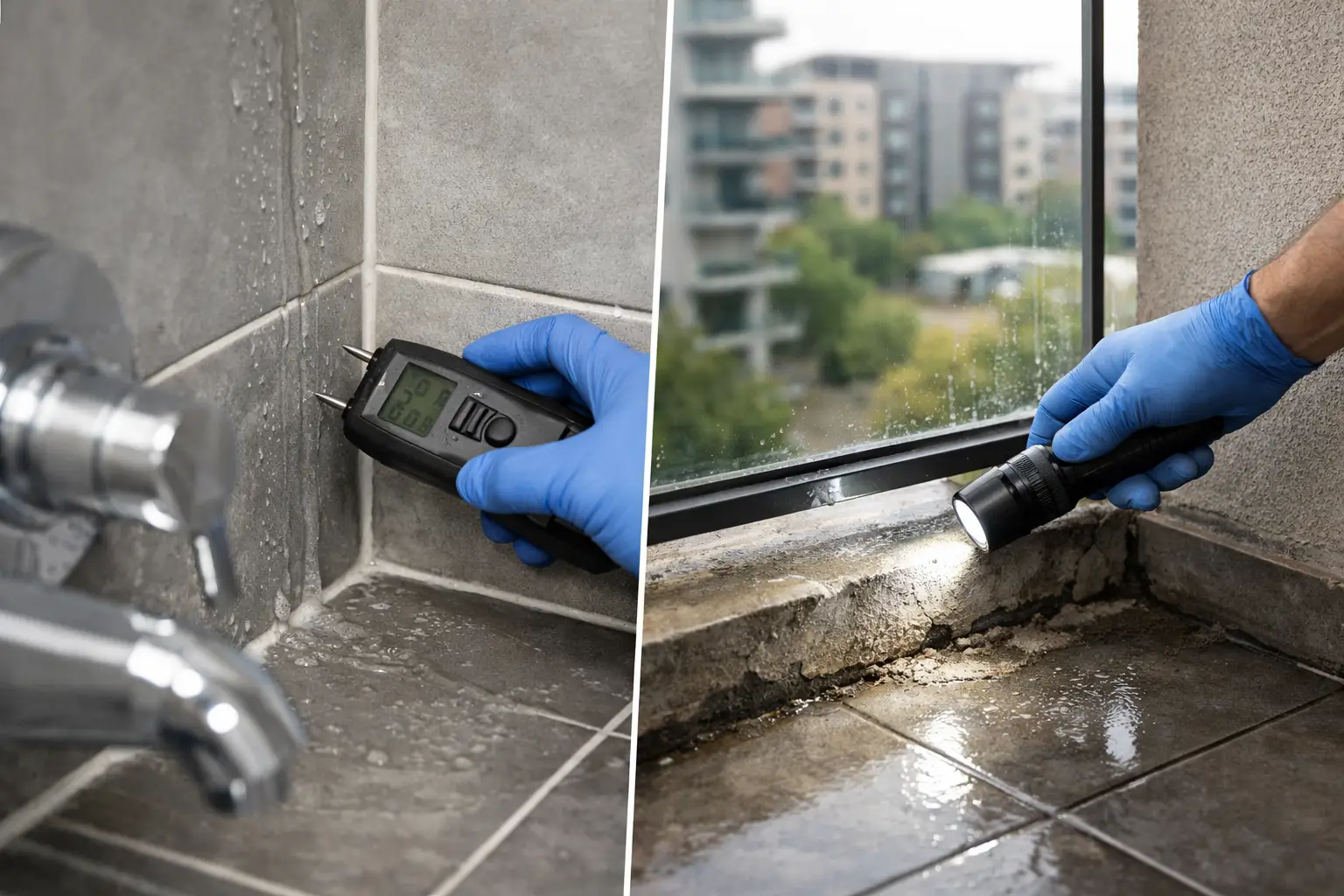
A damp patch on the ceiling below a shower is rarely where the problem began. The same applies to a balcony that leaves stains on the soffit, a mouldy skirting board beside a bathroom, or grout that never seems to dry. Effective water ingress diagnosis identifies the route water is taking before the visible damage becomes a larger repair.
For Melbourne homeowners, landlords and property managers, the priority is clear: stop water getting beyond the tiled surface without paying for demolition that may not be necessary. Many shower and balcony leaks are linked to worn grout, cracked tiles, failed silicone joints or gaps around fixtures. These faults can often be repaired without removing tiles, but only after the source has been assessed properly.
Why water ingress is not always obvious
Tiles are not the waterproof layer in a shower or balcony. They are the hard-wearing finish. Water is managed by the system behind and around them, including grout, silicone joints, drainage points and the waterproof membrane beneath the tiles.
When grout becomes porous, cracked or missing, water can pass through the joints. When silicone separates at the wall-to-floor junction, around a shower screen or near a bath, water can bypass the areas designed to contain it. On balconies, movement, weather exposure and blocked drainage can put extra pressure on joints and edges.
The trouble is that water does not always appear directly below the failure. It may travel along a floor substrate, behind a wall lining or through a slab before showing up as bubbling paint, a swollen architrave, a musty smell or staining in another room. In apartments, it can also affect the property below. Treating the visible mark alone does not address the leak.
Water ingress diagnosis starts with the right questions
A useful inspection looks at the whole wet area, not just the most obvious crack. The age of the shower or balcony, when the issue occurs, and whether it follows rain, shower use or cleaning all help narrow down the cause.
A shower that leaks only when the screen is used may have a failed silicone joint or screen seal. Water appearing after every shower, including when the floor is kept dry, may point to plumbing rather than tiled surfaces. A balcony leak after heavy rain could be caused by deteriorated joints, poor drainage, failed flashing or a problem with the waterproofing system.
This distinction matters. Regrouting and silicone renewal are targeted repairs for surface-joint failures. They are not a substitute for repairing a burst pipe, correcting major drainage issues or replacing a waterproof membrane that has failed extensively. A straightforward specialist will explain what the inspection indicates and where further investigation may be needed.
Signs worth acting on early
Some warning signs deserve prompt attention, even when the leak seems minor. Persistent mould in silicone, crumbling or discoloured grout, loose tiles, peeling paint on an adjoining wall, and dampness below a bathroom or balcony are all reasons to arrange an assessment.
Other clues are more subtle. A shower floor that stays dark long after use, silicone pulling away from a corner, or white mineral deposits on balcony grout can indicate repeated moisture exposure. None confirms the cause on its own, but together they help build a clear picture.
Waiting can be costly because water damage often expands out of sight. Timber framing, plasterboard, cabinetry, insulation and flooring can all be affected once moisture moves beyond the tiled area. For landlords and managers, a small leak can also become a tenant complaint, an insurance issue or a dispute with an adjoining owner.
What a proper inspection checks
A practical water ingress diagnosis combines visual checks with an understanding of how tiled wet areas fail. The goal is to identify likely entry points, rule out obvious alternatives and recommend work that matches the condition of the area.
In a shower, this commonly includes checking grout condition across the walls and floor, the silicone at internal corners and wall-to-floor joints, tile movement, cracks, the shower screen perimeter and penetrations around taps. The drain area also needs attention, as damaged grout or poorly sealed edges nearby can allow repeated water entry.
For a balcony, the inspection should consider grout joints, expansion joints, perimeter seals, tile cracks, wall junctions, drainage and signs of ponding. Balconies face rain, direct sun and temperature movement, so a repair approach needs to account for movement rather than simply filling every gap with more grout.
Moisture readings and controlled water testing may be appropriate in some situations, particularly where there is a clear pattern of damage. However, diagnosis is not always a single test with a yes-or-no answer. Access limitations, concealed construction and the timing of the leak can affect what can be confirmed on the day. The key is a reasoned assessment, not a guess based on one stained patch.
When regrouting and silicone renewal are the sensible repair
Where the tiled surface is sound and the main issue is deteriorated grout or failed silicone, targeted remedial work can be a practical alternative to a full renovation. Old grout is removed where required, joints are renewed, and failed silicone is replaced to restore the seals around vulnerable edges.
This approach retains existing tiles and avoids the noise, dust, waste and extended downtime of demolition. It is particularly useful in otherwise serviceable bathrooms, investment properties between tenancies and balconies where owners want to protect the area before more damage develops.
The quality of preparation matters. Applying fresh grout over loose, contaminated or failing material is unlikely to provide a lasting result. Likewise, new silicone needs clean, stable edges and the correct joint treatment. A cosmetic patch can look better for a short time while allowing water to keep moving behind the tiles.
At Mr. Regrout, the focus is on identifying whether grout and silicone failure are the likely source, then completing a tile-preserving repair where it is appropriate. Free inspections and fixed quotes give Melbourne property owners a clear view of the proposed work before they commit, with a 5-year waterproof warranty supporting eligible repairs.
Cases where a different repair may be needed
Not every leak can be solved from the tile surface. If there is evidence of a plumbing leak, substantial substrate movement, extensive membrane failure, structural cracking or major drainage defects, the repair may require another trade or more invasive work.
That can be disappointing to hear, but it is better than spending money on a repair that does not address the actual cause. The right outcome depends on the condition of the wet area, not on forcing every problem into the same solution.
For example, a cracked grout joint near a shower corner may be straightforward to repair. Multiple loose tiles, widespread hollow sounds and ongoing dampness despite sound joints may suggest a deeper issue. On a balcony, water pooling against a doorway may need drainage or building-envelope attention in addition to joint repairs.
Protecting the area after repairs
Once the source has been addressed, simple care helps extend the life of grout and silicone. Keep shower corners and screen channels reasonably clean, use ventilation to reduce lingering moisture and avoid harsh cleaning methods that wear away joints. On balconies, clear leaves and debris from drains so water can escape freely after rain.
It also pays to inspect the area periodically. Silicone can deteriorate with age, and grout is exposed to regular movement, cleaning and moisture. Early attention to small cracks or separation is usually less disruptive than waiting for a visible leak below.
If your shower or balcony is showing early warning signs, arrange an inspection while the issue is still contained. A clear diagnosis can protect the rooms around it, preserve your existing tiles and give you a practical repair path before a minor leak becomes a major one.