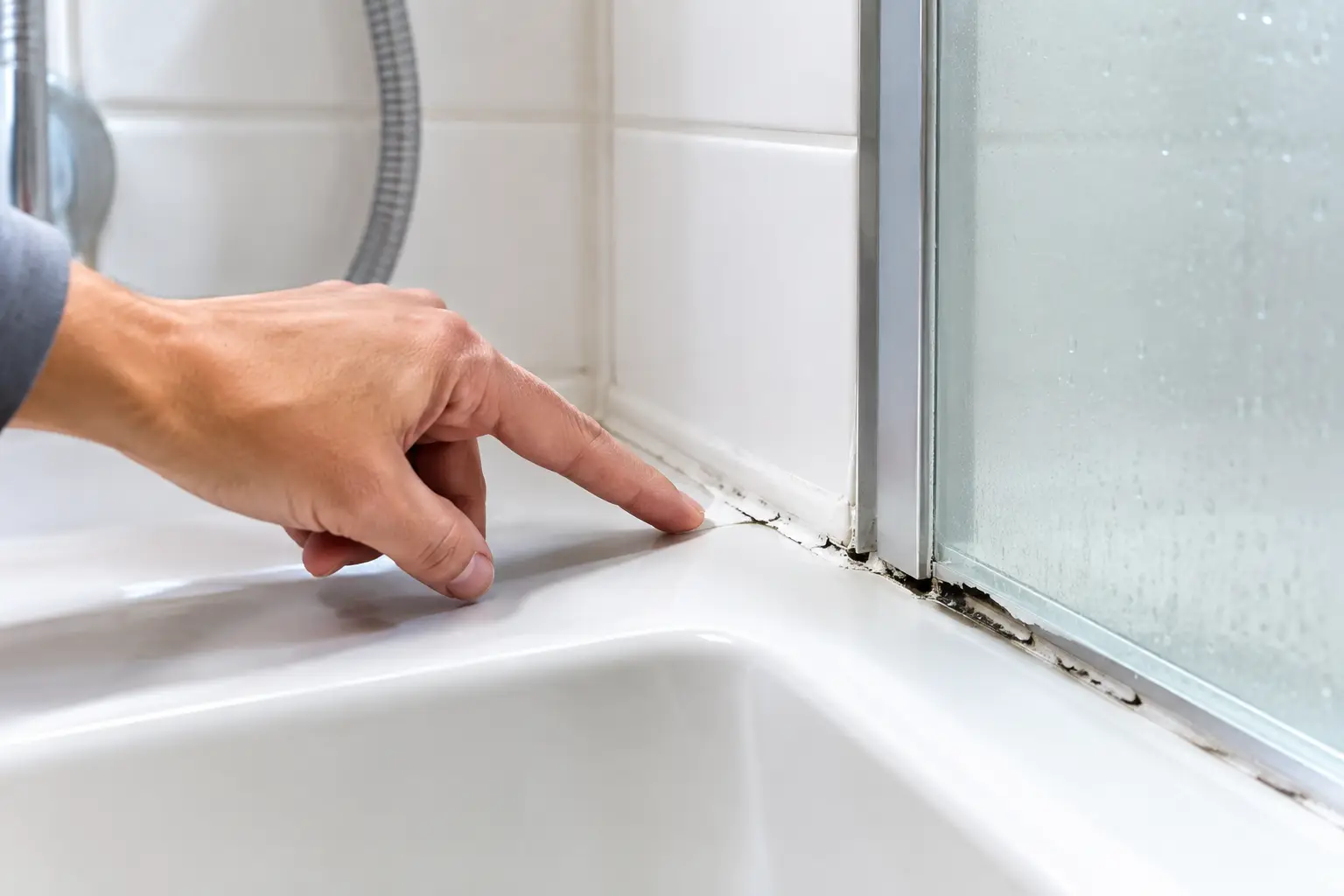
A thin line of silicone around a shower can look like a cosmetic detail, but it is one of the bathroom’s key water barriers. Knowing when to replace shower silicone can prevent water working behind tiles, into wall linings or through the floor below. In Melbourne homes, where many bathrooms have seen years of daily use, failed silicone is a common contributor to shower leaks.
Silicone does not last forever. It flexes as the shower tray, walls and tiles move slightly over time, then gradually loses adhesion. Replacing it early is generally a straightforward maintenance job. Waiting until water damage appears can turn a small joint repair into a much larger problem.
When to replace shower silicone
Shower silicone should be replaced when it is no longer forming a clean, flexible and fully bonded seal between surfaces. There is no single replacement schedule that suits every bathroom. A well-applied, quality sanitary silicone joint may last several years, while silicone in a heavily used family bathroom can fail sooner.
Rather than relying only on age, inspect the joints around the shower base, wall-to-floor corners, vertical wall corners, shower screen channels and bath edges. These are the points where movement and repeated exposure to water place the most pressure on the seal.
If the silicone is intact, firmly attached and free from mould that has penetrated the seal, it may not need replacement yet. If it is cracked, lifting or discoloured throughout, renewal is usually the sensible option.
Cracks, splits and gaps
Cracking is one of the clearest signs that shower silicone has reached the end of its useful life. Small splits can develop as the sealant dries out, shrinks or is stretched by normal movement in the shower area. Gaps often appear where silicone meets the shower base or at the bottom corners of tiled walls.
Even a narrow gap matters. Water does not need a large opening to enter a wall cavity or the area beneath a shower tray. If a crack returns shortly after a patch repair, the old silicone may be failing more broadly or movement in the area may need to be assessed.
Silicone pulling away from tiles or the shower base
Silicone should be bonded tightly to both surfaces it is sealing. When an edge curls, lifts or separates from the tile, grout line or shower base, water can travel behind it. This is particularly common at the junction between a tiled wall and an acrylic shower base.
Pressing on loose silicone can reveal hidden separation, but avoid digging it out yourself if you suspect a leak. Disturbing the joint without resealing it properly can leave the area more exposed. A proper renewal involves removing failed silicone completely, preparing and drying the joint, then applying a continuous new bead.
Persistent mould or staining
Surface mould can often be cleaned from sound silicone. However, black spotting that remains after cleaning, sits within the sealant, or repeatedly returns is different. It can indicate that mould has penetrated the silicone or that moisture is being held behind loose edges.
Stained silicone is not always leaking, but it is worth treating as an early warning sign. In rental properties and apartments, renewing mould-affected silicone also improves presentation and helps property managers address a maintenance issue before it develops into a complaint about a leaking shower.
Brittle, hard or shrunken sealant
Good silicone remains slightly flexible. Old silicone may become hard, chalky, thin or noticeably shrunken away from one side of the joint. It may also feel brittle when gently touched.
This deterioration can happen gradually, so it is easy to overlook until a section breaks away. Regular cleaning gives homeowners a good opportunity to check the condition of the joints rather than only noticing them when water damage is visible.
Signs the problem may be more than silicone
Failed shower silicone is a common issue, but it is not the only cause of water ingress. If water is escaping from a shower, the source could also involve cracked or missing grout, damaged tiles, a faulty shower screen, plumbing leaks, poor drainage or a compromised waterproof membrane.
Pay attention to signs outside the shower itself. Peeling paint on an adjacent wall, swollen skirting boards, a damp patch on the ceiling below, loose tiles, musty odours or water appearing outside the shower enclosure all warrant a proper inspection. Replacing silicone alone may improve the appearance, but it will not solve a leak caused by another failed component.
This is why diagnosis matters. A specialist should look at the entire wet area, including grout condition, movement joints and surrounding surfaces, before recommending work. The goal is to stop water entry at its source without removing tiles unnecessarily.
Why shower corners need flexible silicone, not grout
Grout and silicone have different jobs. Grout fills the spaces between tiles on flat surfaces. Silicone is used at changes of direction and where different materials meet, such as wall corners, the wall-to-floor junction and around a shower base.
These areas move slightly as the building settles, materials expand and contract, and people use the shower. Grout is rigid, so it can crack at these junctions. Silicone is designed to flex, provided it has been applied correctly and remains bonded.
A common short-term fix is to add new silicone over old material. This can look better for a short period, but new silicone does not reliably adhere to old, contaminated or loose silicone. It can trap mould and moisture underneath, then lift again. For a durable result, failed silicone needs to be removed before the joint is cleaned, dried and resealed.
How quickly should you act?
If you can see gaps, lifted silicone or cracks around the shower base, arrange repair promptly. The longer the shower is used with an open joint, the more opportunity water has to travel behind finished surfaces. This is especially important in upstairs bathrooms, apartment bathrooms and properties with timber framing or flooring nearby.
Where there is visible water damage or an active leak, avoid assuming it will dry out on its own. Limit shower use if practical until the source has been assessed. Continuing to use the shower can allow moisture to spread, potentially affecting neighbouring rooms, ceilings or apartments below.
For landlords and property managers, early action also helps avoid a minor maintenance request becoming a vacancy, insurance or tenant damage issue. Clear photos of failed joints and affected areas can help document the condition while an inspection is arranged.
What a proper silicone renewal involves
A lasting silicone replacement is more than applying a neat bead over the top. The existing failed silicone must be cut out carefully without damaging tiles, the shower base or waterproofed areas behind them. The joint then needs to be cleaned of residue, soap build-up and mould, and allowed to dry thoroughly.
The new sanitary-grade silicone is applied as a continuous, correctly sized bead with a smooth finish that sheds water rather than holding it. The shower must then remain dry for the recommended curing period. Using it too soon can affect the seal before it has properly set.
The quality of preparation is just as important as the product. If the joint is damp, dirty or still carrying silicone residue, even premium sealant may not adhere as it should. This is one reason recurring silicone failure is often linked to rushed repairs.
A tile-preserving repair option for Melbourne homes
When silicone failure occurs alongside deteriorating grout, a targeted shower repair may be more appropriate than replacing one joint in isolation. Regrouting and renewing silicone can restore the protective finish of a tiled shower without the cost, disruption and waste of a full strip-out.
Mr. Regrout provides Melbourne property owners with free inspections and fixed quotes for shower repairs that retain existing tiles where possible. Where the assessment confirms suitable remedial work, the focus is on addressing failed grout and silicone joints to protect the shower from further water ingress, supported by a 5-year waterproof warranty.
Do not wait for a stain on the ceiling or a swollen wall to tell you the seal has failed. A close look at the shower corners now can be the simplest way to protect the bathroom, the rooms around it and the value of the property.