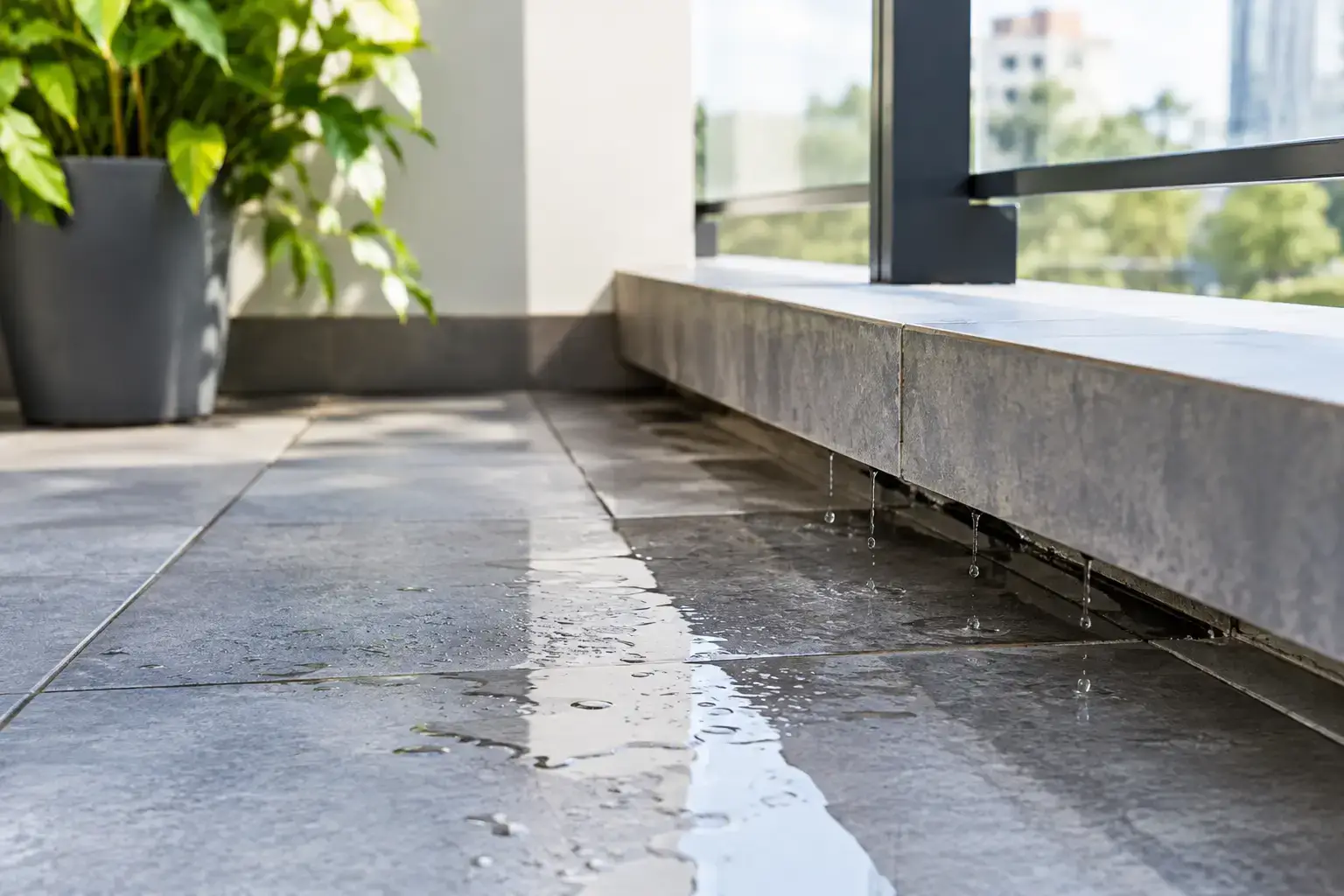
A balcony can look perfectly serviceable from above while water is travelling beneath the tiles, into the slab edge or through the ceiling below. That is why balcony tiles leak: the visible tile surface is only one part of a waterproofing system, and the joints around it are often where that system starts to fail.
For Melbourne homeowners and property managers, a leaking balcony is not a cosmetic issue to leave for later. Water can damage plaster ceilings, timber framing, render, paintwork and neighbouring apartments. Acting early may allow a targeted repair without removing tiles. Leaving it until the leak is obvious inside usually makes the job more complicated and costly.
Tiles are not the waterproof layer
Tiles are hard-wearing, but they are not a sealed roof over your balcony. Small amounts of water can pass through grout, hairline cracks and unsealed edges, particularly after persistent rain. The waterproof membrane beneath the tiles is designed to direct that moisture towards the drainage point.
The problem begins when water finds a path through worn joints or cracks and the membrane, drainage or perimeter detailing cannot manage it. On an exposed balcony, repeated heat, cold, rain and movement place far more pressure on tiled joints than an indoor floor.
A sound repair starts by identifying where water is entering, rather than assuming every leak needs a full retile. In many cases, failed grout and silicone can be renewed to restore protection while retaining the existing tiles.
The common reasons balcony tiles leak
Grout has cracked, worn away or become porous
Grout fills the gaps between tiles, but it can deteriorate over time. Cracks, missing sections, powdery grout and darkened joints are all signs that water has a route below the tile surface. Balconies are especially prone to this because the tiled area expands and contracts with changing temperatures.
Pressure cleaning, harsh chemicals and general weather exposure can also wear grout faster. If water sits on the balcony after rain, weakened grout receives even more exposure. Regrouting can close these entry points, provided the underlying waterproofing remains serviceable.
Silicone joints have failed at the edges
The joints where a balcony meets a wall, door frame, balustrade base or raised edge need flexible sealant, not rigid grout. These are movement joints. When the building and tiles shift slightly, silicone is meant to flex with them.
Old silicone often splits, peels away, shrinks or develops mould. Once the seal breaks, water can run behind it and enter wall junctions or the balcony perimeter. It is a small failure with potentially significant consequences, particularly around sliding doors and external walls.
Water is not draining away properly
A tiled balcony needs adequate fall towards its waste outlet or drainage edge. If the surface has low spots, water pools after rainfall and repeatedly tests every grout line and joint. Blocked outlets, leaves and debris can make the issue worse.
Poor drainage does not always mean the tiles need to be removed. However, where the balcony has no workable fall, an incorrectly located outlet or major ponding, a specialist assessment is needed to establish whether surface repairs alone will be enough.
Cracked tiles or damaged edges let water through
A cracked tile is not always the original cause of a leak, but it should never be ignored. It may have cracked because of impact, movement in the substrate or water-related deterioration beneath it. Chips around balcony edges, drains and doorways are also vulnerable because they expose areas where water naturally collects or changes direction.
Replacing isolated damaged tiles may be possible, but the surrounding grout and silicone still need attention. Repairing one obvious crack without addressing failing joints nearby can leave the same water path open.
Balustrade, wall and door penetrations are weak points
Balcony leaks are often blamed on the floor tiles when the real issue is where another building element meets the tiled area. Balustrade posts, wall flashings, door thresholds and penetrations for services all require careful waterproof detailing.
If sealant around these points has failed, water can bypass the tiled surface entirely. This is one reason a proper inspection matters. Treating only the grout may improve the appearance, but it will not stop a leak entering through a failed perimeter joint.
Signs the leak may be coming from your balcony
The first sign is not always water dripping below. You may notice staining or bubbling paint on the ceiling under the balcony, moisture marks on an external wall, mould near an adjoining room, or rust around fittings. In apartments, the affected area may be in the property below rather than your own.
On the balcony itself, look for cracked or missing grout, lifting silicone, loose tiles, persistent puddles, white mineral deposits, discoloured joints or mould that returns soon after cleaning. None of these signs proves exactly where the leak begins, but together they point to a system that needs attention.
If a leak appears only after heavy rain or wind-driven rain, the source may be at an exposed wall, threshold or balustrade connection. If it worsens whenever water pools on the balcony, grout, drainage and the membrane beneath the tiled area become more likely suspects.
Why sealing over the problem often fails
A quick coat of sealant over dirty grout or cracked silicone can look like an economical fix, but it rarely lasts. Sealants need a clean, stable surface to bond properly. Applying product over loose grout, old silicone or moisture can trap the problem underneath and create a temporary surface finish rather than a durable barrier.
Likewise, grout alone should not be used in corners or where the balcony meets walls. Those areas need flexible silicone to accommodate movement. Using the correct materials in the correct locations is what gives a tile-preserving repair its best chance of lasting.
A quality remedial repair normally involves removing deteriorated grout where required, preparing the joints, applying suitable replacement grout, removing failed silicone and renewing movement joints. Drainage points and vulnerable edges should also be checked as part of the diagnosis.
Can a leaking tiled balcony be repaired without removing tiles?
Often, yes. If the tiles are generally sound and the water ingress is caused by failed grout, silicone or perimeter joints, a targeted balcony regrouting and resealing repair can restore protection without demolition. This avoids the cost, mess and waste of removing an entire tiled balcony simply because its joints have deteriorated.
It depends on the condition of the waterproof membrane and substrate. If there is widespread membrane failure, major cracking, structural movement, extensive drummy tiles or inadequate drainage falls, a more substantial waterproofing repair may be necessary. An honest assessment should distinguish between a repairable joint failure and a deeper construction issue.
For an established Melbourne property, this distinction can save considerable expense. There is no benefit in recommending a full renovation when a specialist repair can address the actual source of water ingress. Equally, there is no value in regrouting a balcony when evidence suggests the membrane has failed beyond what surface work can resolve.
What to do when you suspect a balcony leak
Avoid repeatedly hosing the area down to test it, and do not rely on caulk from the hardware store as a long-term fix. Clear leaves and debris from drains, take photos of visible staining or damaged joints, and note when the leak occurs. That information helps identify whether rain, ponding water or a particular edge is involved.
Then arrange a professional inspection before internal damage spreads. Mr. Regrout provides free inspections and fixed quotes for suitable tiled balcony repairs, with work focused on renewing failed grout and silicone without removing tiles. Where a targeted repair is appropriate, a 5-year waterproof warranty provides added confidence that the work is designed to protect the area, not merely improve its appearance.
A balcony should be a usable outdoor space, not a source of hidden water damage. Addressing worn joints and failed sealant while the problem is contained gives you the best chance of keeping your existing tiles and protecting the home beneath them.