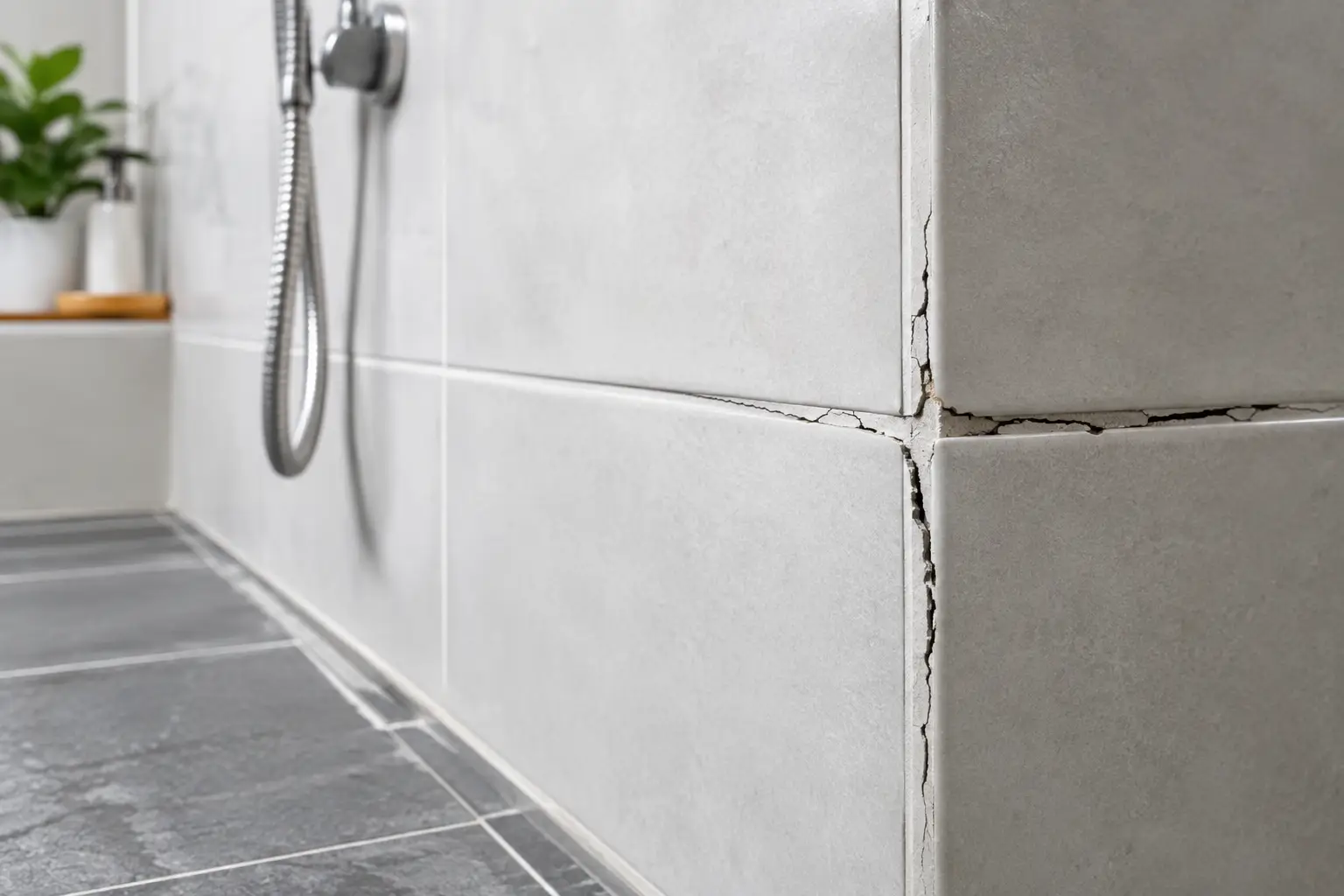
A hairline crack in a shower grout line can look like a small cosmetic issue. But if you are wondering why bathroom grout keeps cracking, the answer is often more than normal wear. Cracked grout may allow water to travel behind tiles, affect surrounding walls or flooring, and create a much larger repair if it is left untreated.
In Melbourne homes, particularly older bathrooms and apartments, grout failure commonly appears alongside mouldy silicone, loose tiles or damp marks in an adjoining room. The good news is that a cracked grout joint does not automatically mean you need to remove every tile and renovate the bathroom. The key is identifying why the grout failed before repairing it.
Why bathroom grout keeps cracking
Grout is a hard, cement-based material used to fill the spaces between tiles. It creates a finished surface and helps reduce water entry through the tiled area, but it is not designed to flex. Bathrooms do flex, move and experience constant moisture. When that movement or moisture is not managed correctly, grout can crack.
A proper assessment looks beyond the visible crack. Is the cracking limited to one small area? Is it occurring at the wall-to-floor junction, around the shower screen or in several sections of the floor? Is there failed silicone nearby? Those details help separate a straightforward grout renewal from a warning sign of water ingress or tile movement.
Building movement and normal expansion
Every property moves slightly over time. Changes in temperature, humidity, settling and daily use can cause walls and floors to expand or shift. This is especially common in established homes, upper-level bathrooms and apartment buildings.
Rigid grout cannot absorb that movement. It often cracks first at changes of plane, such as where a wall meets the shower floor, where two walls meet, or around a bath. These junctions should generally be sealed with flexible sanitary silicone, not hard grout. If grout has been used there, repeated cracking is likely until the joint is prepared and sealed correctly.
Failed or missing silicone joints
Silicone is not just a finishing detail around a shower. It is the flexible seal that protects movement joints and prevents water from entering the gaps around tiles, screens, baths and walls.
When silicone becomes mouldy, splits, lifts away or dries out, water can reach areas behind the tiled surface. The surrounding grout may then deteriorate faster, crack or become loose. Applying new silicone over old, contaminated sealant rarely produces a lasting result. The failed material needs to be removed so the joint can be cleaned, dried and resealed properly.
Water getting behind the tiles
Persistent moisture is one of the main reasons grout loses strength. A leaking shower may allow water to sit behind tiles, soften the adhesive or affect the substrate beneath. As the tiled surface loses support, tiles can move underfoot or when pressed, and the grout breaks apart.
This is why repeatedly patching a cracked joint can be a false economy. If the source of moisture has not been addressed, the new patch may crack, discolour or fall out within months. Water damage can also spread quietly to plasterboard, timber framing, ceilings below or neighbouring apartments before obvious signs appear.
Poor original installation or unsuitable materials
Some grout problems begin at installation. Grout may have been mixed with too much water, applied into joints that were not clean, or spread too thinly. In other cases, joints may not have been filled fully, leaving weak areas that chip and crack with normal shower use.
The wrong product can also cause trouble. Bathroom floors, shower walls and balcony tiles have different demands. A material that performs adequately in a dry tiled area may not suit a wet, high-movement surface. Correct preparation matters just as much as the grout itself, particularly where old sealant, soap residue and moisture need to be removed first.
Loose tiles or movement beneath the floor
Grout that cracks in the same place repeatedly may point to a loose tile or movement in the surface below. You might notice a hollow sound when tapping a tile, a slight movement underfoot, or cracks radiating around a particular tile.
This does not always mean a full retile is required. However, it does mean the repair should not be limited to filling the crack. The affected area needs to be assessed to determine whether tiles can be retained and whether targeted remedial work will stabilise the surface and restore the seal.
When cracked grout is more than a surface problem
Not every crack means there is an active leak. Fine cracks in a small, dry section of wall grout may be isolated ageing. A crack in a shower recess, particularly near the floor or at a corner, deserves more urgency because that area is exposed to regular water pressure.
Look for accompanying signs such as persistent mould, staining on the opposite wall, peeling paint, swollen skirting boards, loose tiles, damp carpet outside the bathroom or a ceiling mark below an upstairs shower. In apartment buildings, water can also affect a neighbour's ceiling or common property, turning a manageable bathroom repair into a more complicated strata issue.
Avoid relying on a quick bead of sealant over cracked grout. Surface products can temporarily improve the appearance, but they do not fix loose material, failed silicone or water already travelling behind tiles. They can also trap moisture where it is harder to detect.
How a targeted regrouting repair works
A durable repair starts with locating the failed areas rather than treating the whole bathroom as a renovation project. Deteriorated grout is removed from the joints, loose or unsuitable material is cleared away, and the tiled surface is prepared for new grout. Failed silicone around corners, shower screens and other movement joints is removed and replaced with fresh flexible sealant.
The exact scope depends on the condition of the shower. Some bathrooms need a focused grout and silicone renewal. Others need more extensive regrouting across the shower base and walls because cracking, mould and water entry are widespread. The goal is to restore the protective finish while retaining sound existing tiles wherever possible.
This approach can avoid the cost, mess and disruption of demolition. It is not the right answer for every bathroom. If tiles are extensively loose, the substrate has severe damage, or the waterproofing system has failed beyond a repairable area, more substantial work may be necessary. A specialist should be clear about that before work begins.
How to reduce future grout cracking
Once grout and silicone have been repaired, sensible maintenance helps protect the result. Use bathroom cleaners that are suitable for tiled wet areas and avoid harsh acidic products that can erode cement grout over time. Keep the shower ventilated, use the exhaust fan during and after bathing, and wipe down excess water when practical.
More importantly, inspect the silicone joints periodically. Corners and wall-to-floor junctions are designed to move, so silicone should remain flexible and well bonded. If it starts lifting, splitting or turning persistently mouldy, address it before water reaches behind the tiles.
For landlords and property managers, it is worth acting when tenants first report cracked grout or mould around a shower. Waiting for a visible leak can mean damage has already reached wall linings, flooring or the unit below. Early remedial work is usually easier to schedule and less expensive to manage.
Get the cause checked before you patch it
A bathroom does not need to look dramatically damaged to have a water-ingress problem. Repeated cracks, failing silicone and mould around a shower are reasons to arrange an inspection rather than another temporary patch.
Mr. Regrout provides Melbourne homeowners, landlords and property managers with free inspections and fixed quotes for targeted shower regrouting and silicone renewal, completed without removing sound tiles. Where suitable, the work is backed by a 5-year waterproof warranty, providing a clear path to protect the bathroom before a small crack becomes a wider repair.
If grout keeps cracking, treat it as useful information from your bathroom. Finding out what is moving, leaking or failing behind that joint can protect the rooms around it and help keep the repair focused on what actually needs fixing.