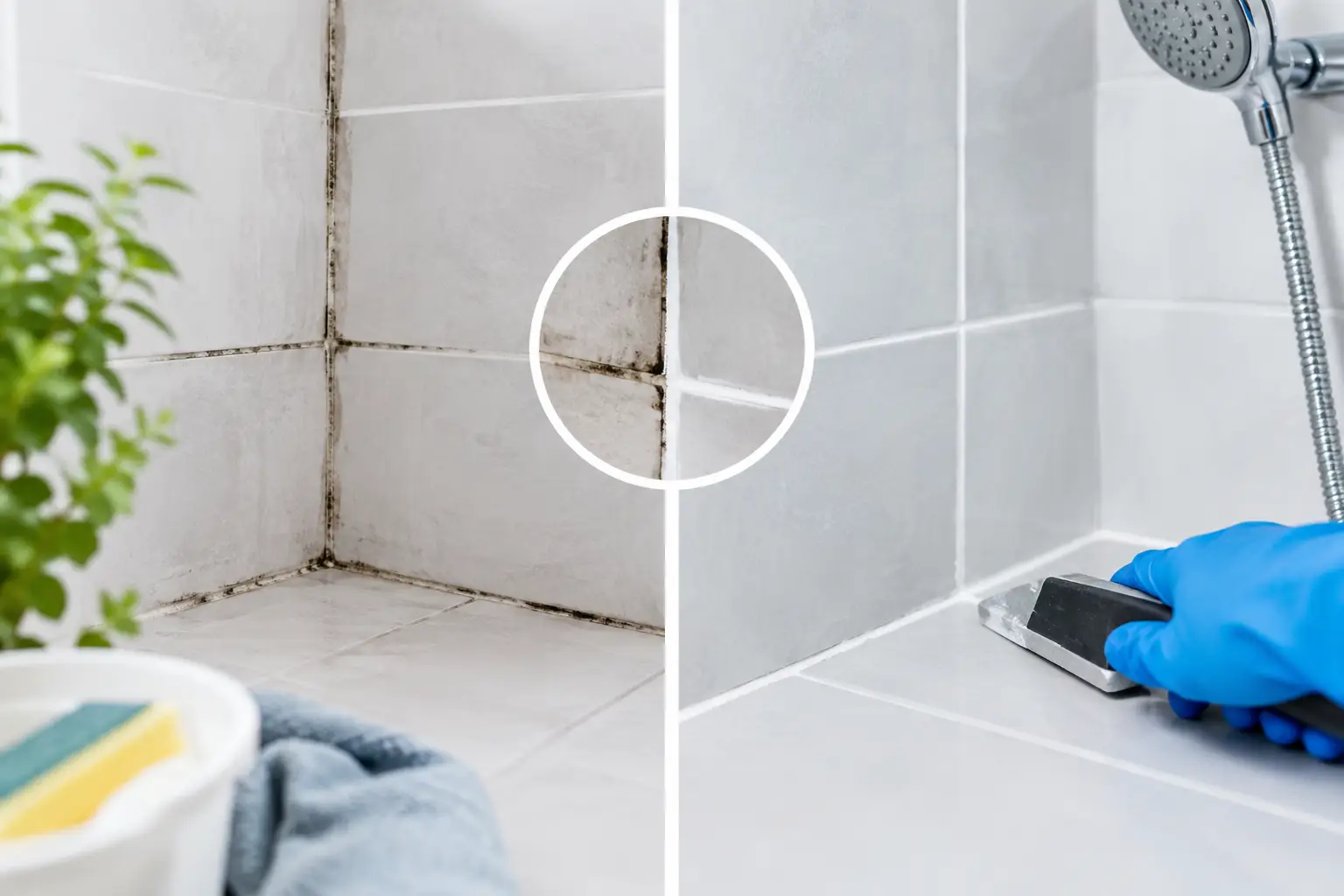
Black spotting in shower grout is rarely just a cleaning problem. It is usually a sign that moisture is sitting where it should not, often in worn grout lines, cracked corners or failed silicone joints. So, will regrouting remove mould? It can remove mould affected grout and greatly improve the appearance of a shower, but lasting results depend on fixing the moisture source as well.
If mould has settled into porous, deteriorated grout, surface cleaning may lighten it temporarily without removing what is embedded below. Regrouting replaces the affected material rather than simply covering it up. However, if water is entering behind tiles or the shower is not draining and ventilating properly, new grout alone may not stop mould from returning.
Will Regrouting Remove Mould Permanently?
Regrouting can remove visible mould where the old grout is cut out and replaced correctly. This is particularly effective when grout has become pitted, cracked, discoloured or impossible to clean. Fresh grout restores the finish between tiles and removes the porous, mould-stained material that has been holding moisture and grime.
The word permanently needs a little care. Regrouting is not a magic cure for every mould issue. Mould needs moisture to grow, so a shower with ongoing leaks, failed silicone, poor drainage or limited airflow can develop mould again, even after the grout looks new.
A proper repair considers both the visible finish and the path water may be taking. In a tiled shower, grout and silicone joints form part of the protective surface, but the waterproofing system behind the tiles is what ultimately protects surrounding walls and floors. When grout is failing or silicone has pulled away at shower corners, the wall-to-floor junction or around fittings, water can work into areas it should not reach.
That is why the right question is often not simply whether new grout will remove mould, but why the mould appeared in the first place.
When Regrouting Is Likely to Solve the Problem
Regrouting is often a practical, tile-preserving solution when the mould is concentrated in ageing grout lines and there are no signs of a more serious leak. You may notice dark staining that does not respond to normal cleaning, crumbling grout, small cracks between tiles or gaps where old silicone has shrunk or split.
In these cases, removing failed grout, cleaning and preparing the joints, applying new grout and renewing silicone can make a substantial difference. The shower looks cleaner, joints are properly finished again, and water is less likely to sit in gaps and damaged edges.
This approach can also be suitable for a bathroom that is otherwise in good condition. There is little sense in removing sound tiles simply because the grout has reached the end of its useful life. Targeted grout and silicone renewal can avoid the cost, mess and disruption of a full renovation while protecting the existing tiled surface.
For landlords and property managers, this is often the sensible middle ground: address the maintenance issue before staining, water damage and tenant complaints become larger and more expensive problems.
When Mould May Point to a Leak
Some mould problems need more than a grout refresh. If the shower leaks into an adjoining room, paint is bubbling, skirting boards are swelling, flooring feels damp or a ceiling below the bathroom has water marks, moisture may already be escaping the shower area.
Other warning signs include tiles that sound hollow, persistent musty odours, recurring mould in the same spot soon after cleaning, or silicone that keeps separating from the tiles. These signs do not automatically mean every tile must come out. They do mean the shower should be assessed before anyone assumes regrouting alone will be enough.
Balconies need the same attention. Mould or dark staining around balcony grout can be linked to trapped moisture, cracked joints and water ingress beneath the tiled finish. Left unchecked, water can affect the substrate below and, in apartment buildings, potentially create problems for neighbouring properties.
A specialist inspection helps separate a surface-maintenance issue from a waterproofing failure. The aim is to repair what has actually failed, rather than pay for demolition that may not be necessary or apply a cosmetic fix that does not address the cause.
Grout and Silicone Need to Be Treated Differently
Grout and silicone are often discussed together, but they do different jobs. Grout fills and finishes the spaces between tiles. Silicone is the flexible sealant used where surfaces meet or move, such as internal corners, around the shower base, along wall-to-floor junctions and near fixtures.
Mould commonly develops in silicone because soap residue and constant moisture sit on its surface. Once silicone becomes blackened, brittle, loose or split, trying to scrub it clean is usually a short-term answer. Removing the old silicone and applying new, properly finished sealant is generally the more reliable repair.
Likewise, regrouting over old, loose or contaminated grout is not the same as replacing it. A lasting job requires failed material to be removed and joints prepared before new grout is applied. Taking shortcuts can leave weak areas beneath the new finish, allowing staining and water problems to return.
What to Do Before and After Regrouting
Before regrouting, avoid heavy bleaching or repeated harsh chemical treatments in an attempt to force the stain out. These products can affect surrounding finishes and may not reach mould inside damaged grout. Keep the shower as dry as practical and note any evidence of leaking, such as damp walls or water outside the shower screen.
After the repair, regular care helps keep the renewed finish looking its best. Use a squeegee or towel to remove excess water from shower walls, run the exhaust fan during and after showers, and leave the shower open to air where possible. Clean with a suitable non-abrasive bathroom cleaner so soap scum does not build up in joints.
Good ventilation matters, especially in older Melbourne homes where bathrooms may have limited natural airflow. A clean, dry shower is less inviting to mould than one that stays wet for hours each day.
It is also worth acting early when silicone starts lifting or grout begins cracking. Waiting until water has travelled into walls, flooring or ceilings can turn a straightforward maintenance repair into a more involved remedial job.
A Repair Without Removing Sound Tiles
For many homeowners, the concern is not only mould but the fear that a leaking or stained shower automatically means a full bathroom renovation. Often, it does not. Where suitable, specialist regrouting and silicone renewal can restore the joints around existing tiles without removing them.
Mr. Regrout provides free inspections and fixed quotes for Melbourne showers and balconies, with a focus on identifying failed grout and silicone before water damage spreads. Suitable waterproof repair work is backed by a 5-year waterproof warranty, giving property owners clarity about the work being done and the outcome expected.
The key is not to treat mould as merely a cosmetic annoyance. When grout or silicone has deteriorated, the visible black marks may be the first prompt to check whether moisture is getting where it should not. Address it while the repair can still be targeted, tidy and far less disruptive than replacing a bathroom.